
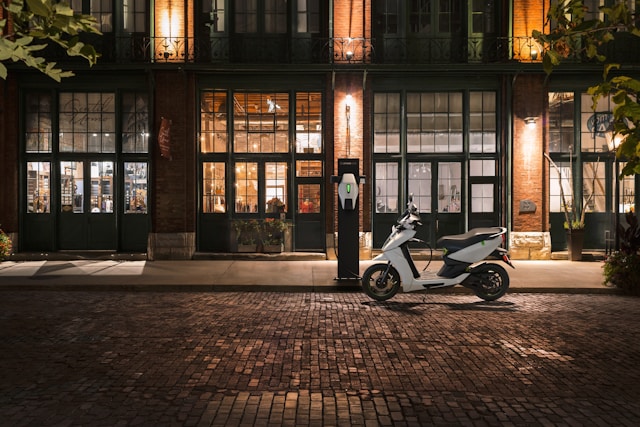
Ather Energy Limited has established itself as one of India’s leading electric two-wheeler (E2W) companies by building far more than just electric scooters. Since its inception in 2013, the company has pursued a vertically integrated approach, developing not only electric vehicles but also proprietary software, charging infrastructure, smart accessories, and an end-to-end electric mobility ecosystem. This strategy differentiates Ather from traditional automobile manufacturers by allowing it to control the complete customer experience—from product design and manufacturing to charging, software updates, and after-sales services.
Unlike many EV manufacturers that rely heavily on third-party suppliers for critical technologies, Ather has invested extensively in in-house research and development. The company designs 80% of its key hardware components and 100% of its software stack internally, enabling faster innovation, tighter quality control, and continuous product improvement. Its proprietary platforms include the AtherStack software ecosystem, the Ather Grid fast-charging network, and a growing portfolio of smart accessories, creating an integrated ecosystem that enhances customer convenience and strengthens brand loyalty.
Ather’s business model is built around premium positioning rather than competing solely on price. The company currently offers multiple scooter models across the Ather 450 and Ather Rizta families, serving both performance-oriented riders and family-focused customers. During FY2025, the launch of the Ather Rizta significantly expanded the company’s addressable market and contributed to higher sales volumes. As of March 31, 2025, Ather had sold more than 388,000 scooters since inception, sold 155,000 scooters during FY2025, operated 375 Experience Centres, 282 Service Centres, and managed 3,611 fast-charging points across India, Nepal, and Sri Lanka.

Technology remains the foundation of Ather’s competitive advantage. Through continuous investments in software, artificial intelligence, connected vehicle capabilities, and battery technologies, the company has built a software-defined mobility platform that enables over-the-air (OTA) software updates, navigation, ride analytics, remote diagnostics, smart charging, and seamless integration with accessories such as the Halo Smart Helmet. These capabilities not only improve the ownership experience but also create recurring revenue opportunities beyond vehicle sales.
Ather’s business model is also designed to balance innovation with capital efficiency. While the company retains control over product design, software, and critical technologies, it follows an asset-light strategy in component manufacturing and retail distribution through partnerships. This approach enables Ather to scale efficiently while directing significant investments toward research and development, where nearly 46% of its on-roll employees are engaged. The company is also expanding manufacturing capacity and developing new vehicle platforms to support future growth across both scooters and motorcycles.
This article analyzes the Ather Energy Business Model based on the FY2025 Annual Report. It examines the challenges the company addresses, explains how Ather creates value through its integrated electric mobility ecosystem, explores its major revenue streams, and discusses the strategic initiatives shaping its long-term growth in India’s rapidly expanding electric vehicle market.

Ather Energy Business Strategy in 2026
Problems Ather Solves
The adoption of electric two-wheelers has historically been constrained by concerns around charging infrastructure, vehicle performance, software capabilities, product quality, and ownership experience. Traditional scooters also struggle to meet growing consumer expectations for connected, intelligent, and sustainable mobility. Ather addresses these challenges by building a vertically integrated electric mobility ecosystem that combines premium electric scooters with proprietary software, fast-charging infrastructure, smart accessories, and an extensive service network. This holistic approach enables the company to improve customer confidence while accelerating the transition toward electric mobility.
1. High Cost of Electric Mobility Adoption
One of the biggest barriers to EV adoption is the perception that electric scooters are expensive compared to conventional internal combustion engine (ICE) vehicles. Although upfront purchase prices remain higher, customers increasingly evaluate vehicles based on total cost of ownership (TCO). Ather addresses this challenge by designing efficient electric scooters that offer significantly lower running costs while continuously reducing manufacturing costs through in-house engineering and product optimization. The company also benefits from India’s growing EV ecosystem, where electric scooters offer substantially lower ownership costs than comparable ICE scooters.
2. Charging Anxiety Among EV Buyers
Limited access to charging infrastructure has been one of the most significant obstacles to widespread EV adoption. Many consumers hesitate to purchase electric scooters because of concerns about finding reliable charging points during daily travel. Ather addresses this challenge through Ather Grid, India’s largest electric two-wheeler fast-charging network, comprising 3,611 charging points across India, Nepal, and Sri Lanka. The company also developed the Light Electric Combined Charging System (LECCS), a BIS-recognized charging standard that supports interoperability and improves charging accessibility for riders.
3. Lack of Smart Connected Two-Wheelers
Modern consumers increasingly expect their vehicles to deliver digital experiences similar to smartphones. Traditional two-wheelers often lack navigation, connectivity, software updates, and intelligent safety features. Ather addresses this gap through its proprietary AtherStack software platform, which offers over-the-air (OTA) updates, Google Maps integration, ride analytics, live location sharing, call and music controls, Alexa integration, ride assistance, and cloud connectivity. This transforms the scooter into a continuously evolving connected mobility platform rather than a static vehicle.
4. Limited Premium Electric Scooter Options
As India’s two-wheeler market experiences premiumization, customers increasingly seek electric scooters that combine performance, technology, quality, and design. Historically, the market offered limited premium EV choices. Ather addresses this need through a diversified product portfolio that includes the Ather 450 series for performance-focused riders and the Ather Rizta family for everyday family mobility. By serving multiple customer segments while maintaining premium quality and advanced technology, the company expands the appeal of electric mobility across a broader consumer base.
5. Dependence on Third-Party EV Technology
Many electric vehicle manufacturers rely extensively on third-party suppliers for critical hardware and software, limiting their ability to innovate and control product quality. Ather addresses this challenge through its vertically integrated business model. The company designs 80% of its key hardware components and 100% of its software stack in-house, including battery management systems, vehicle control units, dashboards, powertrain components, and software platforms. This gives Ather greater control over innovation, quality, product performance, and time-to-market.
6. Weak EV Ownership Experience
Purchasing an electric scooter involves much more than buying a vehicle—it includes charging convenience, software support, servicing, accessories, and ongoing customer engagement. Many early EV offerings lacked a comprehensive ownership ecosystem. Ather addresses this problem by integrating Experience Centres, Service Centres, Ather Grid, AtherStack, smart accessories such as the Halo Smart Helmet, mobile applications, and continuous software upgrades into a unified ownership experience. This ecosystem improves customer satisfaction, reduces ownership friction, and strengthens long-term customer loyalty.
Ather Energy SWOT Analysis in 2026
How Ather Solves These Problems
Ather addresses the barriers to electric vehicle adoption through a vertically integrated business model that combines in-house engineering, proprietary software, charging infrastructure, premium product design, and a connected ownership ecosystem. Instead of focusing solely on manufacturing electric scooters, the company has built an end-to-end electric mobility platform that integrates vehicles, software, charging, accessories, manufacturing, and customer services. This integrated approach enables Ather to deliver superior product quality, continuous innovation, and a differentiated ownership experience while accelerating the adoption of electric mobility.
1. Vertically Integrated EV Design and Manufacturing
One of Ather’s biggest competitive advantages is its vertically integrated approach to product development. The company designs 80% of its key hardware components and 100% of its software stack internally, including battery packs, battery management systems (BMS), vehicle control units (VCU), touchscreen dashboards, motor controllers, transmissions, signal harnesses, and fast-charging systems. This level of technology ownership enables Ather to maintain strict quality standards, accelerate innovation, reduce dependence on third-party suppliers, and introduce new features more quickly than many competitors.
2. Software-Defined Electric Vehicle Ecosystem
Unlike conventional two-wheelers, Ather’s vehicles are built around a proprietary software platform called AtherStack. The software ecosystem powers features such as over-the-air (OTA) software updates, Google Maps navigation, ride analytics, live location sharing, call and music controls, Alexa integration, ride assistance, and cloud connectivity. With 77 connected features and 88% of customers opting for the AtherStack Pro Pack, the platform continuously improves the ownership experience while creating ongoing customer engagement beyond the initial vehicle purchase.
3. Nationwide Charging Infrastructure
To eliminate charging anxiety, Ather has developed Ather Grid, India’s largest electric two-wheeler fast-charging network. As of FY2025, the network included 3,611 charging points across India, Nepal, and Sri Lanka. The company also developed the Light Electric Combined Charging System (LECCS), a BIS-recognized national charging standard that enables interoperability across compatible electric vehicles. By combining public charging infrastructure with home charging solutions, Ather significantly improves charging convenience and strengthens customer confidence in adopting electric mobility.
4. Premium Product and Ownership Experience
Ather differentiates itself by delivering a premium ownership experience rather than competing purely on price. Its product portfolio includes the performance-focused Ather 450 series and the family-oriented Ather Rizta range, addressing different customer needs while maintaining premium quality and advanced technology. This experience is supported by 375 Experience Centres, 282 Service Centres, smart accessories such as the Halo Smart Helmet, mobile applications, and fast, technology-enabled after-sales service. Together, these elements create a seamless customer journey from purchase through long-term ownership.
5. Strong In-House Research and Development
Innovation is central to Ather’s business model. The company has one of the world’s largest electric two-wheeler R&D teams, with 46% of its on-roll employees engaged in research and development. Its R&D capabilities span batteries, power electronics, software, mechanical engineering, and vehicle design, supported by multiple research facilities and a growing intellectual property portfolio. Continuous investments in R&D have enabled Ather to improve vehicle range, performance, safety, software capabilities, and manufacturing efficiency while reducing bill-of-material (BOM) costs over time.
6. Asset-Light Yet Scalable Business Model
While Ather retains ownership of critical technologies and product design, it follows a capital-efficient operating model for manufacturing and distribution. The company outsources component manufacturing where appropriate and operates an asset-light retail model through partner-managed Experience Centres. This approach allows Ather to allocate more capital toward research and development, technology innovation, and product development while maintaining operational flexibility and supporting scalable growth. As demand for electric mobility increases, this balanced strategy enables the company to expand efficiently without compromising innovation or customer experience.
Ather Energy PESTEL Analysis in 2026
Ather Business Model Canvas
Ather Energy has built a vertically integrated electric mobility business that combines premium electric scooters with proprietary software, charging infrastructure, smart accessories, and an expanding service ecosystem. Unlike traditional automobile manufacturers that primarily generate revenue from vehicle sales, Ather’s business model is designed to create long-term customer value through connected software, charging services, after-sales support, and continuous innovation. This integrated ecosystem strengthens customer loyalty while creating multiple avenues for future revenue growth.
| Business Model Canvas | Details |
|---|---|
| Customer Segments | Urban commuters, families, premium scooter buyers, technology enthusiasts, first-time EV buyers, environmentally conscious consumers, fleet operators, and electric mobility adopters across India, Nepal, and Sri Lanka. |
| Value Proposition | Premium electric scooters, vertically integrated technology, connected mobility through AtherStack, India’s largest E2W fast-charging network, superior riding performance, continuous software upgrades, smart accessories, and a seamless ownership experience. |
| Channels | Ather Experience Centres, retail partners, Ather website, mobile application, digital platforms, financing partners, and authorized service centres. |
| Customer Relationships | Premium retail experience, community engagement, OTA software updates, Ather mobile application, connected vehicle services, after-sales support, Ather Grid charging ecosystem, and long-term customer engagement through software and accessories. |
| Revenue Streams | Electric scooter sales, AtherStack Pro Pack subscriptions, smart accessories, charging ecosystem, spare parts, servicing, extended warranty, and future software and platform monetization opportunities. |
| Key Resources | Proprietary software (AtherStack), in-house R&D capabilities, intellectual property, battery technology, manufacturing facilities, Ather Grid charging network, premium brand, engineering talent, and nationwide distribution network. |
| Key Activities | Product design, research and development, software development, battery engineering, manufacturing, charging infrastructure expansion, supply chain management, retail expansion, customer support, and continuous product innovation. |
| Key Partners | Component suppliers, manufacturing partners, retail partners, financing institutions, technology partners, battery suppliers, charging infrastructure partners, logistics providers, and government EV ecosystem stakeholders. |
| Cost Structure | Research & development, battery procurement, manufacturing, software development, charging infrastructure, sales & marketing, distribution, employee costs, warranty & after-sales service, and general administrative expenses. |
Ather’s business model extends beyond manufacturing electric scooters to creating an integrated electric mobility ecosystem. By combining in-house technology development, premium products, connected software, fast-charging infrastructure, and a capital-efficient operating model, the company has established multiple competitive advantages that strengthen customer loyalty and position it to benefit from the long-term growth of India’s electric two-wheeler market. Its vertically integrated strategy also enables continuous innovation while creating opportunities to generate recurring revenue through software, services, and ecosystem offerings beyond vehicle sales.
How Ather Makes Money
Ather Energy generates revenue primarily through the sale of premium electric scooters, but its business model extends well beyond vehicle manufacturing. By combining proprietary software, charging infrastructure, smart accessories, after-sales services, and a vertically integrated technology ecosystem, the company is building multiple revenue streams that strengthen customer loyalty and create opportunities for recurring income. This diversified approach allows Ather to monetize the complete electric mobility experience rather than relying solely on one-time vehicle sales. In FY2025, the company reported Total Income of Rs. 23,052 million, reflecting strong growth driven by higher vehicle volumes and expanding ecosystem offerings.
1. Electric Scooter Sales
The sale of electric scooters is Ather’s largest source of revenue. The company currently offers two major product families—the Ather 450 series, designed for performance-oriented riders, and the Ather Rizta range, developed for family-oriented customers. During FY2025, Ather sold 155,394 scooters, supported by the successful launch of the Ather Rizta, which significantly expanded its addressable market. The company’s premium positioning enables it to command higher average selling prices while differentiating itself through quality, performance, and technology.
2. AtherStack Software Subscription Revenue
Ather generates recurring revenue through AtherStack, its proprietary connected vehicle platform. Customers can purchase the AtherStack Pro Pack, which unlocks premium features such as over-the-air (OTA) software updates, ride assistance, Google Maps navigation, live location sharing, ride analytics, cloud connectivity, and advanced smart features. During FY2025, 88% of Ather customers opted for AtherStack, and the platform contributed approximately 6% of the company’s revenue, making software an increasingly important revenue stream alongside vehicle sales.
3. Smart Accessories and Merchandise
The company also earns revenue by selling premium accessories that enhance the ownership experience. Its portfolio includes products such as the Halo Smart Helmet, Halo Bit, tyre pressure monitoring systems (TPMS), seat covers, bodyguards, storage accessories, and other branded merchandise. These accessories not only generate incremental revenue but also strengthen customer engagement by expanding the Ather ecosystem around its vehicles.
4. Charging Infrastructure and Ecosystem
Although Ather Grid primarily supports electric vehicle adoption and customer convenience, it also strengthens the company’s long-term business model by increasing customer stickiness and supporting ecosystem monetization opportunities. The company operates 3,611 fast-charging points across India, Nepal, and Sri Lanka, making it the country’s largest electric two-wheeler fast-charging network. As EV adoption continues to grow, charging infrastructure can create additional opportunities through partnerships, value-added services, and ecosystem expansion while reinforcing Ather’s competitive advantage.
5. Spare Parts, Service and Extended Warranty
Ather generates recurring post-sale revenue through servicing, spare parts, maintenance, repairs, and extended warranty offerings. The company operates 375 Experience Centres and 282 Service Centres across India, Nepal, and Sri Lanka, providing customers with comprehensive after-sales support. Initiatives such as ExpressCare, which completes routine servicing within approximately 60 minutes, and premium Ather Gold Service Centres further enhance customer satisfaction while creating steady service-related revenue throughout the vehicle ownership lifecycle.
6. Future Platform and Technology Monetization
Beyond its current revenue streams, Ather is investing in scalable technology platforms that can generate future income. The company’s vertically integrated architecture, proprietary software stack, connected mobility platform, battery technologies, and upcoming EL scooter platform and Zenith motorcycle platform provide opportunities to launch new vehicle categories, introduce additional subscription-based digital services, and expand ecosystem offerings. As the installed base of Ather vehicles grows, recurring revenue from software, connected services, accessories, and future digital products is expected to become an increasingly important contributor to the company’s long-term business model.
Future of Ather Business Model
Ather Energy’s future business model is centered on building a comprehensive electric mobility ecosystem rather than simply increasing electric scooter sales. The company plans to strengthen its vertically integrated approach by expanding its product portfolio, scaling software capabilities, growing charging infrastructure, and investing in next-generation manufacturing platforms. As electric vehicle adoption accelerates in India, Ather aims to leverage its technology leadership, strong R&D capabilities, and premium brand positioning to achieve profitable growth while creating recurring revenue beyond vehicle sales.
1. Expanding Across Multiple EV Segments
Ather plans to diversify its product portfolio beyond its existing scooter lineup by developing multiple vehicles on its new EL scooter platform and Zenith motorcycle platform. These modular platforms are designed to support a broader range of electric two-wheelers while reducing development costs and accelerating product launches. By serving both performance-oriented riders and family-focused customers across different price segments, Ather aims to significantly expand its addressable market and strengthen its competitive position in India’s growing electric two-wheeler industry.
2. Scaling the Software-Defined Mobility Platform
Software will continue to play a central role in Ather’s business model. The company plans to further enhance AtherStack, its proprietary software platform, by introducing new connected features, over-the-air (OTA) updates, predictive diagnostics, ride intelligence, cloud services, and smart integrations. As the installed base of Ather vehicles grows, software subscriptions and connected services are expected to become increasingly important sources of recurring revenue while strengthening customer engagement throughout the ownership lifecycle.
3. Expansion of Ather Grid Charging Network
Charging infrastructure remains one of Ather’s strongest competitive differentiators. The company intends to continue expanding Ather Grid, already India’s largest electric two-wheeler fast-charging network with 3,611 charging points across India, Nepal, and Sri Lanka. Wider charging coverage, greater interoperability through the LECCS charging standard, and deeper integration with navigation and digital services are expected to improve customer convenience while accelerating electric vehicle adoption across new markets.
4. Platform-Based Manufacturing and Cost Leadership
As production volumes increase, Ather aims to improve profitability by leveraging modular vehicle platforms, vertically integrated engineering, and manufacturing efficiencies. The company is expanding production capacity through its upcoming manufacturing facility in Aurangabad, Maharashtra, while continuing to optimize its supply chain and reduce bill-of-material (BOM) costs through in-house innovation. This strategy enables Ather to scale efficiently, improve gross margins, and maintain its premium positioning without compromising product quality.
5. International Expansion
Having established a presence in India, Nepal, and Sri Lanka, Ather sees international markets as an important long-term growth opportunity. The company plans to gradually expand its distribution network, charging ecosystem, and product portfolio into additional international markets where demand for premium electric two-wheelers is growing. Its vertically integrated technology platform and strong engineering capabilities provide a scalable foundation for entering new geographies while maintaining consistent product quality and customer experience.
6. Building a Complete Electric Mobility Ecosystem
Ather’s long-term vision extends beyond manufacturing electric scooters to creating a fully integrated electric mobility ecosystem. By combining premium vehicles, proprietary software, fast-charging infrastructure, smart accessories, digital services, and a technology-enabled ownership experience, the company aims to build a comprehensive platform that supports customers throughout the entire EV lifecycle. Continued investments in research and development, charging infrastructure, connected technologies, and customer experience position Ather to benefit from the long-term structural shift toward electric mobility while creating sustainable competitive advantages and diversified revenue opportunities.