
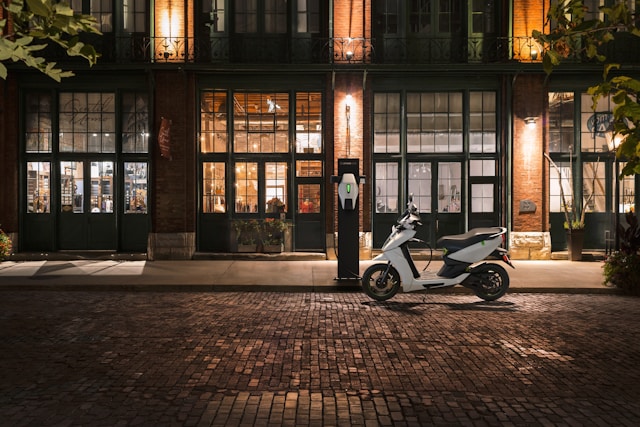
Ather Energy Limited has established itself as one of India’s leading electric two-wheeler companies by building a vertically integrated electric mobility ecosystem that extends far beyond manufacturing scooters. Since its inception in 2013, the company has focused on developing proprietary technologies, connected software, charging infrastructure, and premium customer experiences to accelerate the adoption of electric mobility. This strategy allows Ather to differentiate itself in a rapidly evolving industry while positioning the company to benefit from the long-term transition toward sustainable transportation.

The electric mobility industry is influenced by a wide range of external factors that shape consumer demand, operational efficiency, profitability, and competitive positioning. Government policies promoting electric vehicles, macroeconomic conditions, technological advancements, changing consumer preferences, environmental concerns, and evolving regulatory standards all play a significant role in determining the pace of industry growth. For Ather, understanding and adapting to these external forces is essential for sustaining innovation and maintaining long-term competitiveness.
Ather has built several strategic capabilities that position it well within this evolving environment. The company designs 80% of its key hardware components and 100% of its software stack internally, operates 3,611 Ather Grid fast-charging points, and has established an extensive retail and service network comprising 375 Experience Centres and 282 Service Centres across India, Nepal, and Sri Lanka. Supported by significant investments in research and development, these capabilities enable Ather to respond effectively to technological and market changes while strengthening its competitive advantage.

However, Ather also operates in an industry characterized by rapid technological evolution, changing government incentives, volatile raw material prices, increasing competition, and growing regulatory scrutiny around battery safety, sustainability, and data security. Successfully navigating these external factors will require continuous innovation, operational agility, strategic investments, and effective risk management. The company’s long-term success will depend not only on its internal strengths but also on its ability to anticipate and adapt to changes in the broader business environment.
This PESTEL analysis examines the Political, Economic, Social, Technological, Environmental, and Legal factors influencing Ather Energy’s business based on the FY2025 Annual Report. It provides insights into the external forces shaping the company’s strategic decisions and the future of India’s electric mobility ecosystem.
Ather Energy Business Model in 2026: How Ather Makes Money

Political Factors
Government policies play a crucial role in shaping the growth of India’s electric vehicle industry. Incentives for EV adoption, localization initiatives, charging infrastructure development, import regulations, and industrial policies directly influence consumer demand, manufacturing costs, and long-term investment decisions. As one of India’s leading electric two-wheeler manufacturers, Ather Energy benefits from supportive government initiatives while also facing risks associated with policy changes and geopolitical developments.
1. Government EV Incentives and Subsidies
Government incentive programs have been instrumental in accelerating the adoption of electric vehicles across India. Policies that encourage EV purchases, promote domestic manufacturing, and support industry development improve affordability for consumers and create favorable conditions for manufacturers such as Ather. While these incentives have contributed to market growth, any reduction or restructuring of subsidy programs could influence demand and require Ather to rely more heavily on product innovation, manufacturing efficiency, and cost optimization to remain competitive.
2. Make in India and Localization Policies
India’s emphasis on strengthening domestic manufacturing aligns closely with Ather’s vertically integrated business model. The company designs 80% of its key hardware components and 100% of its software stack internally while continuously increasing localization across its supply chain. Government initiatives promoting local manufacturing, value addition, and indigenous technology development can enhance Ather’s competitiveness by reducing dependence on imports, improving supply chain resilience, and supporting long-term industrial growth.
3. Charging Infrastructure Development Initiatives
Public policies encouraging the expansion of EV charging infrastructure play an important role in reducing range anxiety and increasing consumer confidence. Ather has complemented these initiatives by building Ather Grid, India’s largest electric two-wheeler fast-charging network with 3,611 charging points, and by developing the Light Electric Combined Charging System (LECCS), a BIS-recognized charging standard. Continued government support for charging infrastructure is expected to accelerate EV adoption while strengthening Ather’s integrated mobility ecosystem.
4. Public Investment in EV Ecosystem
Government investment in renewable energy, battery manufacturing, charging infrastructure, research, and advanced manufacturing strengthens the broader electric mobility ecosystem. Such investments improve industry readiness, encourage innovation, and create opportunities for companies like Ather to scale operations more efficiently. Public-private collaboration can also accelerate the commercialization of emerging technologies and support the development of a more robust EV value chain in India.
5. Trade and Import Policies
Ather’s manufacturing operations depend on the availability of battery cells, semiconductors, electronic components, and other specialized materials that may be sourced internationally. Changes in import duties, trade agreements, customs regulations, or localization requirements can influence procurement costs and supply chain efficiency. Favorable trade policies can improve access to critical technologies, while restrictive measures may increase production costs or require further localization of the supply chain.
6. Geopolitical Risks Affecting Supply Chains
Global geopolitical developments can affect the availability and pricing of essential raw materials and electronic components used in electric vehicle manufacturing. Trade disputes, export restrictions, shipping disruptions, or political instability in supplier countries may create supply chain challenges and increase input costs. As Ather expands production capacity and introduces new vehicle platforms, maintaining a diversified supplier network and resilient procurement strategy will be increasingly important for minimizing geopolitical risks and ensuring operational continuity.
Ather Energy Business Strategy in 2026
Economic Factors
Economic conditions significantly influence the growth of the electric vehicle industry by affecting consumer spending, manufacturing costs, investment decisions, and market demand. Factors such as fuel prices, inflation, raw material costs, financing availability, and overall economic growth shape purchasing decisions and industry profitability. For Ather Energy, balancing cost efficiency with premium product positioning is essential to maintaining growth while improving long-term financial performance.
1. Rising Fuel Prices Driving EV Adoption
Increasing petrol and diesel prices have improved the economic attractiveness of electric two-wheelers by reducing the total cost of ownership (TCO) compared to conventional internal combustion engine (ICE) vehicles. As operating cost savings become more evident, consumers are increasingly considering electric scooters for daily commuting. This macroeconomic trend supports higher demand for Ather’s products, particularly among urban commuters seeking long-term savings alongside premium features and connected mobility.
2. Inflation and Raw Material Costs
The cost of manufacturing electric vehicles is highly sensitive to fluctuations in the prices of battery materials, semiconductors, electronic components, and other industrial inputs. Inflationary pressures can increase production costs and reduce profit margins if higher expenses cannot be fully passed on to customers. Ather continues to focus on engineering improvements, localization, and bill-of-material (BOM) optimization to improve cost efficiency while maintaining product quality and innovation.
3. Consumer Purchasing Power
Demand for premium electric scooters is closely linked to consumers’ disposable income and overall economic conditions. During periods of strong economic growth, customers are generally more willing to invest in premium mobility solutions that offer superior performance, technology, and ownership experience. Conversely, weaker economic conditions or reduced consumer confidence may encourage buyers to prioritize affordability over premium features, potentially affecting demand for Ather’s products.
4. Access to Vehicle Financing
Affordable financing plays a crucial role in expanding electric vehicle adoption by lowering the upfront purchase burden for consumers. Partnerships with financial institutions and the availability of competitive financing options can improve affordability and increase the addressable market for premium electric scooters. As financing solutions become more accessible, Ather can attract a broader customer base while supporting higher vehicle sales and market penetration.
5. Scale Economies and Manufacturing Efficiency
Achieving higher production volumes enables manufacturers to reduce per-unit costs through economies of scale, improved procurement efficiency, and better utilization of manufacturing facilities. Ather’s investments in modular vehicle platforms, manufacturing expansion, and supply chain optimization are intended to improve productivity and profitability as volumes increase. Continued scale will be important for strengthening the company’s financial performance while maintaining its premium positioning in an increasingly competitive market.
6. Growth of India’s Electric Mobility Market
India’s electric mobility industry is expected to experience sustained long-term growth as consumer awareness increases, charging infrastructure expands, and technological advancements improve vehicle performance and affordability. The country’s large two-wheeler market presents a significant opportunity for electric vehicle manufacturers. As one of the established premium EV brands, Ather is well positioned to benefit from this structural market expansion through its integrated ecosystem, proprietary technology, and expanding product portfolio.
Ather Energy SWOT Analysis in 2026
Social Factors
Social trends are playing a significant role in accelerating the adoption of electric mobility in India. Growing environmental awareness, changing consumer preferences, increasing urbanization, and rising demand for digitally connected products are reshaping the two-wheeler industry. Consumers are no longer evaluating vehicles solely on price and performance but also on sustainability, technology, convenience, and overall ownership experience. Ather Energy has aligned its business strategy with these evolving consumer expectations by combining premium electric vehicles with software, charging infrastructure, and an integrated mobility ecosystem.
1. Growing Consumer Preference for Sustainable Mobility
Consumers are becoming increasingly conscious of the environmental impact of conventional vehicles and are actively seeking cleaner transportation alternatives. Electric two-wheelers are gaining acceptance as an effective solution for reducing emissions and lowering dependence on fossil fuels. This growing preference for sustainable mobility supports long-term demand for Ather’s electric scooters and aligns with the company’s vision of accelerating the transition toward electric transportation.
2. Rising Acceptance of Electric Vehicles
Public perception of electric vehicles has improved significantly as charging infrastructure expands, battery technology advances, and successful EV brands demonstrate reliable performance. Increasing consumer confidence has reduced concerns related to vehicle range, charging convenience, and long-term ownership. With its established product portfolio, nationwide retail presence, and integrated charging ecosystem, Ather is well positioned to benefit from the growing acceptance of electric two-wheelers across India.
3. Increasing Demand for Smart Connected Vehicles
Modern consumers increasingly expect vehicles to offer digital experiences similar to smartphones. Features such as navigation, cloud connectivity, ride analytics, remote diagnostics, software updates, and intelligent assistance have become important purchase considerations. Through its proprietary AtherStack platform, Ather delivers a connected mobility experience with over-the-air (OTA) updates, smart navigation, cloud-based services, and numerous connected features, enabling the company to meet evolving customer expectations for intelligent transportation.
4. Urbanization and Daily Commuting Needs
Rapid urbanization has increased demand for efficient, economical, and convenient personal transportation. Congested cities require mobility solutions that are easy to operate, cost-effective to maintain, and suitable for short- to medium-distance travel. Electric scooters address these requirements while offering lower operating costs than conventional vehicles. Ather’s product portfolio, including the Ather 450 and Ather Rizta, is designed to serve diverse urban commuting needs, from individual riders to family users.
5. Premiumization of the Two-Wheeler Market
A growing segment of consumers is willing to pay more for superior technology, design, safety, and ownership experience. This premiumization trend supports Ather’s strategy of positioning itself as a premium electric mobility brand rather than competing solely on affordability. By focusing on product quality, intelligent software, fast-charging infrastructure, and customer service, Ather has established a differentiated value proposition that appeals to technology-conscious and premium-oriented customers.
6. Growing Awareness of Environmental Sustainability
Awareness of climate change, air pollution, and sustainable living continues to influence purchasing decisions, particularly among younger consumers and urban households. Businesses and consumers are increasingly supporting environmentally responsible products and brands. Ather’s focus on electric mobility, energy-efficient transportation, and continuous innovation aligns well with this societal shift toward sustainability, strengthening its brand appeal among environmentally conscious customers.
Technological Factors
Technology is the foundation of Ather Energy’s competitive strategy and one of the most important external factors influencing its long-term growth. Rapid advancements in battery technology, connected mobility, charging infrastructure, artificial intelligence, and manufacturing automation continue to reshape the electric vehicle industry. To remain competitive, Ather invests heavily in research and development, proprietary software, and vertically integrated engineering, enabling the company to continuously improve its products while strengthening its technology leadership.
1. Advances in Battery Technology
Battery technology is one of the most critical drivers of electric vehicle adoption. Improvements in battery energy density, charging speed, safety, durability, and cost directly influence vehicle performance and affordability. Ather continuously invests in battery engineering, battery management systems (BMS), and power electronics to improve range, reliability, and efficiency. As battery technologies evolve, the company is expected to benefit from lower production costs, enhanced vehicle performance, and greater customer acceptance of electric mobility.
2. Software-Defined Vehicles and Connected Mobility
Modern electric vehicles increasingly function as software-driven platforms rather than purely mechanical products. Ather has embraced this trend through its proprietary AtherStack software platform, which powers over-the-air (OTA) software updates, Google Maps navigation, ride analytics, cloud connectivity, live location sharing, Alexa integration, and numerous connected features. By continuously enhancing software capabilities after purchase, Ather improves customer experience while creating opportunities for recurring subscription-based revenue and long-term customer engagement.
3. Expansion of Charging Infrastructure
The availability of reliable charging infrastructure remains essential for accelerating electric vehicle adoption. Ather has addressed this challenge by developing Ather Grid, India’s largest electric two-wheeler fast-charging network with 3,611 charging points across India, Nepal, and Sri Lanka. The company has also introduced the Light Electric Combined Charging System (LECCS), a BIS-recognized charging standard that improves interoperability across compatible electric vehicles. Continued advancements in charging technology and infrastructure are expected to enhance customer convenience while supporting broader EV adoption.
4. Artificial Intelligence and Data Analytics
Artificial intelligence and data analytics are becoming increasingly important in the electric mobility industry. Connected vehicles generate valuable operational and customer data that can be used to improve product performance, optimize battery management, enable predictive maintenance, personalize the ownership experience, and support future software innovations. As Ather expands its connected vehicle ecosystem, advanced analytics and intelligent software capabilities are expected to play an increasingly important role in product development, operational efficiency, and customer engagement.
5. Research & Development and Product Innovation
Continuous innovation remains central to Ather’s technology strategy. Approximately 46% of the company’s on-roll employees are engaged in research and development across battery technology, software engineering, electronics, vehicle architecture, and manufacturing processes. This strong R&D capability has enabled Ather to develop proprietary technologies, launch new products, improve vehicle performance, and strengthen its intellectual property portfolio. Sustained investment in innovation will remain essential as technological advancements continue to reshape the electric mobility industry.
6. Manufacturing Automation and Digitalization
Advances in manufacturing technologies, automation, and digital production systems are improving productivity, quality, and cost efficiency across the automotive industry. Ather is expanding its manufacturing capabilities through modular vehicle platforms, process optimization, and its upcoming manufacturing facility in Aurangabad, Maharashtra. Increased automation, digital manufacturing, and engineering-driven process improvements are expected to enhance production efficiency, reduce costs, improve quality consistency, and support scalable long-term growth.
Environmental Factors
Environmental factors are at the core of Ather Energy’s business model and the broader electric mobility industry. Growing concerns about climate change, air pollution, resource conservation, and sustainable manufacturing are accelerating the shift toward electric transportation. Governments, businesses, and consumers are increasingly prioritizing environmentally responsible mobility solutions, creating long-term growth opportunities for companies like Ather. At the same time, the industry must address challenges related to battery lifecycle management, sustainable manufacturing, and environmental compliance to ensure long-term sustainability.
1. Reduction in Carbon Emissions
One of the primary drivers of electric vehicle adoption is the need to reduce greenhouse gas emissions and improve urban air quality. Electric two-wheelers produce zero tailpipe emissions, making them an attractive alternative to conventional internal combustion engine (ICE) vehicles. By promoting electric mobility through its portfolio of premium scooters, Ather contributes to reducing carbon emissions and supports India’s broader transition toward cleaner transportation. This environmental shift continues to strengthen the long-term demand outlook for electric vehicles.
2. Government Focus on Clean Transportation
Governments around the world, including India, are increasingly promoting clean transportation to achieve climate and sustainability goals. Policies encouraging electric vehicle adoption, charging infrastructure development, renewable energy integration, and reduced dependence on fossil fuels create a favorable operating environment for companies such as Ather. Continued policy support for sustainable transportation is expected to accelerate electric vehicle adoption and strengthen the overall EV ecosystem.
3. Battery Recycling and Circular Economy
As electric vehicle adoption increases, responsible battery disposal, recycling, and resource recovery are becoming increasingly important environmental priorities. Developing circular economy practices for lithium-ion batteries can reduce environmental impact while improving resource efficiency and reducing dependence on virgin raw materials. As Ather’s installed vehicle base grows, effective battery lifecycle management and partnerships across the recycling ecosystem will become increasingly important for supporting sustainable long-term growth.
4. Sustainable Manufacturing Practices
Manufacturers are under growing pressure to reduce the environmental footprint of their production processes through energy efficiency, waste reduction, responsible sourcing, and resource optimization. Ather’s investments in vertically integrated engineering, manufacturing optimization, and localized production contribute to improving operational efficiency while supporting more sustainable manufacturing practices. As environmental expectations continue to evolve, further improvements in manufacturing sustainability can strengthen the company’s competitiveness and brand reputation.
5. Renewable Energy Integration
The environmental benefits of electric vehicles increase as electricity generation shifts toward renewable energy sources. Greater integration of solar, wind, and other renewable energy technologies into national power systems can reduce the lifecycle carbon footprint of electric mobility. As India’s renewable energy capacity expands, Ather’s electric vehicles will increasingly contribute to a cleaner transportation ecosystem, reinforcing the company’s long-term sustainability proposition.
6. Climate Change and ESG Expectations
Investors, regulators, customers, and business partners are placing greater emphasis on Environmental, Social, and Governance (ESG) performance when evaluating companies. Businesses are increasingly expected to demonstrate responsible environmental practices, transparent sustainability reporting, and long-term climate resilience. Ather’s focus on electric mobility, continuous innovation, product efficiency, and sustainable transportation aligns with these evolving ESG expectations, positioning the company to benefit from the global shift toward more environmentally responsible business practices.
Legal Factors
The electric vehicle industry operates within a highly regulated legal environment that covers vehicle safety, battery standards, environmental compliance, intellectual property, data privacy, labour laws, and corporate governance. For Ather Energy, compliance with these legal requirements is essential to maintaining product quality, protecting technological innovations, and sustaining customer trust. As the company expands its operations and introduces new products, evolving legal and regulatory frameworks will continue to influence its business strategy and operational decisions.
1. Battery Safety and Vehicle Certification Regulations
Battery safety is one of the most important legal considerations for electric vehicle manufacturers. Regulatory authorities prescribe stringent standards covering battery design, thermal management, testing, vehicle certification, and overall product safety before vehicles can be commercialized. Ather’s focus on in-house engineering, battery management systems, and rigorous product development helps the company comply with these evolving safety requirements. Continuous adherence to regulatory standards is essential for protecting customer safety and maintaining the company’s reputation.
2. Environmental Compliance Requirements
Electric vehicle manufacturers must comply with a wide range of environmental regulations related to manufacturing operations, waste management, battery disposal, emissions reporting, and responsible sourcing of materials. As environmental regulations continue to evolve, Ather must ensure that its manufacturing processes and supply chain practices meet applicable sustainability and compliance requirements. Strong environmental compliance also supports the company’s long-term commitment to sustainable mobility and responsible business practices.
3. Intellectual Property Protection
Innovation is a key competitive advantage for Ather, making intellectual property (IP) protection an important legal factor. The company has invested heavily in proprietary technologies across battery systems, software, electronics, charging infrastructure, and vehicle engineering. Protecting patents, trademarks, industrial designs, copyrights, and proprietary software helps safeguard Ather’s technological leadership while reducing the risk of imitation by competitors. Effective IP management also supports future product development and long-term competitive differentiation.
4. Data Privacy and Cybersecurity Regulations
Connected vehicles generate large volumes of customer and operational data, making data privacy and cybersecurity increasingly important. Through its AtherStack platform, mobile applications, and connected vehicle services, Ather manages information related to vehicle performance, navigation, software updates, and customer interactions. Compliance with applicable data protection regulations, cybersecurity standards, and responsible data management practices is essential for protecting customer information, maintaining trust, and ensuring the secure operation of connected mobility services.
5. Labour and Manufacturing Regulations
As Ather expands its manufacturing operations and workforce, it must comply with labour laws governing employee welfare, workplace safety, compensation, training, industrial relations, and occupational health standards. Compliance with manufacturing regulations and workplace safety requirements is equally important for maintaining operational efficiency and minimizing legal risks. Strong governance of human resources and manufacturing practices supports sustainable business growth while reinforcing Ather’s reputation as a responsible employer.
6. Corporate Governance and Listed Company Compliance
Following its public listing, Ather is subject to enhanced corporate governance, financial reporting, disclosure, and regulatory compliance requirements. The company must adhere to applicable securities regulations, accounting standards, board governance requirements, risk management practices, and shareholder disclosure obligations. Strong corporate governance enhances investor confidence, improves transparency, supports access to capital, and strengthens the company’s credibility among customers, regulators, and other stakeholders. Maintaining high governance standards will remain an important legal priority as Ather continues to grow.