
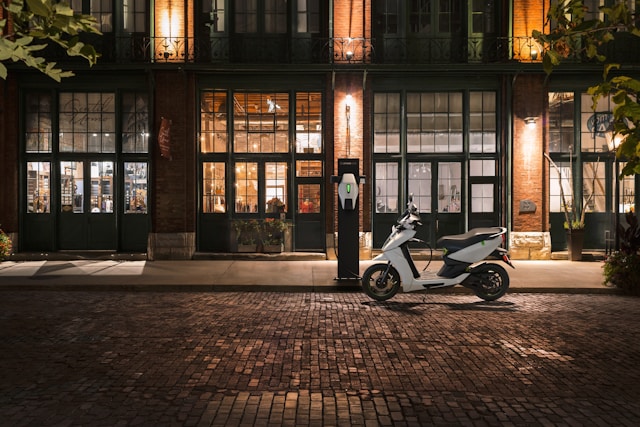
Ather Energy Limited has emerged as one of India’s leading electric two-wheeler manufacturers by combining premium electric vehicles with proprietary technology, software, charging infrastructure, and an integrated customer ecosystem. Since its inception in 2013, the company has differentiated itself through a vertically integrated business model that emphasizes in-house engineering, continuous innovation, and superior customer experience rather than competing solely on price. This strategy has enabled Ather to establish a strong position in India’s rapidly expanding electric mobility industry.

The electric two-wheeler market presents significant growth opportunities, driven by increasing consumer awareness, government support for electric vehicles, technological advancements, and rising fuel costs. At the same time, the industry remains highly competitive, with established automobile manufacturers and emerging EV startups investing aggressively in new products, manufacturing capacity, and charging infrastructure. In this dynamic environment, Ather’s long-term success depends on its ability to leverage its technological strengths while addressing operational and financial challenges.
Ather has built several competitive advantages over the years. The company designs 80% of its key hardware components and 100% of its software stack internally, operates India’s largest electric two-wheeler fast-charging network with 3,611 charging points, and has established a nationwide retail and service ecosystem comprising 375 Experience Centres and 282 Service Centres. Continuous investment in research and development, where 46% of its on-roll workforce is employed, further strengthens its ability to innovate and maintain technological leadership.

However, the company also faces several strategic challenges. Achieving sustainable profitability while investing heavily in research and development, manufacturing expansion, charging infrastructure, and new product platforms remains a key priority. In addition, increasing competition, supply chain uncertainties, evolving government policies, and the need to expand beyond the premium customer segment will influence Ather’s long-term growth trajectory. Successfully balancing innovation, operational efficiency, and financial discipline will be critical to strengthening its competitive position.
This SWOT analysis evaluates Ather Energy’s Strengths, Weaknesses, Opportunities, and Threats based on the FY2025 Annual Report. It highlights the company’s internal capabilities and external market factors that are expected to shape its future strategy and long-term growth in India’s electric mobility ecosystem.
Ather Energy Business Model in 2026: How Ather Makes Money

Strengths
Ather Energy has built a strong competitive position in India’s electric two-wheeler market through technology leadership, vertical integration, premium branding, and continuous innovation. Unlike many EV manufacturers that primarily compete on pricing, Ather has developed an integrated electric mobility ecosystem comprising proprietary software, charging infrastructure, in-house engineering, and customer-centric services. These strategic strengths provide the company with sustainable competitive advantages that support long-term growth in an increasingly competitive industry.
1. Vertically Integrated Technology and Engineering
One of Ather’s greatest strengths is its high level of technology ownership. The company develops 80% of its key hardware components and 100% of its software stack internally, including battery management systems, vehicle control units, dashboards, power electronics, motor controllers, and connected software. This vertical integration enables Ather to maintain superior product quality, accelerate innovation, optimize manufacturing costs, and reduce dependence on third-party technology suppliers. It also allows the company to respond more quickly to changing customer needs and technological advancements.
2. Strong Premium Brand Positioning
Ather has successfully established itself as one of India’s leading premium electric two-wheeler brands. Rather than competing solely on affordability, the company differentiates itself through superior design, performance, intelligent connectivity, safety, and customer experience. Products such as the Ather 450 series and Ather Rizta cater to different premium customer segments while reinforcing the company’s reputation for quality and innovation. This strong brand positioning supports customer loyalty and enables Ather to command premium pricing in the market.
3. Proprietary Software and Connected Vehicle Ecosystem
Software is a major source of competitive advantage for Ather. Its proprietary AtherStack platform offers over-the-air (OTA) software updates, Google Maps navigation, ride analytics, cloud connectivity, Alexa integration, live location sharing, and numerous connected features that continuously improve the ownership experience. With 88% of customers opting for the AtherStack Pro Pack, the software ecosystem not only enhances customer engagement but also creates recurring revenue opportunities beyond vehicle sales. This software-first approach differentiates Ather from many traditional automobile manufacturers.
4. Extensive Charging and Customer Experience Network
Ather has invested significantly in building a comprehensive ownership ecosystem. The company operates 3,611 Ather Grid fast-charging points, making it India’s largest electric two-wheeler fast-charging network. It also has 375 Experience Centres and 282 Service Centres across India, Nepal, and Sri Lanka. This extensive physical infrastructure improves customer convenience, reduces charging anxiety, strengthens after-sales support, and enhances overall customer satisfaction, creating a strong competitive advantage in the EV market.
5. Strong Research & Development Capabilities
Innovation is deeply embedded in Ather’s strategy. Approximately 46% of the company’s on-roll employees are engaged in research and development, focusing on battery technology, software engineering, electronics, vehicle architecture, and manufacturing innovation. This substantial investment in R&D has enabled the company to develop proprietary technologies, expand its intellectual property portfolio, launch new products, and continuously improve vehicle performance, efficiency, and safety. These capabilities position Ather well to remain competitive in a rapidly evolving industry.
6. Scalable Manufacturing and Product Platforms
Ather is strengthening its long-term growth potential through investments in scalable manufacturing and modular product platforms. The company is expanding production capacity with its new manufacturing facility in Aurangabad, Maharashtra, while developing the EL scooter platform and Zenith motorcycle platform to support multiple future vehicle models. These initiatives are expected to improve manufacturing efficiency, accelerate product development, reduce costs through greater component standardization, and enable Ather to address a broader range of customer segments as the electric mobility market continues to grow.
Ather Energy Business Strategy in 2026
Weaknesses
Despite its strong technological capabilities and premium brand positioning, Ather Energy faces several internal challenges that could influence its long-term growth and profitability. The company’s aggressive investments in research and development, manufacturing expansion, charging infrastructure, and ecosystem development require substantial capital, while its premium market positioning limits its addressable customer base in India’s price-sensitive two-wheeler market. Addressing these weaknesses will be essential as Ather scales its operations and competes with larger automobile manufacturers.
1. Continued Losses and Profitability Challenges
Ather continues to prioritize long-term growth over short-term profitability. Significant investments in research and development, manufacturing capacity, charging infrastructure, retail expansion, software development, and customer acquisition have resulted in continued financial losses. While these investments strengthen the company’s long-term competitive position, achieving sustainable profitability remains a key strategic challenge. Improving economies of scale, manufacturing efficiency, and gross margins will be critical to generating consistent financial returns.
2. High Dependence on the Indian Market
Although Ather has established operations in Nepal and Sri Lanka, the vast majority of its business remains concentrated in India. This geographic concentration exposes the company to fluctuations in domestic demand, changes in government policies, competitive pressures, and broader economic conditions. Limited international diversification also restricts the company’s ability to offset market-specific risks through global revenue streams.
3. Premium Pricing Limits Mass Market Penetration
Ather’s strategy of focusing on premium electric scooters has strengthened its brand image but also narrows its target customer base. India’s two-wheeler market is highly price-sensitive, with a significant proportion of consumers prioritizing affordability over advanced technology and premium features. Although products like the Ather Rizta broaden the company’s appeal, expanding into larger customer segments without diluting its premium positioning remains a strategic challenge.
4. High Capital Requirements for Growth
Ather’s business model requires continuous investment across multiple areas, including product development, battery technology, software engineering, manufacturing facilities, charging infrastructure, retail expansion, and research and development. These capital-intensive investments place pressure on cash flows and require careful capital allocation. Sustaining high levels of investment while improving profitability will remain an important balancing act as the company continues to scale.
5. Dependence on External Battery Cell Supply
While Ather designs most of its hardware and software internally, it remains dependent on external suppliers for battery cells and certain critical components used in vehicle manufacturing. Any disruption in the supply of battery cells, semiconductor components, or other essential materials could affect production schedules, increase costs, or delay product launches. Managing supplier relationships and strengthening supply chain resilience will therefore remain an important operational priority.
6. Relatively Smaller Scale Compared to Large OEMs
Compared with established two-wheeler manufacturers that produce millions of vehicles annually, Ather operates at a relatively smaller scale. This limits its purchasing power, manufacturing economies of scale, dealer network reach, and ability to spread fixed costs across larger production volumes. As larger automotive companies continue to expand aggressively into electric mobility, Ather will need to scale its manufacturing, distribution, and operations efficiently to maintain its competitive position while preserving its technology-led differentiation.
Ather Energy PESTEL Analysis in 2026
Opportunities
The global transition toward sustainable transportation presents significant growth opportunities for Ather Energy. Rising electric vehicle adoption, supportive government policies, advancements in battery technology, and increasing consumer acceptance of connected mobility solutions are expanding the addressable market for electric two-wheelers. Leveraging its technology leadership, premium brand, proprietary software, and integrated charging ecosystem, Ather is well positioned to capitalize on these industry trends while creating new revenue streams and strengthening its long-term competitive advantage.
1. Rapid Growth of India’s Electric Two-Wheeler Market
India is one of the world’s largest two-wheeler markets, and electric vehicle penetration remains relatively low, providing substantial long-term growth potential. Rising fuel prices, increasing environmental awareness, improving charging infrastructure, and supportive government initiatives are accelerating the adoption of electric scooters. As consumer confidence in electric mobility continues to improve, Ather has an opportunity to significantly increase vehicle sales by leveraging its strong brand, expanding product portfolio, and nationwide retail network.
2. Expansion into New Vehicle Segments
Ather is expanding beyond its current scooter portfolio through the development of the EL scooter platform and the Zenith motorcycle platform. These modular architectures will support multiple future vehicle models across different customer segments and price points. This strategy enables the company to address a broader market, attract new customer groups, and diversify its product offerings while benefiting from platform-based engineering efficiencies and faster product development cycles.
3. Growth in Software and Subscription Revenue
Ather’s proprietary AtherStack platform provides a strong foundation for expanding recurring revenue streams. As the installed base of connected vehicles grows, the company can introduce additional premium digital services, software subscriptions, intelligent diagnostics, navigation enhancements, and personalized mobility solutions. With 88% of customers already subscribing to the AtherStack Pro Pack, software represents a high-margin business opportunity that can improve customer lifetime value while reducing dependence on one-time vehicle sales.
4. International Market Expansion
Having established operations in Nepal and Sri Lanka, Ather has the opportunity to expand into additional international markets where demand for premium electric two-wheelers is increasing. Many emerging economies face similar urban mobility challenges and are accelerating their transition toward electric transportation. By leveraging its proprietary technology, premium products, and scalable manufacturing capabilities, Ather can diversify its revenue base while reducing dependence on the Indian market.
5. Increasing Government Support for EV Adoption
Governments continue to promote electric mobility through supportive policies, localization initiatives, charging infrastructure development, and environmental regulations aimed at reducing carbon emissions. Such initiatives encourage EV adoption, improve ecosystem development, and stimulate investments across the electric mobility value chain. As one of India’s leading electric two-wheeler manufacturers, Ather is well positioned to benefit from continued policy support while contributing to the country’s transition toward sustainable transportation.
6. Building a Comprehensive Electric Mobility Ecosystem
Ather’s long-term opportunity extends beyond manufacturing electric scooters. The company has already built an integrated ecosystem comprising AtherStack, Ather Grid, Experience Centres, Service Centres, connected accessories, and digital services. As this ecosystem continues to expand, Ather can strengthen customer loyalty, increase recurring revenue, and create higher switching costs for customers. This ecosystem-driven approach positions the company to evolve into a comprehensive electric mobility platform rather than remaining solely a vehicle manufacturer.
Threats
Ather Energy operates in one of the fastest-growing yet most competitive segments of the automotive industry. While the transition toward electric mobility creates substantial opportunities, it also exposes the company to external risks such as aggressive competition, evolving regulations, supply chain disruptions, and rapid technological advancements. Managing these threats effectively will be critical to sustaining Ather’s premium positioning and long-term growth strategy.
1. Intensifying Competition in the EV Industry
India’s electric two-wheeler market has attracted significant investments from established automobile manufacturers as well as new-age EV startups. Competitors are rapidly expanding their product portfolios, increasing manufacturing capacity, strengthening dealer networks, and introducing aggressive pricing strategies. As competition intensifies, Ather may face pressure on market share, pricing power, customer acquisition costs, and profitability. Maintaining technological leadership and a differentiated customer experience will be essential to preserving its competitive advantage.
2. Reduction in Government Incentives
The growth of India’s electric vehicle industry has been supported by government incentive programs, policy initiatives, and subsidies that encourage EV adoption. Any reduction, modification, or discontinuation of these incentives could increase the effective purchase price of electric scooters, potentially slowing customer adoption and affecting market demand. Ather must therefore continue improving manufacturing efficiency and reducing production costs to remain competitive even in a less supportive policy environment.
3. Supply Chain and Raw Material Price Volatility
Electric vehicle manufacturing depends on the availability of battery cells, semiconductors, electronic components, and critical raw materials such as lithium, nickel, and cobalt. Fluctuations in commodity prices, geopolitical developments, trade restrictions, or supply chain disruptions could increase production costs and delay manufacturing schedules. Since Ather relies on external suppliers for several key inputs, maintaining a resilient and diversified supply chain remains an ongoing strategic challenge.
4. Rapid Technological Changes
The electric mobility industry is evolving rapidly, with continuous advancements in battery technology, charging systems, software, connectivity, and vehicle design. Technologies that are considered industry-leading today may become outdated within a short period. To remain competitive, Ather must sustain high levels of investment in research and development while continuously introducing innovations that improve vehicle performance, safety, efficiency, and customer experience. Failure to keep pace with technological change could weaken its competitive position.
5. Price Competition from Established Manufacturers
Large automobile manufacturers benefit from extensive manufacturing scale, well-established supply chains, strong dealer networks, and significant financial resources. These advantages allow them to compete aggressively on pricing while maintaining healthy margins. As more established OEMs expand their electric vehicle portfolios, Ather may face increasing pressure to balance premium positioning with affordability, particularly in India’s highly price-sensitive two-wheeler market.
6. Regulatory and Safety Compliance Risks
The electric vehicle industry is subject to evolving regulations covering battery safety, vehicle certification, localization requirements, environmental standards, cybersecurity, and consumer protection. Compliance with these regulations often requires ongoing investment in product testing, engineering, manufacturing processes, and quality assurance. Additionally, any product quality issues, battery-related incidents, or changes in regulatory standards could impact customer confidence, increase compliance costs, and affect Ather’s brand reputation. Maintaining high safety standards and regulatory compliance will remain a critical priority as the company continues to scale its operations.