
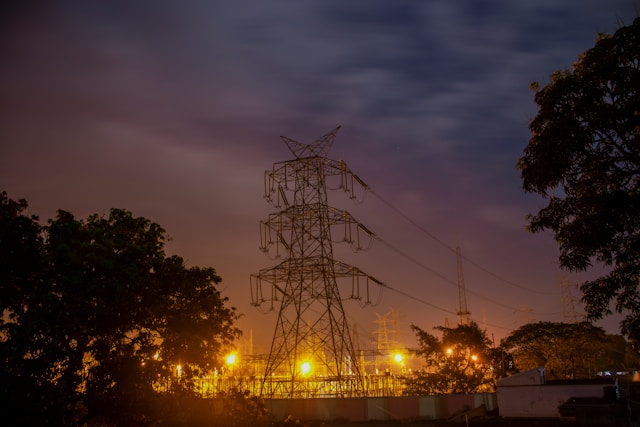
NTPC Limited is India’s largest integrated power company and one of the country’s most strategically important public sector enterprises. Since its establishment in 1975, the company has expanded from a thermal power producer into a diversified energy business spanning coal, gas, hydro, solar, wind, nuclear, power trading, mining, green hydrogen, battery storage, and energy services. Today, NTPC is leading India’s energy transition while ensuring reliable and affordable electricity for the country’s growing economy.

During FY2024-25, the NTPC Group crossed 83 GW of installed capacity, generated 439 billion units (BU) of electricity, and accelerated investments in renewable energy, battery storage, green hydrogen, and nuclear power. The company has also set an ambitious target of developing 60 GW of renewable energy capacity by 2032, reflecting its long-term commitment to sustainable growth.
The following SWOT analysis is based on NTPC’s FY2024-25 Integrated Annual Report.

NTPC Business Model in 2026: How Does NTPC Make Money?
Strengths
1. India’s Largest Integrated Power Company
NTPC is India’s largest power producer with an installed capacity exceeding 83 GW and one of the country’s largest electricity generation portfolios. Its scale provides significant operational efficiencies, strong market leadership, and a stable revenue base.
2. Diversified Energy Portfolio
The company operates across coal, gas, hydro, solar, wind, nuclear, power trading, mining, consultancy, battery storage, and green hydrogen, reducing dependence on a single energy source while strengthening long-term growth opportunities.

3. Strong Renewable Energy Pipeline
NTPC has positioned renewable energy at the centre of its future strategy, targeting 60 GW of renewable energy capacity by 2032 through solar, wind, hydro, hybrid projects, and strategic acquisitions.
4. Integrated Energy Value Chain
Beyond electricity generation, NTPC operates captive coal mines, power trading businesses, consultancy services, electric mobility initiatives, and energy infrastructure projects. This integrated model strengthens energy security while creating multiple revenue streams.
5. Strong Government Support and Strategic Importance
As a leading public sector enterprise, NTPC plays a critical role in India’s energy security and infrastructure development. Its strategic importance supports long-term investments in conventional and renewable energy projects.
NTPC Business Strategy in 2026
Weaknesses
1. High Dependence on Thermal Power
Although renewable energy is expanding rapidly, coal-based generation continues to contribute a significant portion of NTPC’s installed capacity and electricity generation, exposing the company to long-term decarbonisation challenges.
2. Capital-Intensive Business Model
Developing power plants, renewable projects, mining operations, transmission infrastructure, and emerging energy technologies requires substantial capital investment and long project execution timelines.
3. Exposure to Fuel Availability
Thermal power operations depend on consistent coal and gas availability. Any disruption in fuel supply or increase in fuel costs can affect operational efficiency and profitability.
4. Long Gestation Periods
Large-scale power generation and infrastructure projects often require lengthy regulatory approvals, construction periods, and significant upfront investments before generating returns.
5. Complex Multi-Business Operations
Managing conventional power plants alongside renewable energy, mining, nuclear projects, green hydrogen, consultancy, and energy services increases operational complexity and execution requirements.
Opportunities
1. Rapid Growth in Renewable Energy
India’s clean energy transition provides significant opportunities for NTPC to expand its solar, wind, hydro, hybrid, and battery storage businesses while achieving its 60 GW renewable capacity target by 2032.
2. Green Hydrogen and Emerging Energy Technologies
Investments in green hydrogen, green ammonia, green methanol, carbon capture, battery energy storage systems (BESS), and pumped storage projects position NTPC to benefit from future low-carbon energy markets.
3. Rising Electricity Demand
India’s economic growth, urbanisation, industrialisation, electrification, and digital infrastructure expansion are expected to drive sustained long-term demand for electricity.
4. Expansion Across the Energy Value Chain
Continued growth in coal mining, power trading, consultancy, electric mobility, and energy infrastructure provides additional revenue opportunities beyond traditional power generation.
5. Nuclear Energy Development
The company’s planned investments in nuclear power strengthen its long-term clean energy portfolio while supporting India’s future energy security objectives.
Threats
1. Stricter Environmental Regulations
Increasing carbon emission standards, environmental regulations, and climate-related policies may require additional investments in cleaner technologies and emission control systems.
2. Rapid Energy Transition
The accelerating shift towards renewable energy may reduce the long-term role of conventional thermal power generation, requiring continuous portfolio transformation.
3. Fuel Price and Supply Risks
Volatility in coal and gas prices, transportation costs, and fuel availability can affect operating costs and plant performance.
4. Project Execution Risks
Large infrastructure projects are exposed to risks such as regulatory delays, land acquisition challenges, construction delays, cost overruns, and technology implementation issues.
5. Technology and Market Evolution
Rapid advancements in renewable energy, battery storage, hydrogen technologies, and distributed energy systems require continuous investment to remain competitive in the evolving energy landscape.
Source: NTPC Annual Report 2026