
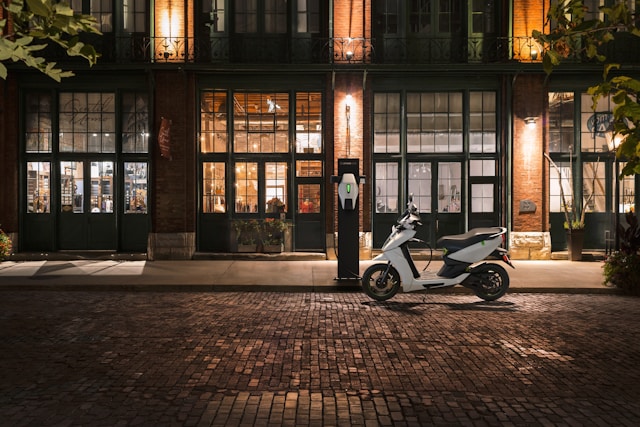
Ather Energy Limited has positioned itself as one of India’s most technology-driven electric vehicle companies by pursuing a strategy that extends beyond manufacturing electric scooters. Rather than competing solely on price or production scale, the company has built its competitive advantage around premium products, vertically integrated technology, proprietary software, charging infrastructure, and an end-to-end customer ownership experience. This integrated approach enables Ather to differentiate itself in an increasingly competitive electric two-wheeler market while creating multiple long-term growth opportunities.

Since its inception in 2013, Ather has consistently focused on developing core technologies in-house. The company designs 80% of its key hardware components and 100% of its software stack, allowing it to control product quality, accelerate innovation, and rapidly introduce new features through over-the-air (OTA) updates. This technology-led strategy has enabled Ather to build proprietary assets such as the AtherStack connected software platform and the Ather Grid fast-charging network, creating an integrated ecosystem that is difficult for competitors to replicate.
Ather’s strategy also revolves around serving the premium segment of the electric two-wheeler market. Instead of targeting mass-market affordability alone, the company emphasizes superior performance, intelligent connectivity, safety, design, and customer experience. The launch of the Ather Rizta in FY2025 expanded its portfolio beyond performance enthusiasts to include family-oriented customers, allowing the company to increase its addressable market while maintaining its premium brand positioning. During FY2025, Ather sold over 155,000 electric scooters, taking cumulative sales since inception to more than 388,000 units.

Innovation remains central to Ather’s long-term strategy. Nearly 46% of the company’s on-roll workforce is engaged in research and development, supporting advancements in battery technology, software engineering, vehicle platforms, manufacturing processes, and connected mobility solutions. Simultaneously, Ather continues to expand its retail footprint, service network, and charging infrastructure to improve accessibility and strengthen customer confidence in electric mobility. As of March 31, 2025, the company operated 375 Experience Centres, 282 Service Centres, and 3,611 Ather Grid charging points across India, Nepal, and Sri Lanka.
Looking ahead, Ather’s business strategy focuses on scaling through new modular vehicle platforms, expanding manufacturing capacity, increasing recurring software revenue, strengthening its charging ecosystem, and selectively entering international markets. By combining product innovation, technology ownership, customer-centric design, and ecosystem development, the company aims to build a sustainable competitive advantage in the rapidly evolving electric mobility industry.
This article analyzes Ather Energy’s Business Strategy based on the FY2025 Annual Report. It explores the company’s strategic priorities, growth initiatives, competitive positioning, key challenges, and future roadmap for building a leading electric mobility ecosystem in India and beyond.

Ather Energy Business Model in 2026: How Ather Makes Money
Ather’s Strategic Pillars
Ather Energy’s business strategy is built on a set of long-term strategic pillars that differentiate the company from conventional two-wheeler manufacturers. Rather than competing primarily on price or production scale, Ather focuses on technology leadership, premium customer experience, vertical integration, and continuous innovation. These strategic priorities enable the company to build sustainable competitive advantages while positioning itself as a leading player in India’s rapidly expanding electric mobility market.
1. Premium Brand Positioning
Ather has deliberately positioned itself as a premium electric mobility brand instead of targeting the mass-market segment. The company’s strategy emphasizes performance, design, quality, safety, and advanced technology, appealing to customers who value a superior ownership experience over the lowest purchase price. Its product portfolio, comprising the Ather 450 series for performance enthusiasts and the Ather Rizta range for family-oriented customers, enables the company to serve multiple premium customer segments while maintaining a consistent brand identity. This positioning supports stronger customer loyalty and helps differentiate Ather in an increasingly crowded EV market.
2. Vertically Integrated Technology Platform
A key pillar of Ather’s strategy is owning its core technologies rather than relying heavily on external suppliers. The company develops 80% of its key hardware components and 100% of its software stack internally, including battery management systems, vehicle control units, dashboards, power electronics, and connected software. This vertical integration gives Ather greater control over product quality, innovation, supply chain resilience, and time-to-market while enabling continuous optimization of vehicle performance and manufacturing efficiency.
3. Software-Defined Mobility Ecosystem
Unlike traditional automobile manufacturers, Ather views software as a core competitive advantage. Through its proprietary AtherStack platform, the company delivers over-the-air (OTA) software updates, navigation, ride analytics, cloud connectivity, smart diagnostics, Alexa integration, and numerous connected vehicle features that continue to evolve after purchase. By treating the scooter as a connected digital platform rather than a standalone vehicle, Ather enhances customer engagement, improves the ownership experience, and creates opportunities for recurring software-based revenue through products such as the AtherStack Pro Pack.
4. Customer-Centric Ownership Experience
Ather’s strategy extends beyond selling electric scooters to creating a seamless ownership journey. The company has invested heavily in an integrated ecosystem comprising Experience Centres, Service Centres, Ather Grid fast-charging infrastructure, mobile applications, smart accessories, and responsive after-sales support. Initiatives such as ExpressCare and the Halo Smart Helmet further enhance convenience and customer satisfaction. This ecosystem-driven approach strengthens customer relationships, encourages repeat purchases, and differentiates Ather from manufacturers that focus primarily on vehicle sales.
5. Continuous Innovation through R&D
Research and development forms the foundation of Ather’s long-term strategy. Approximately 46% of the company’s on-roll employees work in research and development, focusing on battery technologies, software engineering, vehicle architecture, electronics, and manufacturing innovation. Continuous investment in R&D has enabled Ather to launch new vehicle platforms, improve battery performance, enhance software capabilities, reduce production costs, and strengthen its intellectual property portfolio. This innovation-led strategy supports sustainable differentiation in a fast-evolving industry.
6. Capital-Efficient Scaling Strategy
While Ather retains ownership of critical technologies and product development, it follows a capital-efficient operating model to support long-term growth. The company leverages partner-managed retail operations, strategic supplier relationships, and modular manufacturing capabilities while concentrating investments on technology, engineering, and product innovation. Simultaneously, Ather is expanding manufacturing capacity, strengthening its distribution network, and developing scalable vehicle platforms that can support future product launches. This balanced strategy enables the company to pursue growth while maintaining operational flexibility and improving long-term profitability.
Ather Energy SWOT Analysis in 2026
Growth Strategy
Ather Energy’s growth strategy focuses on expanding its addressable market while strengthening the integrated electric mobility ecosystem it has built over the past decade. Rather than relying solely on increasing vehicle sales, the company is investing across product development, manufacturing, charging infrastructure, software, retail expansion, and international markets. This diversified growth strategy is designed to create sustainable competitive advantages, improve operating leverage, and position Ather for long-term leadership in the electric two-wheeler industry.
1. Expanding the Product Portfolio
Ather is broadening its product portfolio to serve a wider range of customer segments. While the Ather 450 series established the company in the premium performance scooter segment, the launch of the Ather Rizta in FY2025 marked its entry into the family-oriented electric scooter market. Looking ahead, Ather is developing the EL scooter platform and the Zenith motorcycle platform, which will support multiple future products across different price points and customer needs. This platform-based strategy enables faster product launches, lower development costs, and access to a significantly larger addressable market.
2. Scaling Manufacturing Capacity
To support future demand, Ather is expanding its manufacturing capabilities beyond its existing facilities. The company is establishing a new manufacturing plant in Aurangabad, Maharashtra, which will significantly increase production capacity and improve operational scalability. Alongside capacity expansion, Ather continues to optimize manufacturing processes, increase automation, and reduce bill-of-material (BOM) costs through engineering improvements and modular product platforms. These initiatives are expected to enhance productivity, improve gross margins, and support profitable growth as production volumes increase.
3. Expanding Retail and Service Network
Ather continues to strengthen its physical presence by expanding its network of Experience Centres and Service Centres across India. As of FY2025, the company operated 375 Experience Centres and 282 Service Centres, providing customers with greater accessibility for sales, servicing, and after-sales support. The company follows a partner-led retail model that enables rapid geographic expansion while maintaining capital efficiency. A wider distribution network not only improves customer reach but also enhances brand visibility and supports higher vehicle adoption across both metropolitan and emerging markets.
4. Strengthening Ather Grid Charging Infrastructure
Charging infrastructure remains a critical component of Ather’s long-term growth strategy. The company continues to expand Ather Grid, India’s largest electric two-wheeler fast-charging network, which comprised 3,611 charging points across India, Nepal, and Sri Lanka as of March 2025. In addition, Ather has promoted interoperability through the Light Electric Combined Charging System (LECCS), a BIS-recognized charging standard. By improving charging accessibility and convenience, Ather aims to reduce one of the biggest barriers to EV adoption while reinforcing customer confidence in its ecosystem.
5. Increasing Software and Digital Revenue
Ather is increasingly positioning software as a strategic growth engine. Through its proprietary AtherStack platform, the company offers premium connected features, over-the-air (OTA) software updates, navigation, ride analytics, and cloud-based services. With 88% of customers subscribing to the AtherStack Pro Pack, software already contributes a meaningful share of revenue. As the installed base of vehicles expands, Ather plans to introduce additional connected services and digital offerings that can generate recurring revenue while strengthening customer engagement and lifetime value.
6. International Market Expansion
Although India remains Ather’s primary market, the company has begun expanding internationally with operations in Nepal and Sri Lanka. Over the long term, Ather intends to selectively enter additional international markets where demand for premium electric two-wheelers is increasing. Its technology-led products, proprietary software platform, charging ecosystem, and scalable manufacturing capabilities provide a strong foundation for international growth. Geographic diversification also enables Ather to reduce dependence on a single market while leveraging global opportunities in electric mobility.
Ather Energy PESTEL Analysis in 2026
Competitive Strategy
Ather Energy competes by differentiating itself through technology, innovation, and customer experience rather than participating in aggressive price competition. While many electric two-wheeler manufacturers focus on expanding production volumes or offering lower-priced models, Ather has built its competitive strategy around proprietary technology, vertically integrated engineering, software-defined mobility, and a comprehensive ownership ecosystem. This strategy enables the company to create sustainable competitive advantages that are difficult for competitors to replicate.
1. Differentiation through Technology
Technology is the cornerstone of Ather’s competitive strategy. The company develops 80% of its key hardware components and 100% of its software stack in-house, including battery management systems, vehicle control units, dashboards, power electronics, and connected vehicle software. This deep engineering capability enables Ather to deliver superior vehicle performance, faster product innovation, higher reliability, and continuous product improvements. By controlling critical technologies internally, the company reduces dependence on external suppliers while maintaining greater flexibility in product development.
2. Building a Proprietary Software Ecosystem
Unlike traditional two-wheeler manufacturers that primarily compete on mechanical engineering, Ather positions software as a key source of competitive advantage. Its proprietary AtherStack platform provides over-the-air (OTA) software updates, navigation, ride analytics, cloud connectivity, live location sharing, smart diagnostics, Alexa integration, and numerous connected features that continuously evolve after purchase. With 88% of customers opting for the AtherStack Pro Pack, the software ecosystem enhances customer engagement while creating recurring revenue opportunities that extend beyond vehicle sales.
3. Vertical Integration as a Competitive Advantage
Ather follows a vertically integrated strategy that gives it greater control over product development, quality, and innovation. By designing core hardware and software internally, the company can optimize vehicle performance, accelerate product development cycles, improve supply chain resilience, and reduce long-term manufacturing costs. This strategy also enables tighter integration between hardware, software, batteries, charging infrastructure, and customer services, creating a more seamless user experience than competitors that rely heavily on third-party technologies.
4. Premium Customer Experience
Rather than competing solely on affordability, Ather differentiates itself by delivering a premium ownership experience. Customers benefit from modern Experience Centres, a widespread Service Centre network, ExpressCare servicing, the Ather Grid fast-charging network, smart accessories such as the Halo Smart Helmet, and a connected mobile application. These touchpoints create a consistent customer experience across the entire ownership lifecycle, strengthening satisfaction, brand loyalty, and customer retention while supporting Ather’s premium positioning.
5. Ecosystem-Based Customer Lock-In
Ather’s competitive strategy extends beyond individual products to building an integrated electric mobility ecosystem. Its scooters, AtherStack software, Ather Grid charging infrastructure, mobile application, connected services, smart accessories, and after-sales support work together to create a unified ownership experience. As customers become more integrated into this ecosystem, switching to another brand becomes less attractive due to the convenience, familiarity, and value offered by Ather’s interconnected products and services. This ecosystem approach strengthens long-term customer relationships while increasing customer lifetime value.
6. Brand and Community Building
Ather complements its technology strategy by building a strong premium brand and an engaged customer community. Through experience-led retail outlets, owner events, digital engagement, customer feedback programs, and continuous software enhancements, the company fosters long-term relationships with its users. This community-driven approach not only strengthens brand advocacy but also provides valuable customer insights that support future product development and innovation. By combining premium branding with continuous engagement, Ather reinforces its competitive positioning in India’s evolving electric mobility market.
Strategic Challenges
As Ather Energy continues to scale its operations, it faces several strategic challenges that could influence its long-term growth and profitability. While the company has established strong competitive advantages through technology, software, and premium positioning, it operates in a rapidly evolving electric vehicle market characterized by intense competition, changing regulations, and continuous technological advancements. Successfully addressing these challenges will be critical to sustaining growth and strengthening its leadership position in the electric two-wheeler industry.
1. Rising Competition in India’s EV Market
India’s electric two-wheeler market has become increasingly competitive, with both established automobile manufacturers and new-age EV companies expanding their product portfolios. Competitors are investing aggressively in pricing, technology, manufacturing capacity, and distribution networks to capture market share. This competitive intensity could place pressure on Ather’s pricing power, customer acquisition costs, and market share, requiring the company to continuously innovate and strengthen its brand differentiation.
2. Achieving Sustainable Profitability
Although Ather has demonstrated strong revenue growth, achieving sustainable profitability remains a key strategic objective. The company continues to invest heavily in research and development, manufacturing expansion, charging infrastructure, retail network growth, and technology development. Balancing these long-term investments with improvements in gross margins, operating efficiency, and economies of scale will be essential for creating a financially sustainable business model.
3. Managing Supply Chain and Battery Costs
Battery cells, electronic components, semiconductors, and critical raw materials remain essential inputs for electric vehicle manufacturing. Fluctuations in commodity prices, supply chain disruptions, or dependence on global suppliers can impact production costs and manufacturing schedules. As Ather expands production, maintaining a resilient supply chain while reducing bill-of-material (BOM) costs through engineering innovation and supplier partnerships will remain an important strategic priority.
4. Scaling Manufacturing Without Compromising Quality
Ather is expanding its manufacturing capacity to support future demand through its new facility in Aurangabad, Maharashtra and the development of modular vehicle platforms. However, rapidly increasing production volumes while maintaining product quality, operational efficiency, and customer satisfaction presents a significant execution challenge. Ensuring consistent manufacturing standards and quality control across larger production volumes will be critical to preserving Ather’s premium brand reputation.
5. Expanding Beyond Premium Customers
Ather’s premium positioning has enabled it to build a strong brand, but it also limits its addressable customer base in a price-sensitive market. As electric vehicle adoption accelerates across India, the company will need to expand into broader customer segments without diluting its premium identity. Successfully balancing affordability, innovation, and profitability while attracting new customers represents an important strategic challenge for future growth.
6. Navigating Regulatory and Policy Changes
The electric vehicle industry is significantly influenced by government policies, safety regulations, localization requirements, and incentive schemes. Changes in subsidy programs, taxation, battery safety standards, import regulations, or environmental compliance requirements could affect demand, production costs, and investment decisions. Ather must remain agile in responding to evolving regulatory frameworks while continuing to invest in compliance, product safety, and localized manufacturing capabilities.
Future of Ather’s Business Strategy
Ather Energy’s future business strategy is centered on evolving from a premium electric scooter manufacturer into a comprehensive electric mobility technology company. The company intends to leverage its vertically integrated engineering capabilities, proprietary software, expanding charging ecosystem, and modular vehicle platforms to accelerate growth while improving profitability. As India’s electric two-wheeler market matures, Ather aims to strengthen its competitive position by expanding its product portfolio, increasing recurring revenue, and building a scalable ecosystem that extends beyond vehicle sales.
1. Becoming a Multi-Platform EV Company
Ather’s next phase of growth will be driven by platform-based product development. The company is investing in the EL scooter platform and the Zenith motorcycle platform, which are designed to support multiple electric vehicle models across different customer segments. By leveraging modular architectures, Ather can reduce development timelines, improve component standardization, and achieve greater economies of scale. This strategy enables the company to expand beyond premium scooters and address a wider spectrum of India’s electric two-wheeler market.
2. Expanding Recurring Revenue Streams
While vehicle sales currently contribute the majority of revenue, Ather is strategically increasing its focus on recurring income. The AtherStack software platform, premium connected services, smart accessories, extended warranties, maintenance services, and future digital offerings provide opportunities to generate predictable revenue throughout the vehicle ownership lifecycle. As Ather’s installed vehicle base continues to grow, these recurring revenue streams are expected to contribute a larger share of total income while strengthening customer retention and lifetime value.
3. AI-Driven Connected Mobility
Software and intelligent connectivity will continue to define Ather’s competitive strategy. The company is expected to enhance AtherStack with more advanced connected features, predictive diagnostics, intelligent energy management, personalized riding insights, and deeper integration between vehicles, charging infrastructure, and digital services. As connected mobility technologies evolve, Ather’s software-first approach positions it to deliver continuous improvements through over-the-air (OTA) updates while creating increasingly personalized customer experiences.
4. Building India’s Largest Electric Mobility Ecosystem
Ather plans to strengthen its integrated ecosystem by expanding Ather Grid, enhancing its retail and service network, and broadening its portfolio of software, accessories, and customer services. By combining premium vehicles, charging infrastructure, connected software, smart accessories, and after-sales support into a unified platform, the company aims to create an ecosystem that encourages long-term customer engagement and differentiates Ather from manufacturers focused solely on vehicle production. This ecosystem strategy is expected to remain one of the company’s strongest competitive advantages.
5. Driving Cost Leadership Through Scale
As production volumes increase, Ather intends to improve operational efficiency through manufacturing expansion, modular vehicle platforms, supply chain optimization, and continuous engineering improvements. The new manufacturing facility in Aurangabad, Maharashtra, combined with higher localization and bill-of-material (BOM) optimization, is expected to enhance economies of scale and improve profitability. Achieving cost efficiencies without compromising product quality will be essential for sustaining growth while maintaining the company’s premium positioning.
6. Long-Term Vision for Global Expansion
Although India remains Ather’s primary market, the company views international expansion as an important long-term growth opportunity. Having already established operations in Nepal and Sri Lanka, Ather plans to selectively enter additional markets where demand for premium electric two-wheelers is increasing. Supported by its proprietary technology, software platform, scalable manufacturing capabilities, and integrated ownership ecosystem, the company aims to build a globally recognized electric mobility brand while leveraging the worldwide transition toward sustainable transportation.