Axis Bank operates in one of the world’s fastest-growing banking markets, where macroeconomic trends, government policies, technology adoption, sustainability expectations, and evolving regulations significantly influence long-term performance. As a universal financial services institution, the Bank serves retail customers, MSMEs, corporates, institutions, governments, and international businesses through an integrated ecosystem of banking, lending, wealth management, insurance, asset management, fintech, and capital market services.
The FY2024-25 Integrated Annual Report highlights that Axis Bank’s long-term strategy is built around six strategic pillars, including digital transformation, financial inclusion, nation-building, stakeholder value creation, and sustainability. These priorities are closely linked to external political, economic, technological, environmental, and regulatory developments that shape India’s banking industry.
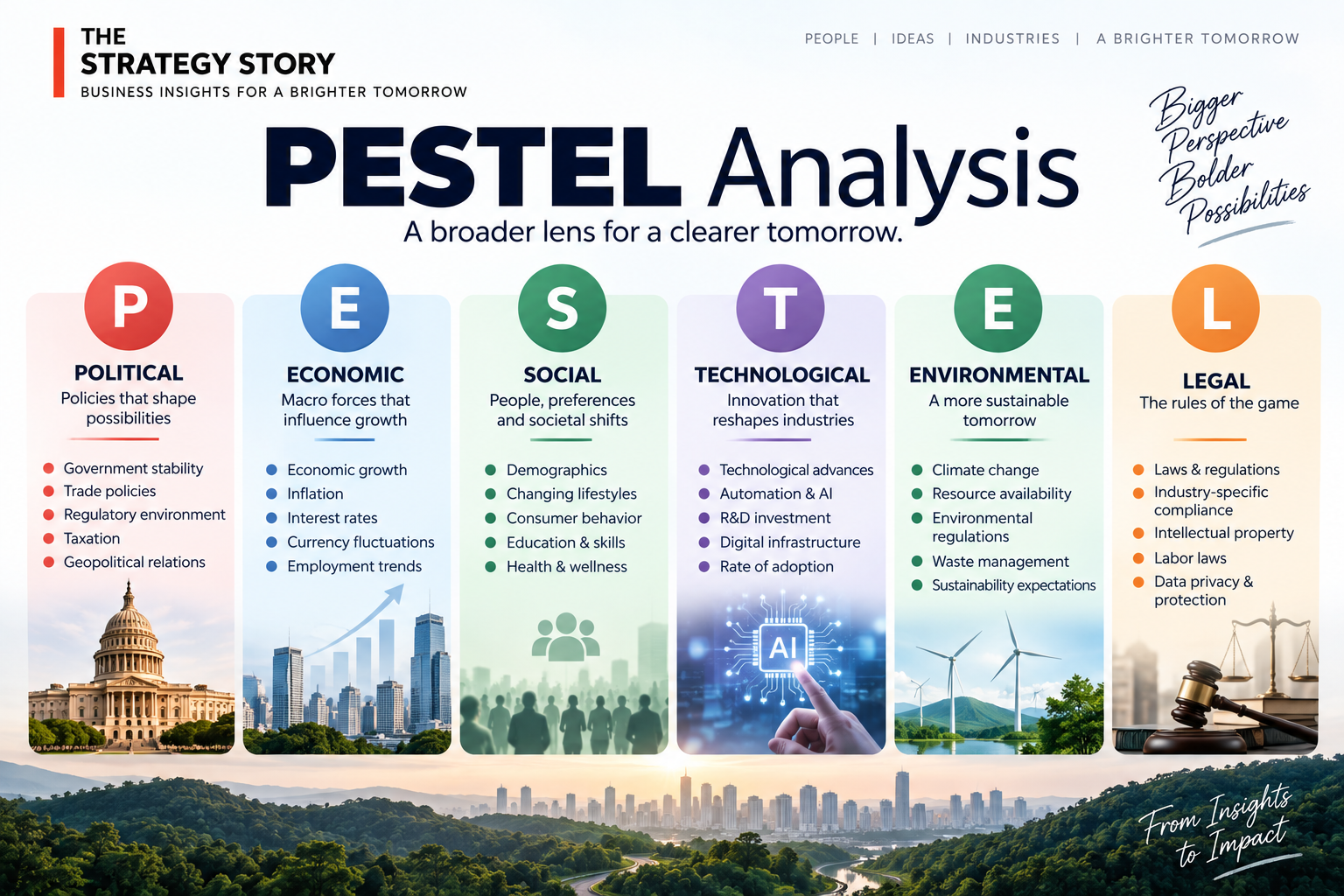
The following PESTEL analysis examines the major external factors influencing Axis Bank’s business environment based on its FY2024-25 Integrated Annual Report.
Axis Bank Business Model in 2026: How Axis Bank Makes Money
Political Factors
1. Government Focus on Financial Inclusion
Government initiatives promoting financial inclusion, digital banking, rural banking, and Direct Benefit Transfers (DBT) create significant growth opportunities for Axis Bank’s Bharat Banking strategy and branch expansion across underserved regions.
2. Public Sector Digital Infrastructure
India’s continued investment in digital public infrastructure, including digital identity, payments, and e-governance, supports greater adoption of banking services while improving customer acquisition and service delivery for private-sector banks.
3. Infrastructure and Manufacturing Policies
Government investments in infrastructure, manufacturing, logistics, MSMEs, and industrial development increase demand for corporate lending, trade finance, project finance, and transaction banking services offered by Axis Bank.
4. Nation-building Partnerships
Axis Bank actively collaborates with government institutions across taxation, agriculture, education, healthcare, transportation, Smart Cities, and public finance, making government partnerships an important strategic growth area.
5. Stable Banking Policy Environment
A stable regulatory and policy environment encourages credit growth, digital innovation, investment, and financial sector expansion, supporting the Bank’s long-term growth strategy.
Axis Bank Business Strategy in 2026
Economic Factors
1. India’s Strong Economic Growth
India’s expanding economy continues to increase demand for retail banking, MSME financing, corporate lending, wealth management, payments, and investment products, providing long-term growth opportunities for Axis Bank.
2. Rising Household Wealth
Growing disposable incomes and increasing financialisation of savings create opportunities for Axis Bank to expand deposits, wealth management, mutual funds, insurance distribution, and investment advisory services.
3. Interest Rate Movements
Changes in interest rates directly affect lending margins, deposit costs, borrowing demand, treasury performance, and profitability, making interest rate management a key economic factor for the Bank.
4. Growth of MSMEs and Corporate Banking
The expansion of India’s MSME sector, manufacturing industry, startups, and infrastructure projects increases demand for commercial lending, cash management, trade finance, and treasury solutions.
5. Global Economic Uncertainty
Inflation, geopolitical tensions, global financial market volatility, and slower international growth could affect credit demand, asset quality, foreign exchange markets, and corporate investment decisions.
Axis Bank SWOT Analysis in 2026
Social Factors
1. Growing Digital Adoption
Customers increasingly prefer mobile banking, online payments, AI-enabled support, and digital financial services, encouraging Axis Bank to accelerate its digital-first strategy and customer experience initiatives.
2. Expanding Financial Awareness
Higher financial literacy and greater awareness of investments, insurance, and wealth creation are increasing demand for diversified financial products beyond traditional banking.
3. Rural Financial Inclusion
Growing access to formal banking services across rural and semi-urban India supports Axis Bank’s Bharat Banking initiatives and customer acquisition strategy.
4. Increasing Customer Expectations
Customers expect faster, personalised, omnichannel banking experiences, requiring continuous improvements in service quality, digital onboarding, and relationship management.
5. Greater Focus on Trust and Customer Experience
Strong governance, transparent banking practices, responsible lending, and superior customer service have become critical differentiators in attracting and retaining customers.
Technological Factors
1. Artificial Intelligence and Automation
Axis Bank continues investing in AI-powered customer support, automation, analytics, and intelligent banking platforms to improve operational efficiency and customer experience.
2. Digital Banking Transformation
Platforms such as open, neo, WhatsApp Banking, mobile banking, API-based services, and digital onboarding are transforming customer engagement while reducing servicing costs.
3. Cybersecurity Requirements
Growing digital banking adoption requires continuous investment in cybersecurity, fraud prevention, operational resilience, and customer data protection.
4. Cloud Computing and Data Analytics
Advanced analytics, cloud infrastructure, API integration, and data-driven decision-making improve risk management, product personalisation, and operational scalability.
5. Fintech Collaboration
The Bank continues collaborating with fintech companies and expanding digital ecosystems through platforms such as Freecharge and A.TReDS, strengthening innovation and customer reach.
Environmental Factors
1. Climate Change Risks
Climate-related risks increasingly influence lending portfolios, operational resilience, risk management, and long-term financial planning within the banking industry.
2. Green Finance Opportunities
Growing investments in renewable energy, sustainable infrastructure, and ESG-linked financing create new lending and advisory opportunities for Axis Bank.
3. Sustainable Banking Strategy
The Bank has integrated sustainability into governance, business strategy, lending decisions, and stakeholder engagement through its ‘Embracing the Green Way’ strategic pillar.
4. Operational Sustainability
Axis Bank continues improving resource efficiency, reducing environmental impact, and promoting sustainable practices across its operations and infrastructure.
5. Rising ESG Expectations
Investors, regulators, customers, and other stakeholders increasingly expect financial institutions to demonstrate measurable ESG performance and transparent sustainability reporting.
Legal Factors
1. Banking Regulations
Axis Bank operates under extensive RBI regulations governing capital adequacy, lending, liquidity, governance, risk management, and consumer protection, making regulatory compliance a critical operational requirement.
2. Data Privacy Regulations
The expansion of digital banking increases compliance requirements related to customer data protection, cybersecurity, and privacy regulations.
3. ESG and Sustainability Reporting
Increasing disclosure requirements around ESG performance, climate risk, and sustainability reporting influence governance practices and long-term strategic planning.
4. Anti-Money Laundering and Financial Crime Compliance
Axis Bank must continuously strengthen systems for Know Your Customer (KYC), anti-money laundering (AML), fraud prevention, and transaction monitoring to comply with evolving regulatory expectations.
5. Consumer Protection Regulations
Evolving regulations related to digital banking, customer grievance redressal, fair lending practices, transparency, and financial services continue shaping product design, customer engagement, and operational processes.
Source: Axis Bank Annual Report 2024-25