
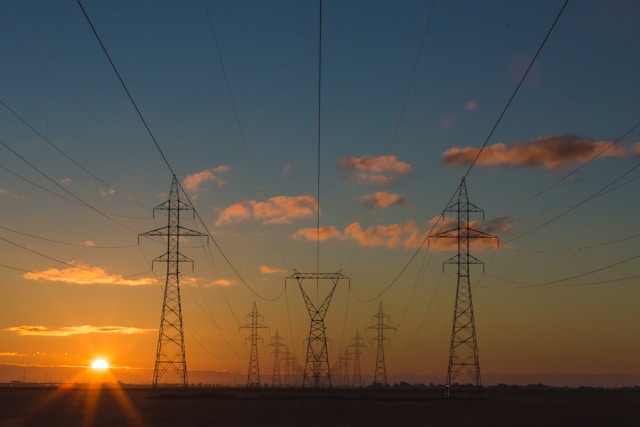
GE Vernova’s external environment in 2026 is being shaped by a global race for more electricity. AI data centers, manufacturing, electrification and energy security are increasing power demand while governments simultaneously pursue decarbonization. With $38.1 billion of 2025 revenue and $150.2 billion of backlog, GE Vernova is exposed not only to technology demand but to policy, capital markets, supply chains and regulation.

Political Factors
1. Energy security is now industrial policy
Governments increasingly view reliable electricity as essential to national security and economic competitiveness. This can support investment in domestic generation, grids and manufacturing, benefiting GE Vernova’s broad portfolio.
2. Renewable policy directly affects Wind demand
Wind projects depend heavily on permitting, tax incentives and regulatory certainty. U.S. onshore wind customers faced policy uncertainty in 2025, demonstrating how political changes can delay orders even when long-term electricity demand is strong.

3. Nuclear policy can unlock a new investment cycle
Government support is critical to licensing and financing small modular reactors. GE Vernova’s BWRX-300 progress and U.S.-Japan cooperation illustrate how public policy can accelerate nuclear commercialization.
4. Trade policy affects industrial supply chains
Tariffs and localization requirements can change the cost of components and manufacturing. GE Vernova must balance global scale with growing political pressure for domestic energy supply chains.
5. Grid permitting can become the bottleneck
Generation capacity has limited value if transmission projects cannot be approved. Faster grid permitting can accelerate Electrification demand; delays can slow the conversion of backlog into customer projects.

Related: GE Vernova Business Model in 2026
Economic Factors
1. Electricity demand is entering a capital-intensive growth cycle
AI, manufacturing and electrification require substantial new generation and grid investment. GE Vernova benefits because customers must spend on both power supply and electrical infrastructure.
2. Interest rates influence project economics
Power projects require large upfront capital. Higher financing costs can delay wind, grid and generation projects, particularly where returns depend on long-term contracted cash flows.
3. Backlog creates visibility but locks in execution obligations
GE Vernova’s $150 billion backlog provides future revenue visibility, yet long-duration contracts expose the company to inflation and cost changes. Better underwriting is essential to protect margin.
4. Services reduce cyclicality
Services represented $17.1 billion of 2025 revenue. Because existing turbines require maintenance regardless of new-build cycles, service revenue can partially cushion changes in equipment demand.
5. Manufacturing constraints can support pricing
When transformers, gas turbines and switchgear are scarce, suppliers with available capacity gain negotiating power. GE Vernova’s capacity investments can therefore influence both volume and pricing.
Related: GE Vernova Business Strategy in 2026
Social Factors
1. Society expects reliable electricity
Power interruptions disrupt homes, hospitals, industry and digital services. Reliability supports investment in dispatchable generation, grid resilience and maintenance.
2. AI changes public expectations for power infrastructure
Data centers create jobs and digital capability but also consume large amounts of electricity. Communities increasingly scrutinize whether new loads raise prices or strain local grids.
3. Decarbonization expectations influence technology choices
Customers and governments want lower-carbon electricity while preserving affordability. GE Vernova’s portfolio must help customers navigate this trade-off rather than assume one technology fits every market.
4. Skilled industrial labor is increasingly important
GE Vernova hired more than 1,500 incremental U.S. production workers in Power and Electrification during 2025. Expanding capacity depends on attracting and training workers in specialized manufacturing roles.
5. Safety is fundamental to social license
Large turbines, factories and electrical systems involve significant occupational and public safety risks. Strong safety performance is necessary to retain employees, customers and community trust.
Related: GE Vernova SWOT Analysis in 2026
Technological Factors
1. AI creates demand for power technology
AI is both a productivity tool and an end-market driver. Data centers require generation and grid equipment, giving GE Vernova direct exposure to the physical infrastructure behind digital growth.
2. AI can improve industrial productivity
GE Vernova plans to use AI assistants, robotics and proprietary installed-base data across engineering, manufacturing and service. The payoff can appear through lower cost, faster design and better uptime rather than software revenue alone.
3. Small modular reactors could reshape nuclear economics
SMRs aim to standardize nuclear construction and reduce project complexity. Successful commercialization of the BWRX-300 could create a new equipment and service platform.
4. Grid technology must evolve with distributed generation
Renewables and data centers change power flows. HVDC, advanced transformers, storage and grid software become more valuable as networks need greater flexibility and control.
5. Carbon capture can extend gas technology relevance
If carbon capture becomes economical at scale, gas generation could provide dispatchable power with lower emissions, extending the useful life of GE Vernova’s gas franchise.
Environmental Factors
1. Climate goals support low-carbon generation
Decarbonization policies create demand for wind, nuclear, hydro and technologies that reduce gas emissions. GE Vernova can participate across several pathways rather than relying on one solution.
2. Renewable variability increases balancing needs
Higher wind and solar penetration can increase the need for flexible generation, storage and grid equipment. Environmental policy can therefore indirectly support Gas Power and Electrification as well as renewables.
3. Extreme weather increases grid-resilience requirements
Heat, storms and other climate-related events can stress electricity systems. Utilities may invest more in resilient transmission and equipment to reduce outage risk.
4. Industrial manufacturing has its own footprint
Turbines, transformers and electrical equipment require materials and energy-intensive manufacturing. GE Vernova must improve factory efficiency while expanding output.
5. Product lifecycle performance matters more than factory emissions alone
GE Vernova equipment operates for decades. Efficiency improvements in turbines and grids can influence customer emissions far more than short-term manufacturing changes, making product innovation central to environmental impact.
Legal Factors
1. Product quality creates long-tail liability
Equipment failures can lead to warranty claims, contractual penalties and litigation years after delivery. Quality systems are therefore both operational and legal risk controls.
2. Environmental permits influence project timing
Power plants, wind farms and transmission infrastructure require extensive approvals. Delays can shift revenue recognition and increase project costs.
3. International operations create compliance complexity
GE Vernova operates across numerous jurisdictions and must comply with anti-corruption, sanctions, trade and procurement rules. Large government-linked energy projects can increase compliance exposure.
4. Cybersecurity regulation affects grid software
Electricity infrastructure is critical national infrastructure. As GE Vernova digitizes grids and services, cybersecurity obligations and liability become more important.
5. Long-term contracts require disciplined legal underwriting
Project terms allocate inflation, delay, performance and warranty risks between supplier and customer. Contract quality can determine profitability years after an order is booked.
Strategic Interpretation
GE Vernova benefits from a rare convergence of political, economic and technological forces: governments want energy security, AI requires more electricity, and grids need modernization regardless of the generation mix. This creates demand across Power and Electrification.
But external support does not guarantee attractive returns. Wind demonstrates how policy uncertainty, project complexity and contractual risk can undermine economics. The company’s ability to price risk and execute long-cycle projects remains as important as the size of the market.
The key PESTEL conclusion for 2026 is that electricity has become strategic infrastructure for both decarbonization and digital growth. That expands GE Vernova’s opportunity while increasing regulatory, geopolitical and execution scrutiny. Its diversified portfolio is valuable precisely because the path to more electricity will differ by country and change over time.
6. Localization requirements can influence where capacity is built
Governments increasingly link energy investment to domestic jobs and supply-chain resilience. This can favor GE Vernova when it already has local manufacturing, but it can also require duplicative capacity across regions and reduce the efficiency of a globally optimized supply chain.
6. Commodity and labor inflation affect backlog profitability
Steel, copper, specialized components and skilled labor are major inputs into power equipment. When contracts are signed years before delivery, unexpected inflation can compress margins unless pricing formulas or procurement strategies transfer enough risk.
6. Electricity affordability can shape public acceptance
Consumers ultimately bear much of the cost of grid and generation investment. If electricity bills rise sharply, political pressure can slow projects or change the mix of technologies regulators are willing to approve.
6. Manufacturing automation can offset labor constraints
Robotics, machine vision and digital workflows can raise throughput without increasing headcount proportionally. For GE Vernova, technology adoption inside factories may be as economically important as innovation in the equipment it sells.
6. Circularity and equipment life extension create new service opportunities
Repowering and upgrading existing assets can reduce the need for complete replacement while improving efficiency. This can align environmental goals with attractive service economics, particularly across the large installed wind and gas fleets.
6. Data and AI increase privacy and intellectual-property considerations
Using operational data across customer assets can improve predictive maintenance, but it also requires clear rights over data access, cybersecurity and model outputs. As industrial AI scales, contractual treatment of proprietary operating information will become more important.
These external forces interact rather than operate independently. Political support for domestic energy can accelerate investment but also impose localization costs. AI can increase electricity demand while simultaneously improving factory productivity. Climate policy can support renewables while creating additional need for flexible generation and grid reinforcement.
This interaction is why GE Vernova’s breadth matters. The company does not need every policy or technology trend to move in the same direction. It needs electricity investment to remain structurally important and its portfolio to stay relevant as the mix changes.
Source: GE Vernova, 2025 Annual Report.