
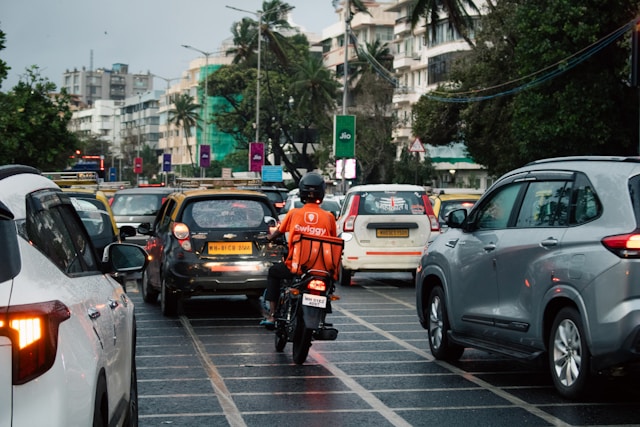
Swiggy has evolved from a food delivery startup into one of India’s leading consumer-first technology platforms for urban convenience. What began as an on-demand food delivery service has expanded into a diversified ecosystem that enables consumers to order groceries and household essentials, reserve restaurants, book live events, access professional services, and much more through a single app. Powered by a reusable technology stack, an extensive partner network, and millions of users, Swiggy has built a unified platform that connects consumers with restaurants, merchants, brands, delivery partners, and service providers. Its mission is to “Elevate the quality of life of urban consumers by offering unparalleled convenience.”
Today, Swiggy operates across five major business segments: Food Delivery, Instamart (Quick Commerce), Out-of-Home Consumption through Dineout and Scenes, Supply Chain & Distribution through Lynk, and Platform Innovations, which includes emerging businesses such as Pyng and SNACC. Rather than operating these businesses independently, Swiggy leverages a unified app, shared technology infrastructure, common delivery network, broad partner ecosystem, and its Swiggy One membership programme to create powerful network effects and increase customer engagement across multiple services. This integrated platform strategy enables the company to deepen user relationships while unlocking new revenue opportunities beyond food delivery.
This Swiggy Business Model in 2026 analyses how the company creates value and generates revenue through its integrated convenience ecosystem. Based exclusively on Swiggy Limited’s FY2025 Annual Report, the article explores the problems Swiggy solves, its multi-sided platform business model, diverse revenue streams, and the strategic initiatives positioning the company to become India’s leading urban convenience platform.
Swiggy Business Strategy in 2026
The Problem Swiggy Solves
Swiggy was created to solve one of the biggest challenges faced by urban consumers—accessing everyday essentials quickly, reliably, and conveniently. As cities become more crowded and lifestyles more demanding, consumers increasingly expect food, groceries, restaurant experiences, and other daily services to be available on demand through a single digital platform. At the same time, restaurants, merchants, brands, and service providers need efficient ways to reach customers, manage operations, and grow their businesses. Swiggy addresses these challenges by building a technology-driven platform that connects multiple participants within one integrated ecosystem.
One of the primary problems Swiggy solves is the lack of convenient access to restaurants and prepared meals. Traditionally, consumers had limited dining options beyond visiting restaurants or ordering directly from individual outlets. Swiggy simplifies this process by connecting users with a vast network of restaurant partners while providing reliable last-mile delivery through its large fleet of delivery partners. The platform also offers restaurants digital storefronts, operational tools, marketing solutions, and advertising services to help them grow their businesses.
Swiggy also addresses the growing demand for rapid delivery of groceries and household essentials. Modern consumers increasingly expect everyday products to be delivered within minutes rather than hours or days. Through Instamart, Swiggy enables customers to order groceries, personal care products, electronics, fashion items, and other essentials through a network of dark stores, merchant partners, and its delivery infrastructure, making quick commerce an integral part of its convenience ecosystem.
Beyond home delivery, Swiggy solves challenges associated with out-of-home consumption. Consumers often face fragmented experiences when making restaurant reservations or discovering local events. Through Dineout and Scenes, the company enables users to reserve restaurant tables, make payments, and book curated dining experiences and live events from within the same application, extending its value proposition beyond home delivery.
Swiggy’s platform also creates value for restaurants, merchants, brands, and delivery partners. Restaurant partners gain access to millions of customers, advertising solutions, market intelligence, recruitment support, and operational tools. Merchants benefit from logistics, fulfilment, and supply chain services, while delivery partners receive flexible earning opportunities supported by welfare, skilling, and healthcare initiatives. By solving problems for every participant in the ecosystem—not just consumers—Swiggy strengthens its network effects and creates a platform where increasing participation generates greater value for all stakeholders.
Swiggy’s Solution
Swiggy has built a consumer-first technology platform designed to simplify everyday urban living by integrating multiple services into a single application. Instead of operating as only a food delivery company, Swiggy has created a comprehensive convenience ecosystem that connects consumers, restaurants, merchants, brands, delivery partners, and service providers through a shared technology platform. By leveraging a common user base, delivery network, and reusable technology infrastructure, the company delivers a seamless experience across multiple services while creating value for every participant in its ecosystem.
The company’s flagship business remains Food Delivery, which connects millions of consumers with a large network of restaurant partners. Through its technology platform, customers can discover restaurants, place orders, track deliveries in real time, and make digital payments. Restaurant partners benefit from customer acquisition, advertising solutions, operational tools, and access to Swiggy’s logistics network, enabling them to expand their reach and improve operational efficiency.
Swiggy has further expanded its value proposition through Instamart, its quick commerce business. Instamart enables consumers to receive groceries, fresh produce, personal care products, electronics, fashion items, and other everyday essentials within a short delivery window. Supported by a network of dark stores, merchant partnerships, and Swiggy’s delivery infrastructure, Instamart allows the company to address consumers’ increasing demand for instant convenience beyond restaurant meals.
Beyond home delivery, Swiggy enhances consumers’ social and lifestyle experiences through its Out-of-Home Consumption business. Dineout enables users to discover restaurants, reserve tables, and make payments, while Scenes allows customers to explore and book curated experiences, events, and entertainment activities. These services extend Swiggy’s ecosystem beyond food delivery, increasing user engagement across different consumption occasions.
The company also supports businesses through its Supply Chain & Distribution operations under Lynk, which provides logistics and distribution services to brands and merchants. In addition, Swiggy continues investing in Platform Innovations, including emerging businesses such as Pyng and SNACC, which expand the company’s addressable market and create new growth opportunities. Together with the Swiggy One membership programme, reusable technology stack, and integrated logistics infrastructure, these businesses reinforce Swiggy’s vision of becoming India’s leading platform for urban convenience.
Swiggy PESTEL Analysis in 2026
Swiggy Business Model
Swiggy operates a multi-sided platform business model that connects consumers, restaurants, merchants, brands, delivery partners, and service providers through a single technology ecosystem. Rather than generating value from a single business, the company has built multiple interconnected platforms—including Food Delivery, Instamart, Dineout, Scenes, Lynk, and emerging platform innovations—that share technology infrastructure, logistics capabilities, customer relationships, and partner networks. This integrated approach allows Swiggy to increase customer engagement while creating multiple revenue streams across its ecosystem.
A key strength of Swiggy’s business model is its network effect. As more consumers join the platform, restaurants and merchants gain access to a larger customer base, encouraging more businesses to participate. A broader selection of restaurants, grocery stores, and services attracts even more customers, increasing order volumes for delivery partners and strengthening the overall ecosystem. These reinforcing network effects improve platform liquidity while making Swiggy increasingly valuable to every participant.
The company’s Food Delivery business forms the foundation of its ecosystem. Swiggy provides restaurants with customer acquisition, digital ordering infrastructure, payment processing, logistics support, marketing solutions, and operational tools. Consumers benefit from a wide selection of restaurants, real-time order tracking, reliable delivery, and personalised recommendations, while delivery partners generate income by fulfilling customer orders. This marketplace model enables Swiggy to scale efficiently without operating restaurants itself.
Instamart, Swiggy’s quick commerce platform, extends this model beyond prepared meals to everyday essentials. Through a network of dark stores, merchant partnerships, and its delivery infrastructure, Instamart enables rapid delivery of groceries, fresh produce, personal care products, electronics, toys, fashion products, and household items. By serving multiple daily consumption needs, Instamart increases customer engagement and encourages more frequent usage of the Swiggy platform.
Swiggy has also expanded into Out-of-Home Consumption through Dineout and Scenes. Dineout enables customers to discover restaurants, reserve tables, and make digital payments, while Scenes offers access to curated dining experiences, live events, and entertainment activities. These businesses allow Swiggy to participate in consumer spending beyond home delivery while strengthening relationships with restaurant partners and increasing customer lifetime value.
Beyond consumer-facing services, Swiggy operates Lynk, its Supply Chain & Distribution business, which provides logistics and distribution solutions for brands and merchants. The company is also investing in Platform Innovations, including businesses such as Pyng and SNACC, to expand into new categories of urban convenience. These newer businesses leverage Swiggy’s existing technology platform, customer base, and operational expertise, reducing the cost of entering adjacent markets while creating additional growth opportunities.
Another important component of Swiggy’s business model is Swiggy One, its membership programme. Subscribers receive benefits across multiple services, encouraging greater engagement with Food Delivery, Instamart, Dineout, and other platform offerings. By increasing customer retention, purchase frequency, and cross-service adoption, Swiggy One strengthens ecosystem loyalty while improving customer lifetime value.
Underlying all these businesses is a shared technology and logistics infrastructure. Swiggy uses a reusable technology stack, common delivery network, data analytics capabilities, and integrated customer platform across its various businesses. This allows the company to launch new services more efficiently, improve operational productivity, reduce duplication of resources, and create synergies between different business units. As more consumers adopt multiple Swiggy services, the company strengthens its integrated urban convenience ecosystem while building a scalable platform for long-term growth.
How Does Swiggy Make Money?
Swiggy generates revenue through a diversified platform model that combines consumer services, merchant services, supply chain solutions, advertising, memberships, and emerging platform businesses. Rather than relying only on food delivery commissions, the company monetises multiple businesses built on a shared technology stack, delivery network, and partner ecosystem. During FY2025, revenue from operations increased to Rs. 15,226.76 crore, compared with Rs. 11,247.39 crore in FY2024, reflecting strong growth across its business segments.
1. Food Delivery Platform Revenue
Food Delivery is Swiggy’s largest consumer business and a major source of revenue. The platform earns revenue by connecting consumers with restaurant partners through its marketplace. Restaurants pay platform commissions and service fees in exchange for customer acquisition, digital storefronts, payment processing, logistics, marketing solutions, and operational tools. During FY2025, the Food Delivery segment generated revenue from operations of Rs. 6,352.89 crore, remaining one of the company’s strongest businesses.
2. Delivery and Convenience Fees
In addition to platform commissions, Swiggy earns revenue through delivery-related charges paid by consumers. These include delivery fees and other convenience charges that vary based on factors such as distance, demand, and service type. These fees help support Swiggy’s extensive delivery network while enabling reliable last-mile fulfilment across Food Delivery and other consumer businesses.
3. Restaurant Advertising and Marketing Services
Advertising has become an increasingly important revenue stream for Swiggy. The company provides restaurant partners with self-service advertising tools, digital storefronts, promotional campaigns, and marketing solutions that improve visibility and customer acquisition. According to the FY2025 Annual Report, over 65% of transacting restaurant partners now use Swiggy’s self-serve advertising platform, creating a scalable high-margin monetisation opportunity alongside its marketplace business.
4. Quick Commerce Revenue
Swiggy generates significant revenue through Instamart, its quick commerce platform. Instamart earns revenue from the sale of groceries, household essentials, electronics, fashion products, personal care items, and other merchandise delivered through its network of dark stores and merchant partners. During FY2025, the Quick Commerce segment generated revenue from operations of Rs. 2,129.58 crore, making it one of the company’s fastest-growing businesses.
5. Out-of-Home Consumption Revenue
Through Dineout and Scenes, Swiggy earns revenue from restaurant reservations, dining solutions, payments, curated events, and entertainment experiences. These services extend Swiggy’s ecosystem beyond home delivery while enabling restaurants to attract customers through digital booking and promotional tools. During FY2025, this segment generated Rs. 238.45 crore in revenue from operations.
6. Supply Chain & Distribution Services
Swiggy also operates a B2B Supply Chain & Distribution business through Lynk. The company provides warehousing, procurement, logistics, fulfilment, and distribution services to wholesalers, retailers, and FMCG brands. This business represents one of Swiggy’s largest revenue streams, generating Rs. 6,417.50 crore in revenue from operations during FY2025.
7. Swiggy One Membership and Platform Innovations
Swiggy further monetises its ecosystem through Swiggy One, its membership programme, which offers benefits across Food Delivery, Instamart, and other services, encouraging higher customer retention and cross-platform usage. The company is also investing in Platform Innovations, including businesses such as Pyng and SNACC, which are designed to create additional revenue opportunities while leveraging Swiggy’s existing technology platform, customer base, and delivery infrastructure. During FY2025, Platform Innovations generated Rs. 88.33 crore in revenue from operations.
8. Other Operating Income
In addition to its core businesses, Swiggy earns other operating income. According to the FY2025 financial statements, the company reported Rs. 180.63 crore under other operating income during FY2025. Together with revenue from platform services, supply chain services, and product sales, these additional income streams further diversify Swiggy’s overall revenue base.
Future of Swiggy
Swiggy’s long-term strategy is centred on becoming India’s leading consumer-first platform for urban convenience. Rather than positioning itself as only a food delivery company, Swiggy is building an integrated ecosystem that combines Food Delivery, Instamart, Out-of-Home Consumption, Supply Chain & Distribution, and Platform Innovations on a common technology and logistics infrastructure. By serving multiple daily consumer needs through a single platform, the company aims to increase customer engagement, create stronger network effects, and diversify its revenue streams over the long term.
A key growth priority is the continued expansion of Quick Commerce through Instamart. Management views quick commerce as one of the largest long-term opportunities within the consumer internet sector. The company plans to expand its dark store network, broaden product assortments, strengthen merchant partnerships, and improve operational efficiency to increase order frequency and customer adoption. As consumers increasingly expect rapid delivery of groceries and everyday essentials, Instamart is expected to become an even more significant contributor to Swiggy’s overall business.
Swiggy is also investing in new platform businesses that extend beyond its core services. Through initiatives such as Pyng, SNACC, Swiggy Sports, and other Platform Innovations, the company is expanding into adjacent categories of urban convenience. These businesses leverage Swiggy’s existing technology platform, customer base, and logistics capabilities, allowing the company to enter new markets efficiently while creating additional opportunities for customer engagement and long-term revenue growth.
Technology and artificial intelligence will remain central to Swiggy’s future. The company continues to strengthen its reusable technology stack, data capabilities, and digital infrastructure to improve customer experience, optimise logistics, personalise recommendations, enhance merchant tools, and increase operational efficiency across all business segments. By using a common technology platform across multiple services, Swiggy can scale new businesses faster while improving productivity and reducing duplication of resources.
Another strategic priority is increasing cross-platform engagement within its ecosystem. Swiggy One membership, shared customer accounts, integrated payments, and common logistics infrastructure encourage users to adopt multiple services instead of interacting with only one business. As more customers use Food Delivery, Instamart, Dineout, and future platform offerings together, the company expects stronger customer retention, higher lifetime value, and deeper ecosystem network effects.
Looking ahead, Swiggy aims to balance growth with sustainable value creation. By expanding its urban convenience ecosystem, investing in technology and innovation, strengthening partnerships with restaurants and merchants, and improving operational efficiency across its businesses, the company is positioning itself to capture a larger share of India’s rapidly growing digital economy. Its long-term vision is to become the preferred platform that consumers rely on for everyday convenience across multiple aspects of urban life.
Source: Swiggy Annual Report FY25