Sandisk Corporation is a global semiconductor memory company focused on NAND flash technology. Following its separation from Western Digital on February 21, 2025, Sandisk operates as an independent publicly traded company under the SNDK ticker. Its business combines semiconductor design, intellectual property, manufacturing, systems engineering and a broad portfolio of flash-storage products used in datacenters, edge devices and consumer applications.
Fiscal 2026 was a transformational year for the company. Revenue increased 175% from $7.355 billion to $20.248 billion. Datacenter revenue rose 437% to $5.153 billion, Edge revenue increased 195% to $12.160 billion and Consumer revenue increased 29% to $2.935 billion. Gross profit expanded from $2.212 billion to $14.472 billion as stronger sales and substantially higher pricing changed the economics of the business.
Sandisk Business Strategy 2026
Industry Background: Why NAND Flash Matters
Sandisk operates in the semiconductor memory chip and data-storage industries. The underlying need it addresses is simple but increasingly important: data must be captured, stored, accessed and moved across a growing number of devices and computing environments. Sandisk describes data storage as a fundamental component of the global technology architecture extending from intelligent endpoints to cloud infrastructure and artificial intelligence workloads.
NAND flash is non-volatile memory, meaning stored data remains available when power is removed. This makes flash useful across SSDs, embedded storage, removable cards, USB drives and other applications. The addressable market spans public and private cloud datacenters, enterprise systems, PCs, smartphones, gaming, automotive, industrial equipment, physical AI and retail storage products.
The industry is also highly cyclical. Supply-demand imbalances can create sharp movements in NAND pricing, revenue and margins. Sandisk’s fiscal 2026 results illustrate this sensitivity: total revenue rose 175% while total products sold increased only by a mid-teens percentage on an exabyte basis. Pricing therefore played a major role in the revenue increase.
Technology transitions are equally important. Storage suppliers must continuously increase density, performance, endurance and cost efficiency. Sandisk combines chip-level design and IP with manufacturing and systems engineering to control more of this technology stack rather than operating only as a branded reseller.
How Sandisk Solves the Data-Storage Problem
Sandisk’s solution is a vertically integrated flash-storage platform. The company owns chip-level design and intellectual property, participates in front-end and back-end manufacturing, and develops complete storage systems. Its products include solid-state drives, embedded products, removable cards, USB drives, wafers and components.
This breadth lets Sandisk serve three major end markets. Datacenter products address public cloud, private cloud and enterprise customers. Edge products are supplied to OEM and channel customers across PCs, mobile, gaming, automotive, physical AI, home entertainment and industrial applications. Consumer products are sold through retail and other end-user channels and benefit from Sandisk’s global brand recognition.
The company’s technology base is supported by approximately 8,000 granted patents and approximately 3,000 pending patent applications worldwide. Sandisk also maintains R&D capabilities, customer and partner relationships, manufacturing supply chains and routes to market across multiple geographies.
Sandisk’s Business Model
At its core, Sandisk converts NAND technology, manufacturing capacity and systems expertise into tangible storage products sold to OEMs, cloud and enterprise customers, distributors, retailers and other channel partners. Substantially all revenue comes from tangible products, with performance obligations generally satisfied at a point in time when products are delivered under the relevant shipping terms.
The model therefore differs from subscription software. Revenue depends on product volumes, product mix and market pricing. Semiconductor memory pricing can move rapidly with industry supply and demand, making capacity discipline, technology transitions and cost competitiveness central to profitability.
Vertical integration is an important part of the model. Sandisk does not simply purchase finished flash products and resell them. It owns important design and IP capabilities and participates in manufacturing through owned facilities and manufacturing arrangements. This can create technology and cost advantages, but it also exposes the company to capital intensity, manufacturing execution and supply-chain risk.
Sandisk operates owned manufacturing facilities in Malaysia and has manufacturing operations contracted through related parties in China and Japan. It also relies on third-party subcontractors to assemble and test a portion of products. This network gives Sandisk global production capability while creating dependencies on suppliers, partners and manufacturing continuity.
How Does Sandisk Make Money?
1. Edge: the largest revenue engine
Edge was Sandisk’s largest end market in fiscal 2026, producing $12.160 billion of revenue. That represented approximately 60% of total company revenue and was up 195% from $4.127 billion in fiscal 2025. Edge includes flash solutions for personal computers, mobile devices, gaming, automotive, physical AI, home entertainment and industrial applications.
The fiscal 2026 increase came from both higher sales and much higher pricing. Products sold increased by a high-single-digit percentage on an exabyte basis, while revenue per gigabyte increased by almost 180%. This demonstrates the importance of NAND pricing to Sandisk’s financial model: modest physical-volume growth can produce very large revenue changes when market pricing improves.
2. Datacenter: the fastest-growing end market
Datacenter generated $5.153 billion of fiscal 2026 revenue, approximately 25% of total revenue, compared with only $960 million in fiscal 2025. Revenue therefore increased 437%. Sandisk supplies flash storage for public and private cloud environments and enterprise customers, including solutions relevant to AI workloads.
Datacenter growth combined strong volume and pricing. Products sold increased by almost 120% on an exabyte basis and revenue per gigabyte increased by almost 150%. The combination made Datacenter the most rapidly expanding part of Sandisk’s reported business in fiscal 2026.
3. Consumer: branded retail storage
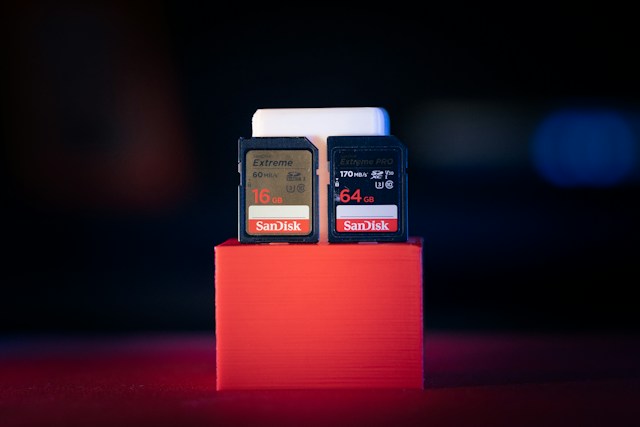
Consumer generated $2.935 billion of revenue, approximately 14% of fiscal 2026 total revenue, up 29% from $2.268 billion. Products include removable cards, USB drives and other retail and end-user storage solutions. This business benefits from Sandisk’s brand recognition and global points of presence.
Unlike Datacenter and Edge, Consumer physical sales declined. Products sold decreased by a mid-teens percentage on an exabyte basis, but revenue per gigabyte increased by a low-fifties percentage. Higher pricing therefore more than offset lower volume and drove reported revenue growth.
4. Geographic revenue diversification
Asia generated $14.241 billion of fiscal 2026 revenue, the Americas $4.275 billion and Europe, Middle East and Africa $1.732 billion. On a country-level basis, China generated $4.503 billion, Hong Kong $5.126 billion, the United States $3.714 billion and the rest of Asia $4.612 billion. International sales represented roughly 82% of revenue.
This geographic mix reflects both Sandisk’s global customer base and the concentration of electronics manufacturing and supply chains in Asia. Geographic diversification expands the addressable market, although it also increases exposure to trade policy, currency, geopolitical and supply-chain risks.
5. Pricing and product mix
Sandisk’s fiscal 2026 results show that the business model cannot be understood through unit growth alone. Total products sold rose only by a mid-teens percentage on an exabyte basis, yet revenue rose 175%. Higher revenue per gigabyte in all three end markets drove a major part of the increase.
Gross profit rose from $2.212 billion to $14.472 billion and gross margin improved by 4,100 basis points. With fiscal 2026 revenue of $20.248 billion and cost of revenue of $5.776 billion, reported gross margin was approximately 71.5%. The extraordinary year-on-year expansion demonstrates the operating sensitivity of a memory manufacturer to industry pricing conditions.
Customer Relationships and Sales Economics
Sandisk sells through OEM, cloud, enterprise, distribution, channel and retail relationships. No single customer represented more than 10% of fiscal 2026 revenue, although the top ten customers collectively represented 44%. This means the company avoids dependence on one customer for reported revenue while still having meaningful concentration among its largest relationships.
Accounts receivable concentration is more pronounced at particular points in time. At July 3, 2026, Sandisk had $4.7 billion of net accounts receivable and three customers represented approximately 19%, 12% and 10% of that balance. Customer financial condition and collection therefore remain important working-capital considerations.
Sandisk also provides sales incentives and marketing programs such as price protection and reimbursements, recorded as reductions of gross revenue. These programs represented 11% of gross revenue in fiscal 2026, down from 19% in both fiscal 2025 and fiscal 2024. The level varies with industry conditions, pricing strategies, demand, competition, channel mix and product availability.
Manufacturing, Technology and Intellectual Property
Manufacturing economics are central to Sandisk’s model because NAND competitiveness depends on technology, yields, scale and cost per bit. Sandisk’s vertical integration combines design, IP and manufacturing participation with systems engineering. This enables it to create products ranging from components to complete storage solutions.
The company holds approximately 8,000 granted patents and 3,000 pending patent applications. R&D expense was $1.328 billion in fiscal 2026, compared with $1.132 billion in fiscal 2025. Sustained R&D is necessary to maintain product competitiveness as storage density, performance and customer requirements evolve.
Sandisk’s manufacturing network also introduces risk. Shortages of essential materials can constrain production, while third-party subcontractors used for assembly and testing may not always operate under long-term contracts. The company cannot directly control every supplier’s delivery schedule or manufacturing process.
Competitive Advantages and Value Proposition
Sandisk’s first advantage is its vertically integrated technology position. Ownership of chip design, intellectual property, manufacturing participation and systems engineering gives it capabilities across multiple layers of flash storage. The second is portfolio breadth across Datacenter, Edge and Consumer, allowing the company to serve very different storage workloads and customer types.
A third advantage is its intellectual-property base and more than three decades of NAND innovation. A fourth is global reach through customer, partner and channel relationships. A fifth is brand recognition in consumer storage, which complements the less visible OEM and datacenter portions of the business.
The combination matters because storage requirements vary considerably. Hyperscale and enterprise buyers focus on performance, capacity, reliability and economics at scale. OEM customers need qualified embedded and system products. Consumers value compatibility, convenience and brand trust. Sandisk can address all three through one underlying flash-technology platform.
Risks in the Business Model
The largest structural risk is cyclicality. NAND supply and demand can create major pricing swings, and fiscal 2026’s exceptional improvement also illustrates how sensitive results could be if pricing moves in the opposite direction. High fixed costs and manufacturing commitments can amplify these cycles.
Sandisk also faces intense technological competition. Failure to execute product transitions or achieve cost reductions can weaken market position. Supply disruptions, manufacturing problems and dependence on third parties can affect product availability and cost.
Geopolitical and trade risks are significant because most revenue is international and substantial manufacturing and customer activity occurs in Asia. Export controls, tariffs and restrictions on technology trade can affect customers, suppliers and market access.
Economics of Sandisk’s Revenue Growth
Fiscal 2026 provides an unusually clear illustration of the economics behind Sandisk’s model. Revenue increased by $12.893 billion year over year, from $7.355 billion to $20.248 billion, while total products sold increased only by a mid-teens percentage on an exabyte basis. The gap between physical-bit growth and reported revenue growth was primarily explained by much stronger revenue per gigabyte. Datacenter revenue per gigabyte increased by almost 150%, Edge by almost 180%, and Consumer by a low-fifties percentage. This means Sandisk monetizes not simply the amount of NAND capacity shipped, but the market value that customers are willing to pay for that capacity at a particular point in the memory cycle.
The effect flowed directly into profitability. Cost of revenue was $5.776 billion in fiscal 2026 compared with $5.143 billion in fiscal 2025, an increase far smaller than the increase in revenue. Consequently, gross profit rose by $12.260 billion to $14.472 billion and gross margin increased by 4,100 basis points. This operating behavior is central to understanding Sandisk: manufacturing scale and technology costs create a significant cost base, but when NAND pricing and mix improve, incremental revenue can generate substantial gross-profit leverage.
The reverse is also important. Because memory pricing is cyclical, the same economic structure can pressure profitability when supply exceeds demand or pricing weakens. Sandisk therefore has to balance technology investment and manufacturing supply with market demand. Its business model is attractive when higher-value products, disciplined supply and favorable pricing coincide, but the annual report makes clear that industry conditions can change rapidly.
Research and Development as a Core Investment
Sandisk’s business model requires continuous investment in technology rather than relying only on existing products and brands. Research and development expense increased from $1.132 billion in fiscal 2025 to $1.328 billion in fiscal 2026. The increase included higher compensation and benefits, additional spending on R&D projects and higher stock-based compensation as the company continued investing in innovation.
This investment supports Sandisk’s ability to compete across very different workloads. Datacenter customers need storage that can operate at scale in cloud and enterprise environments. Edge customers require products suited to PCs, mobile devices, gaming, automotive, physical AI and industrial applications. Consumer buyers need accessible and dependable removable and portable storage. Underlying all of these products is the need to advance NAND technology while integrating memory, controllers, firmware and systems engineering into commercially useful solutions.
The company’s approximately 8,000 granted patents and 3,000 pending patent applications are therefore not merely legal assets; they represent part of the technology foundation supporting future products. Continued R&D spending is effectively a recurring requirement of Sandisk’s model because semiconductor competitiveness depends on successive generations of technology, performance and cost improvement.
Working Capital and Cash Conversion
Sandisk’s product-based model also creates meaningful working-capital requirements. The company must manage inventories, accounts receivable, supplier commitments and customer incentive programs while NAND prices and demand can change quickly. Net accounts receivable stood at approximately $4.7 billion at July 3, 2026. The concentration of some receivables among large customers means customer payment behavior can influence cash conversion even though no individual customer represented more than 10% of annual revenue.
Inventory management is particularly important in a cyclical memory industry. Products manufactured or committed when demand is strong may face different market pricing by the time they are sold. Conversely, insufficient supply during a strong pricing environment can limit the ability to capture demand. Sandisk’s vertically integrated structure and manufacturing relationships therefore have to coordinate technology transitions, production and customer demand closely.
Customer incentive programs add another dimension. Price protection and other marketing incentives represented 11% of gross revenue in fiscal 2026, compared with 19% in each of the prior two fiscal years. Because these programs vary with industry conditions, list pricing, competition, channel mix, demand and product availability, the amount ultimately realized from gross product sales depends partly on commercial programs as well as headline market pricing.
Independence After the Western Digital Separation
Sandisk’s February 2025 separation from Western Digital fundamentally changed the corporate structure surrounding this business. Fiscal 2026 was the first full fiscal year in which investors could evaluate Sandisk as a standalone public semiconductor memory company. Independence gives the company a more focused corporate identity around NAND flash and storage, but it also means Sandisk directly bears the corporate, financing and operating responsibilities of an independent company.
The separation makes capital allocation and strategic priorities more visible. Rather than being one part of a broader storage company, Sandisk can direct management attention and investment toward flash technology, its three end markets and the manufacturing and R&D capabilities required to compete in NAND. At the same time, the company continues to depend on a network of related-party manufacturing arrangements, third-party suppliers and global partners, so independence does not mean operational isolation.
For investors analyzing the business model, this distinction matters. Sandisk’s future performance will increasingly reflect its own decisions on technology investment, product mix, customer relationships, supply discipline and capital allocation rather than the consolidated priorities of its former parent.
Future Outlook
Sandisk enters its second full year as an independent company with dramatically stronger reported economics than at separation. Fiscal 2026 revenue of $20.248 billion was nearly three times fiscal 2025 revenue, while gross profit increased more than sixfold. Datacenter and Edge were the principal engines of this change.
The long-term opportunity described by Sandisk is tied to continued growth in data and the need for larger, faster and more capable storage from cloud infrastructure through intelligent endpoints. AI adds another workload requiring storage capacity in datacenters and at the edge, while PCs, mobile devices, automotive systems, industrial applications and consumer devices sustain broader NAND demand.
Yet fiscal 2026 should not be viewed as evidence that growth will be linear. Memory markets remain cyclical, and the year benefited substantially from higher revenue per gigabyte. Sandisk’s ability to sustain value creation will depend on technology leadership, cost competitiveness, manufacturing execution, disciplined supply, customer diversification and its ability to capture the expanding storage requirements of AI and data-intensive computing.
Source: Sandisk Corporation, FY2026 Annual Report / Form 10-K.