
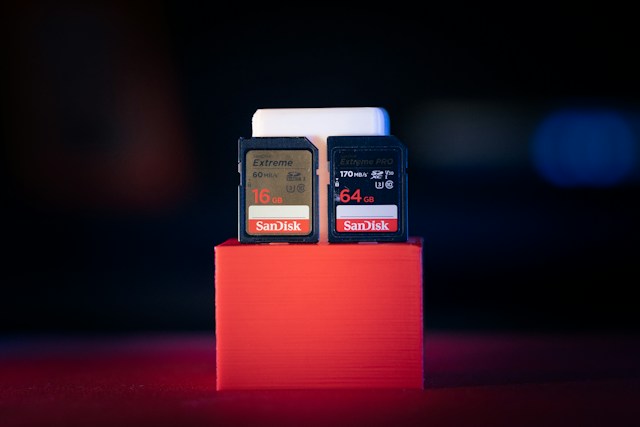
Sandisk Corporation operates at the intersection of semiconductors, data storage and global electronics supply chains. In fiscal 2026, the newly independent NAND flash company generated $20.248 billion of revenue, with approximately 82% of sales outside the United States. Its manufacturing and customer footprint spans Asia, the Americas and EMEA, while its products serve Datacenter, Edge and Consumer markets. This scale exposes Sandisk to policy, economic cycles, technology transitions, environmental requirements and complex legal regimes. The following PESTEL analysis is grounded in Sandisk’s FY2026 Annual Report.

Sandisk Business Model 2026: How Does Sandisk Make Money?
Political Factors
1. U.S.-China trade relations
Sandisk has significant commercial exposure to China and the broader Asian electronics ecosystem. China generated $4.503 billion of fiscal 2026 revenue and Hong Kong $5.126 billion. Political tensions between the United States and China can affect semiconductor trade, customer demand, supply chains and access to technology, making bilateral policy an important external factor for the company.

2. Export controls and technology restrictions
Semiconductors are increasingly subject to government controls on technology exports and cross-border sales. Sandisk identifies trade restrictions and export controls as risks that can affect products, customers and suppliers. Changes in the countries, technologies or customers covered by restrictions can alter addressable markets and require changes in product distribution or supply-chain arrangements.
3. Tariffs and international trade policy
Sandisk’s products and components move through a global manufacturing network. Tariffs or other trade barriers can increase costs, change sourcing economics or reduce customer demand. With manufacturing activities in Malaysia and arrangements in China and Japan, plus customers worldwide, the company is exposed to policy changes across multiple trade corridors rather than a single domestic market.
4. Geopolitical instability in Asia
Asia generated $14.241 billion of Sandisk’s fiscal 2026 revenue and hosts important manufacturing and customer activity. Geopolitical conflict or regional instability could disrupt logistics, manufacturing, customer purchasing or access to materials and equipment. The geographic concentration of the semiconductor ecosystem makes regional political stability commercially important.

5. Government focus on semiconductor supply chains
Government policies increasingly influence where semiconductor capacity, technology and supply chains are located. For Sandisk, policy incentives or restrictions can affect manufacturing economics and long-term investment decisions. The company must evaluate government actions alongside cost, technology and customer considerations when managing a globally distributed NAND business.
Sandisk Business Strategy 2026
Economic Factors
1. NAND supply-demand cycles
The most important economic factor is the cyclical balance between NAND supply and demand. Fiscal 2026 revenue increased 175% even though total exabytes sold increased only by a mid-teens percentage. Higher revenue per gigabyte was therefore a major driver. If industry supply expands faster than demand, falling prices can rapidly pressure revenue and margins.
2. Datacenter and AI infrastructure spending
Datacenter revenue increased 437% to $5.153 billion, with exabyte sales up almost 120%. Demand from cloud, private-cloud and enterprise customers therefore became a major economic driver. Investment cycles in datacenters and AI infrastructure can influence Sandisk’s growth, particularly as the company positions flash products for AI workloads.
3. Consumer and device demand
Edge serves PCs, mobile, gaming, automotive, industrial and other device markets, while Consumer serves retail and end users. These markets respond to economic conditions and replacement cycles. Consumer exabyte sales declined by a mid-teens percentage in fiscal 2026, demonstrating that higher revenue does not necessarily mean stronger physical demand in every end market.
4. Foreign currency exposure
Approximately 82% of fiscal 2026 revenue was international, creating exposure to currency movements and economic conditions outside the United States. Sandisk also incurs costs through a global manufacturing and operating network. Currency volatility can therefore affect reported financial results, local purchasing economics and the relative cost of operations across geographies.
5. Capital intensity and cost discipline
Semiconductor memory requires sustained investment in technology, manufacturing and R&D. Sandisk spent $1.328 billion on R&D in fiscal 2026. Because memory pricing is cyclical, the company must maintain technology investment while controlling costs and supply even when market conditions weaken. Capital and operating discipline are therefore important economic requirements.
Social Factors
1. Rapid growth in data creation
Sandisk’s business is supported by the expanding role of digital data across consumers, enterprises and cloud infrastructure. Students, gamers, home offices, enterprises and public clouds all create and store information. Increasing dependence on digital services raises the underlying need for storage capacity across both centralized datacenters and edge devices.
2. Consumer dependence on connected devices
PCs, smartphones, gaming systems, entertainment devices and other electronics require non-volatile storage. Sandisk’s Edge portfolio addresses many of these applications. Social dependence on connected devices and digital content can sustain storage demand, although the timing of device replacement and consumer purchasing remains variable.
3. Growth of AI-enabled products
AI is moving beyond datacenters into physical devices and other edge applications. Sandisk explicitly includes physical AI among the spaces served by its Edge products. As consumers and businesses adopt more intelligent devices, local storage requirements may increase, creating new use cases for high-performance NAND products.
4. Brand trust in consumer storage
Consumer storage products rely partly on brand recognition because users entrust personal files, photos and other data to storage devices. Sandisk describes its Consumer business as benefiting from strong product-brand recognition and broad points of presence. Maintaining quality and reliability is therefore socially and commercially important to the retail franchise.
5. Workforce and engineering talent
Sandisk’s competitive position depends on specialized semiconductor, firmware, systems and manufacturing expertise. R&D expense increased partly because of higher compensation, benefits and headcount. Competition for skilled technical employees can affect innovation speed, costs and the company’s ability to execute complex technology transitions.
Technological Factors
1. NAND technology transitions
Continuous NAND advancement is fundamental to Sandisk’s competitiveness. Customers expect higher density, performance and cost efficiency over successive technology generations. Delays or weaker execution can increase cost per bit or make products less competitive. Sandisk’s vertical integration and R&D capabilities are designed to support these transitions.
2. Artificial-intelligence storage requirements
Sandisk positions its flash portfolio for AI workloads in datacenters, edge devices and consumer applications. AI systems generate and process large amounts of data, increasing the importance of storage performance and capacity. Fiscal 2026 Datacenter growth suggests that this market can become an increasingly important destination for Sandisk’s technology.
3. Systems engineering and product integration
Competition extends beyond manufacturing NAND bits. Sandisk combines flash memory with systems engineering and design to produce SSDs, embedded products and other complete solutions. Controllers, firmware and product architecture can differentiate storage products for specific workloads and allow Sandisk to capture more value than component-only sales.
4. Intellectual-property protection
The company holds approximately 8,000 granted patents and has approximately 3,000 pending patent applications. This intellectual-property base supports technology across all end markets. Continued innovation and protection of proprietary designs are essential because competitors also invest heavily in semiconductor process and storage technologies.
5. Manufacturing technology and yields
Advanced semiconductor manufacturing requires consistent yields and process execution. Sandisk’s network includes owned facilities, related-party manufacturing and subcontractors. Technology transitions that do not achieve expected yields can increase costs or constrain supply, while successful manufacturing improvements can strengthen cost competitiveness.
Environmental Factors
1. Resource-intensive semiconductor manufacturing
Semiconductor manufacturing requires substantial facilities, materials and utilities. Sandisk’s manufacturing footprint therefore creates environmental compliance and resource-management obligations. Environmental requirements can influence facility operating costs, capital investment and supplier standards across the company’s global manufacturing network.
2. Energy availability and cost
Manufacturing and datacenter-related technology ecosystems depend on reliable energy. Energy prices or constraints can affect production economics directly or through suppliers and manufacturing partners. As Sandisk scales products for data-intensive applications, energy efficiency also remains relevant to customers evaluating storage solutions.
3. Water and manufacturing continuity
Semiconductor fabrication depends on reliable access to water and other critical resources. Environmental disruption or scarcity can affect manufacturing continuity. Sandisk’s reliance on facilities and manufacturing relationships in multiple Asian locations makes local resource conditions part of supply-chain resilience.
4. Extreme weather and natural disasters
Sandisk’s global manufacturing and logistics network can be affected by earthquakes, floods, storms and other natural events. Concentrated semiconductor production means disruption at a facility or supplier can affect product availability. Geographic diversification can reduce some exposure but does not eliminate supply-chain vulnerability.
5. Environmental regulation and supply-chain standards
Sandisk and its suppliers operate under environmental laws and standards across multiple jurisdictions. Changes in requirements relating to manufacturing, chemicals, waste, emissions or product materials can increase compliance costs or require process changes. Managing third-party compliance is particularly important because Sandisk does not directly control every manufacturing partner.
Legal Factors
1. Patent and intellectual-property disputes
Intellectual property is central to semiconductor competition. Sandisk’s large patent portfolio protects important technologies but also places the company in an industry where patent claims, licensing disputes and litigation can arise. Adverse outcomes can create costs, restrict product features or require licensing arrangements.
2. Export-control compliance
Cross-border technology sales require compliance with export laws and sanctions regimes. Sandisk’s international customer base and Asian revenue concentration increase the operational importance of these rules. Violations can lead to penalties or restrictions, while changes in regulations can make previously permitted transactions more difficult.
3. Product quality and warranty obligations
Storage products must reliably preserve and access customer data. Product defects can create warranty costs, returns, customer claims and reputational damage. Sandisk must maintain quality controls across owned facilities, related-party manufacturing and subcontracted assembly and testing to meet contractual and legal obligations.
4. Data and cybersecurity requirements
As a global technology company, Sandisk operates information systems and handles business information across jurisdictions. Cybersecurity incidents can disrupt operations, expose confidential information and create legal or regulatory consequences. Increasing cybersecurity requirements can raise compliance and technology costs.
5. Standalone public-company compliance
Following its separation from Western Digital, Sandisk is independently responsible for securities reporting, governance, internal controls and other public-company obligations. Building and maintaining these capabilities creates costs and execution requirements, particularly during the transition from being part of a larger corporate organization.
Source: Sandisk Corporation, FY2026 Annual Report / Form 10-K.