
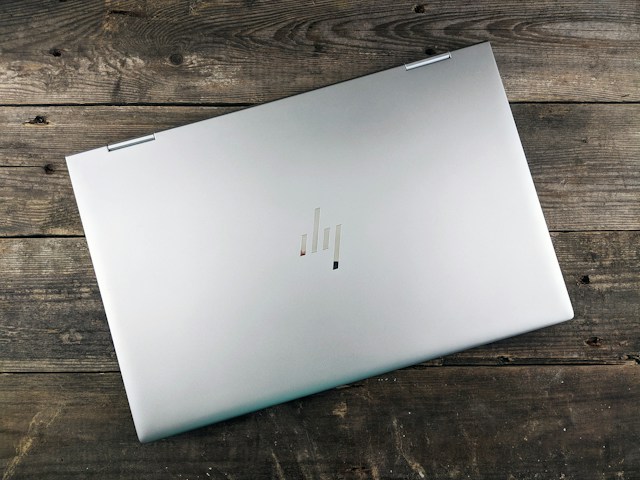
HP Inc. is one of the world’s major personal computing and printing companies. Its business spans PCs, workstations, displays, peripherals, printers, supplies, services, subscriptions, security solutions and emerging areas such as AI PCs and 3D printing. In fiscal 2025, HP generated $55.295 billion in net revenue, up 3.2% from the prior year. The company operates through Personal Systems, Printing and Corporate Investments, with the first two segments accounting for virtually all revenue. HP’s business model combines high-volume device sales with profitable recurring supplies and services, broad distribution, commercial customer relationships and continued product innovation.
The economics of HP are more nuanced than simply selling computers and printers. Personal Systems is the larger revenue engine, while Printing produces a disproportionately important share of segment operating earnings. Within Printing, supplies create recurring demand after hardware placement. At the same time, HP is expanding services and subscriptions, AI-enabled PCs, hybrid-work solutions and security capabilities to increase the value generated across the installed base.

Industry Background and the Problem HP Solves
Individuals and organizations depend on computing devices to create, communicate and access digital services. Businesses require fleets of secure notebooks, desktops and workstations that can support employees across offices and remote environments. Consumers need PCs for work, learning, gaming and entertainment. These needs create a large but competitive hardware market in which customers evaluate performance, price, design, reliability, security and increasingly AI capabilities.
Printing addresses a different but related set of needs. Homes and offices continue to require documents and images, while commercial customers use printing for graphics, packaging and industrial applications. A printer is not only a one-time hardware purchase: customers require ink, toner, media, maintenance and services throughout the device life. This installed-base dynamic is central to the economics of HP’s Printing business.
The industry also creates operational problems for customers. Enterprises must deploy, configure, secure, support and eventually replace large fleets of endpoints. Distributed work increases the security surface. HP responds with lifecycle services, endpoint security, device management, support and contractual offerings in addition to hardware. This allows the company to compete for a broader share of customer spending.

Technology cycles also matter. In fiscal 2025, HP reported that the Windows-based PC operating-system refresh contributed to Personal Systems unit growth. AI PCs and workstations are another product cycle. HP must continuously translate advances in processors, software, security and user experience into differentiated products while managing commodity costs and competitive pricing.
How HP Solves the Problem
HP addresses these needs with a broad portfolio. Personal Systems offers commercial and consumer desktops, notebooks, workstations, thin clients, point-of-sale systems, displays, hybrid systems, software, endpoint security solutions and services. Its portfolio includes AI PCs and workstations as well as consumer, gaming and commercial device families.
The company supports multiple operating systems and architectures, primarily Microsoft Windows and Google Chrome. This enables HP to serve different customer requirements rather than depending on one device configuration. Commercial customers can also buy lifecycle services covering deployment, configuration, support and extended warranties.
Printing serves home, office and industrial applications. Office Printing Solutions targets SMBs, public-sector organizations and large enterprises. Home Printing Solutions addresses households, home businesses and micro businesses. Graphics Solutions serves print-service providers and packaging converters, while 3D Printing and Personalization targets additive and digital manufacturing use cases.
Security is embedded across the portfolio. HP describes security-enhanced PCs and printers, hardware-enforced endpoint security software and endpoint security services. This broadens differentiation beyond specifications such as processor speed or print quality and makes security part of the device value proposition.
HP Business Model
1. Personal Systems: Scale Through PCs and Commercial Devices
Personal Systems is HP’s largest business. It generated $38.532 billion in fiscal 2025 revenue, compared with $36.195 billion in fiscal 2024, an increase of 6.5%. Commercial Personal Systems generated $27.438 billion and Consumer Personal Systems generated $11.094 billion. Commercial customers therefore represented the majority of segment revenue.
HP monetizes this segment primarily through product sales, supplemented by software, solutions and lifecycle services. The commercial mix matters because enterprise purchases can involve larger fleets, managed deployments, support contracts and repeat refresh cycles. HP reported a 6.4% increase in Commercial PS units and favorable mix in fiscal 2025.
2. Printing: Hardware Creates an Installed Base
Printing generated $16.702 billion of fiscal 2025 revenue. HP sells consumer and commercial printer hardware to establish and maintain a large installed base. Hardware revenue itself matters, but the installed base also drives demand for supplies and services over time.
Commercial Printing generated $4.633 billion and Consumer Printing generated $1.153 billion in fiscal 2025. Hardware markets were under pressure: overall printer unit volume decreased 4.2%. This illustrates why HP’s printing model cannot depend solely on new printer placements.
3. Supplies: Recurring Monetization of Printing Usage
Supplies generated $10.916 billion in fiscal 2025, making them the largest component of Printing revenue. Ink, laser cartridges, media and other consumables are purchased repeatedly as customers use installed devices. This recurring behavior gives HP an economic stream that extends beyond the original hardware sale.
Supplies revenue declined 3.4% in fiscal 2025, primarily because of declines in installed base and usage plus currency effects, partly offset by disciplined pricing. The result highlights both the strength and vulnerability of the model: supplies can be recurring, but they depend on the health and usage of the installed base.
4. Services and Subscriptions
HP increasingly combines products with services and subscriptions. At the consolidated level, services revenue was $3.293 billion in fiscal 2025, up from $3.106 billion in fiscal 2024. HP states that services revenue includes service offerings and support on hardware devices, while product revenue includes hardware, supplies, subscriptions and software licenses.
Services can deepen customer relationships and make revenue less dependent on individual hardware transactions. Commercial customers may need deployment, configuration, support, security and lifecycle management. In Printing, contractual models can link device access, supplies and service into an ongoing customer relationship.
5. Global Distribution and Channel Reach
HP operates globally and uses a broad network of channel partners and distributors. Fiscal 2025 revenue was $19.212 billion in the United States and $36.083 billion outside the United States. By region, the Americas generated $23.545 billion, Europe, Middle East and Africa $18.596 billion, and Asia-Pacific and Japan $13.154 billion.
This reach allows HP to serve consumers, SMBs, enterprises and public-sector customers across markets. It also creates exposure to foreign exchange, tariffs, local regulation and channel concentration. TD Synnex accounted for 12% of fiscal 2025 net revenue, demonstrating the importance of major distribution relationships.
How Does HP Make Money?
HP generated $55.295 billion in fiscal 2025 net revenue. Products contributed $52.002 billion and services contributed $3.293 billion. Products therefore remain the overwhelming majority of reported revenue, although services grew year over year.
Personal Systems Revenue
Personal Systems generated $38.532 billion, approximately 70% of total company revenue. Commercial PS contributed $27.438 billion and Consumer PS $11.094 billion. Segment revenue increased 6.5%, driven by a 4.3% increase in unit volume and a 3.1% increase in average selling prices. HP attributed unit growth primarily to the Windows-based PC operating-system refresh, while ASP improvement reflected favorable mix and disciplined pricing.
Commercial PS revenue increased 7.7%, while Consumer PS increased 3.6%. This shows that commercial computing was the stronger growth engine. However, Personal Systems operating earnings were $2.054 billion and its operating margin fell to 5.3% from 6.2%, partly because of higher commodity and tariff costs.
Printing Revenue
Printing generated $16.702 billion, approximately 30% of total revenue. Supplies contributed $10.916 billion, Commercial Printing $4.633 billion and Consumer Printing $1.153 billion. Printing revenue fell 3.7% year over year.
Despite lower revenue, Printing remained economically important. Segment operating earnings were $3.118 billion and operating margin was 18.7%. Printing therefore generated more segment operating earnings than Personal Systems despite producing less than half as much revenue. This difference is one of the defining features of HP’s business model.
Corporate Investments
Corporate Investments generated $62 million in fiscal 2025 revenue and includes certain business incubation projects and investments in digital enablement. It is small relative to the two core segments, but it provides a structure for developing emerging opportunities.
Cost Structure and Profit Economics
HP reported gross profit of $11.392 billion on $55.295 billion of revenue in fiscal 2025. Research and development expense was $1.602 billion and selling, general and administrative expense was $5.821 billion. The company must fund product development, sales channels, marketing, supply-chain operations, services and corporate functions while competing in price-sensitive categories.
The contrast between segments is important. Personal Systems operates at lower margins and depends heavily on scale, mix, pricing discipline and supply-chain execution. Printing operates at materially higher margins, supported by supplies and other recurring economics. Management therefore has to balance growth in computing with protection and renewal of the printing installed base.
Competitive Advantages and Value Proposition
Brand and Global Scale
HP’s scale supports procurement, distribution, marketing and product breadth. The company serves customers across the Americas, EMEA and Asia-Pacific and Japan, reducing dependence on a single national market.
Broad Commercial Portfolio
HP can address more than the PC itself. Devices, displays, peripherals, security, lifecycle services and support allow it to offer integrated solutions to organizations managing endpoint fleets and hybrid work.
Printing Installed Base and Supplies
The printing installed base creates repeat demand for supplies. With $10.916 billion of fiscal 2025 supplies revenue, consumables remain a major monetization engine and help explain Printing’s higher profitability.
Innovation in AI PCs and Security
HP is investing in AI PCs, workstations and security-enhanced devices. These capabilities can support product differentiation and premium mix as computing workloads change.
Pricing and Portfolio Discipline
HP repeatedly cites disciplined pricing and favorable mix as drivers of performance. In mature hardware categories, profitability depends not only on unit growth but on selecting segments, configurations and customer propositions that sustain economics.
Future Outlook
HP’s future model is likely to depend on several transitions already visible in the FY2025 report. In Personal Systems, the company is focused on profitable growth through innovation, segmentation and portfolio simplification. AI PCs and workstations create a potential refresh opportunity, while commercial customers provide a large base for devices, services and security.
In Printing, the challenge is to stabilize and renew the installed base while extending contractual, services and industrial opportunities. Fiscal 2025 declines in supplies and printer units show why this is strategically important. The company must continue innovating in office, home, graphics, 3D and personalization while protecting recurring supplies economics.
Across both segments, HP is also pursuing productivity. The Future Ready transformation is intended to generate cost savings and simplify operations. This matters because hardware businesses face commodity volatility, tariffs, foreign exchange and intense competition.
Ultimately, HP’s business model combines two different economic engines. Personal Systems provides scale and exposure to computing refresh cycles, while Printing contributes recurring supplies revenue and higher segment margins. Services, subscriptions, security and AI-enabled products are intended to increase customer lifetime value around those installed bases. The strength of the model depends on HP’s ability to innovate fast enough to sustain device relevance while converting more of its enormous global customer base into recurring, higher-value relationships.
Source: HP Inc., FY2025 Annual Report / Form 10-K.