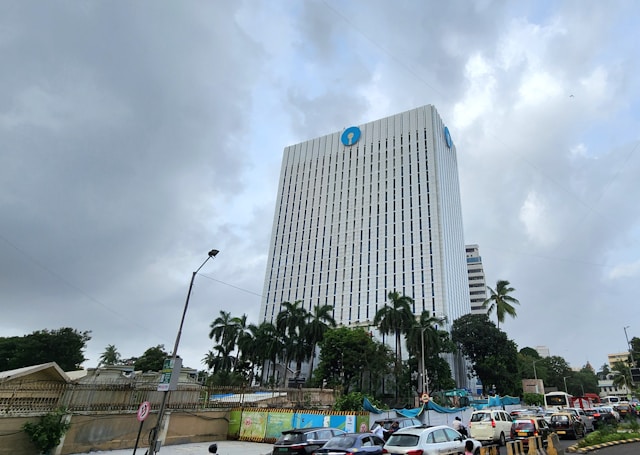
State Bank of India (SBI) is India’s largest commercial bank and one of the most valuable banking franchises globally. With a history spanning more than 200 years, the Bank serves over 530 million customers through 23,265 branches, 64,245 ATMs/ADWMs, nearly 80,000 Customer Service Points, and an expanding digital ecosystem led by YONO, which has more than 10.02 crore registered users. During FY2025-26, SBI crossed Rs. 109 trillion in total business, comprising Rs. 59.8 trillion in deposits and Rs. 49.3 trillion in advances, while reporting a record standalone net profit of Rs. 80,032 crore.
The Bank has transformed itself into a technology-driven universal bank with a strategic focus on “Digital First, Customer First, Nation Always.” Investments in artificial intelligence, digital banking, process automation, wealth management, green finance, and customer experience have strengthened SBI’s market leadership while maintaining strong financial performance. At the same time, the Bank continues to play a pivotal role in financial inclusion, government banking, agriculture financing, SME development, and infrastructure financing across India.
Despite its leadership position, SBI operates in a highly competitive and rapidly evolving banking environment. Continuous technological disruption, cybersecurity risks, changing customer expectations, regulatory developments, and macroeconomic uncertainties require constant innovation and disciplined risk management. The following SWOT analysis evaluates SBI’s internal strengths and weaknesses along with the external opportunities and threats influencing its future growth.
State Bank of India Business Model in 2026: How SBI Makes Money
Strengths
1. India’s Largest Banking Franchise
SBI serves over 530 million customers through the country’s largest banking network consisting of 23,265 branches, 64,245 ATMs, nearly 80,000 Customer Service Points, and an extensive international presence. This unmatched scale provides significant competitive advantage across every customer segment.
2. Strong Financial Performance
During FY2025-26, SBI reported Rs. 80,032 crore in standalone net profit, Rs. 109 trillion in total business, 18.57% Return on Equity, 1.12% Return on Assets, and a 15.40% Capital Adequacy Ratio. These indicators reflect sustainable profitability and strong capital strength.
3. Leadership in Digital Banking
SBI has successfully transformed into a digital-first bank through YONO, which has more than 10.02 crore registered users, while 98.7% of transactions are conducted through alternate digital channels. Continuous investments in AI, automation, and digital platforms strengthen customer experience and operational efficiency.
4. Diversified Universal Banking Model
The Bank operates across retail banking, corporate banking, SME finance, agriculture lending, government business, international banking, treasury operations, wealth management, and financial services through its subsidiaries. This diversified business model reduces dependence on any single revenue stream.
5. Strong Asset Quality and Risk Management
SBI has significantly strengthened its balance sheet through disciplined underwriting and portfolio monitoring. The Bank reported a Net NPA of only 0.39% and continued improving asset quality while maintaining healthy growth across retail, SME, agriculture, and corporate lending.
State Bank of India Business Strategy in 2026
Weaknesses
1. High Operational Complexity
Managing India’s largest branch network, digital platforms, international operations, subsidiaries, government business, and millions of daily transactions creates considerable operational complexity and increases administrative costs.
2. Significant Technology Investment Requirements
Maintaining leadership in digital banking requires continuous investments in artificial intelligence, cybersecurity, cloud infrastructure, automation, analytics, and digital platforms. These investments increase operating expenditure despite supporting long-term competitiveness.
3. Dependence on Interest-Based Income
Although SBI earns substantial fee income from multiple businesses, lending remains its primary source of revenue. Changes in interest rates, funding costs, or credit demand can directly affect profitability and net interest income.
4. Large Public Sector Organizational Structure
As India’s largest public sector bank, implementing organization-wide transformation, technology upgrades, and process changes across thousands of branches and a large workforce can take longer than at smaller private-sector competitors.
5. Exposure to Multiple Economic Sectors
SBI’s broad lending portfolio spans agriculture, MSMEs, retail, infrastructure, corporates, and government-linked sectors. Economic weakness in any major segment could increase provisioning requirements despite diversified exposure.
State Bank of India PESTEL Analysis in 2026
Opportunities
1. Expansion of Digital Banking
Growing smartphone penetration, digital payments, artificial intelligence, and digital financial services provide opportunities for SBI to expand YONO, strengthen customer engagement, and improve operational efficiency through technology-led banking.
2. Rising Retail and Wealth Management Demand
Increasing household incomes and financial awareness create opportunities to expand housing loans, personal finance, investments, insurance, wealth management, and advisory services through SBI’s integrated financial ecosystem.
3. Growth in MSME and Supply Chain Finance
Rapid expansion of India’s MSME sector, digital commerce, and supply chain financing creates long-term lending opportunities. Initiatives such as the MSME Centre of Excellence and cash flow-based lending strengthen SBI’s competitive position.
4. Green and Sustainable Finance
India’s transition towards renewable energy, electric mobility, climate technologies, and sustainable infrastructure provides significant opportunities for SBI to expand green lending, climate finance, and ESG-linked financial products.
5. Financial Inclusion and Rural Banking
Government initiatives promoting financial inclusion continue expanding banking access across rural India. SBI’s extensive Business Correspondent network and leadership in government schemes position the Bank to benefit from increasing formalization of the economy.
Threats
1. Intense Competition
SBI faces growing competition from private sector banks, fintech companies, NBFCs, payment banks, and digital financial platforms. Increased competition may pressure lending margins, deposit growth, and customer acquisition costs.
2. Cybersecurity Risks
Rapid growth in digital banking increases exposure to cyberattacks, digital fraud, ransomware, and data breaches. Maintaining robust cybersecurity remains essential for protecting customer trust and operational continuity.
3. Regulatory Changes
The banking industry is subject to extensive regulation by the Reserve Bank of India and other authorities. Changes in capital requirements, lending norms, compliance standards, or financial regulations may influence profitability and business operations.
4. Macroeconomic Uncertainty
Inflation, global geopolitical tensions, commodity price volatility, interest rate movements, and slower economic growth can affect loan demand, asset quality, customer repayment capacity, and overall banking profitability.
5. Rapid Technological Disruption
Emerging technologies such as Generative AI, embedded finance, open banking, blockchain, and digital-first financial ecosystems are rapidly transforming the banking industry. SBI must continuously innovate to maintain its leadership position in an increasingly technology-driven market.
Source: SBI Annual Report 2025-26