
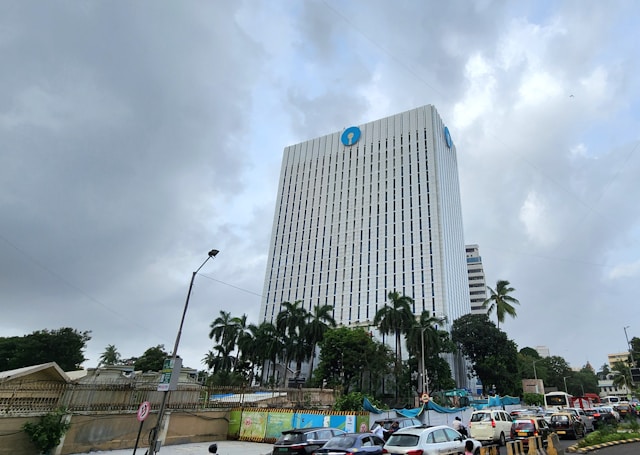
State Bank of India (SBI) is India’s largest commercial bank and one of the world’s largest financial institutions by customer base. With a legacy spanning more than 200 years, SBI has evolved from a traditional public sector bank into a technology-driven financial services institution that combines nationwide physical reach with a rapidly expanding digital ecosystem. The Bank serves over 530 million customers through 23,265 branches, 64,245 ATMs/ADWMs, nearly 80,000 Customer Service Points (CSPs), and the country’s largest banking super app, YONO, which has over 10.02 crore registered users.

During FY2025-26, SBI crossed a major milestone with Rs. 109 trillion in total business, comprising Rs. 59.8 trillion in deposits and Rs. 49.3 trillion in advances. The Bank reported a record Rs. 80,032 crore in standalone net profit while maintaining a 0.39% Net NPA, 18.57% Return on Equity, and 15.40% Capital Adequacy Ratio, demonstrating strong financial performance alongside disciplined risk management.
Unlike many banks that compete only on lending and deposit rates, SBI’s business model integrates retail banking, corporate banking, SME financing, agriculture finance, government business, international banking, treasury operations, wealth management, digital banking, and an extensive financial services ecosystem through its subsidiaries. Supported by its strategy of “Digital First, Customer First, Nation Always,” SBI aims to create sustainable value for customers, shareholders, businesses, and the Indian economy.

State Bank of India Business Strategy in 2026
Industry Problems SBI Solves
India’s financial ecosystem presents diverse challenges. Individuals require secure savings, affordable housing finance, personal loans, digital payments, investments, insurance, pensions, and wealth management. Small businesses need working capital, supply chain finance, digital collections, and faster access to credit. Large corporations require treasury services, trade finance, project financing, foreign exchange management, and capital market solutions. Rural India continues to need financial inclusion, agricultural credit, government benefit transfers, and accessible banking infrastructure.
Simultaneously, customers increasingly expect banking to be instant, digital, personalized, secure, and available around the clock. The rise of fintech companies, digital payment platforms, cybersecurity threats, and evolving regulatory requirements has transformed customer expectations across the banking sector.

SBI addresses these challenges through a combination of scale, technology, trust, and financial inclusion. Its nationwide branch network, Business Correspondent model, Customer Service Points, YONO digital platform, AI-enabled automation, and extensive government partnerships enable the Bank to serve urban and rural customers alike. Rather than offering isolated financial products, SBI provides an integrated financial ecosystem spanning deposits, lending, payments, investments, insurance, international banking, and advisory services.
State Bank of India SWOT Analysis in 2026
How SBI Solves These Problems
SBI follows a customer-centric strategy built around its guiding philosophy of “Digital First, Customer First, Nation Always.” The Bank seeks to simplify banking through digital transformation while preserving the trust and relationship-driven strengths of its extensive branch network. This hybrid approach enables customers to choose between digital self-service and personalized branch support depending on their needs.
Technology plays a central role in this strategy. The Bank continues expanding YONO 2.0, which has evolved into a comprehensive financial and lifestyle platform delivering hyper-personalized banking experiences through enterprise-wide MarTech capabilities. YONO serves both retail and business customers, while nearly 98.7% of all transactions are now conducted through alternate digital channels, highlighting SBI’s success in digital adoption.
Operational efficiency is further enhanced through Project SARAL, SBI’s enterprise-wide process re-engineering initiative. Key initiatives include Universal Branch Access, Single KYC across products, automation of inward clearing using Generative AI, digital onboarding, and simplified customer servicing. The Bank has also established the Centre of Excellence for Refinement of User Experience (CRUX) to improve customer experience through continuous service enhancement.
Beyond technology, SBI leverages its unmatched physical presence to advance financial inclusion. Through over 23,000 branches, Business Correspondents, Customer Service Points, Financial Literacy Centres, and partnerships with government schemes such as PMJDY, PMSBY, PMJJBY, and APY, the Bank extends banking services to underserved communities while supporting India’s inclusive economic development.
State Bank of India PESTEL Analysis in 2026
Business Model
SBI operates a universal banking model, serving virtually every customer segment across India’s financial system while maintaining a significant international presence. The Bank’s value creation is built upon scale, trust, technology, customer relationships, diversified financial products, prudent risk management, and deep integration with India’s economic development.
Its customer segments include retail individuals, salaried employees, farmers, MSMEs, large corporates, multinational companies, government departments, public sector enterprises, startups, exporters, importers, NRIs, institutional investors, and rural communities. Internationally, SBI operates through 245 overseas offices across 29 countries while maintaining correspondent relationships with 222 banks in 56 countries, enabling global banking and trade finance services.
The Bank’s key resources include its trusted brand, over 530 million customers, 23,265 branches, 64,245 ATMs, nearly 80,000 CSPs, YONO digital platform, strong capital base, technology infrastructure, skilled workforce of 2,45,131 employees, treasury operations, analytics capabilities, and the broader SBI Group comprising insurance, mutual funds, credit cards, investment banking, and regional rural banks.
Its key activities include deposit mobilisation, retail lending, housing finance, agriculture finance, SME lending, corporate banking, government business, treasury management, trade finance, payments, wealth management, digital banking, international banking, financial inclusion, AI-enabled process automation, cybersecurity, and risk management.
The Bank’s value proposition is built on four major pillars:
- Universal banking access through India’s largest banking network.
- Technology-enabled convenience via YONO, digital onboarding, AI, and automated processes.
- Comprehensive financial solutions across savings, lending, investments, insurance, payments, and advisory.
- Nation-building and financial inclusion, supporting individuals, businesses, government initiatives, and sustainable economic growth.
The Bank’s cost structure primarily comprises interest expenses on deposits, employee costs, technology investments, branch operations, cybersecurity, regulatory compliance, infrastructure, and credit provisioning. Its diversified operating model enables revenue generation from multiple complementary businesses rather than relying on a single source of income.
How SBI Makes Money
SBI primarily earns revenue through net interest income, generated by lending customer deposits across retail, agriculture, MSME, corporate, infrastructure, housing, and international banking portfolios. During FY2025-26, the Bank reported Net Interest Income of Rs. 1.73 lakh crore, supported by Rs. 49.3 trillion in advances and Rs. 59.8 trillion in deposits. A strong CASA franchise continues to provide relatively low-cost funding while supporting healthy interest margins.
The Bank’s loan portfolio is highly diversified. Retail personal advances crossed Rs. 17 trillion, housing loans approached Rs. 9.44 trillion, agriculture lending exceeded Rs. 4 trillion, SME advances reached Rs. 6.12 lakh crore, while the corporate credit portfolio surpassed Rs. 14.25 trillion. This diversified lending strategy reduces concentration risk while creating multiple sources of interest income.
Beyond lending, SBI generates substantial non-interest income through treasury operations, trade finance, foreign exchange, transaction banking, government business, merchant acquiring, digital banking, wealth management, investment services, insurance distribution, card services, and international banking. The Bank also benefits from its diversified subsidiaries, including SBI Life Insurance, SBI General Insurance, SBI Funds Management, and SBI Cards, which collectively strengthen the overall SBI Group ecosystem. The SBI Group reported Rs. 83,299 crore in net profit during FY2025-26.
Financial discipline remains central to SBI’s earnings model. During FY2025-26, the Bank reported Rs. 80,032 crore standalone net profit, 18.57% Return on Equity, 1.12% Return on Assets, 15.40% Capital Adequacy Ratio, and 0.39% Net NPA, reflecting a combination of profitable growth, prudent underwriting, operational efficiency, and strong asset quality.
Future Outlook
SBI’s future business model will increasingly revolve around digital transformation, artificial intelligence, customer personalization, and operational simplification while preserving its unmatched physical banking network. The Bank plans to continue investing in YONO, AI, data analytics, cybersecurity, MarTech, automation, Project SARAL, and digital infrastructure to deliver faster, more intuitive, and highly personalized banking experiences.
At the same time, SBI intends to deepen customer relationships through wealth management, transaction banking, SME ecosystems, digital onboarding, supply chain finance, green finance, and sustainable lending. Its strategy also emphasizes strengthening the liability franchise, improving CASA mobilisation, supporting financial inclusion, and financing India’s transition towards a greener economy through renewable energy, electric mobility, and climate-focused initiatives. With its unmatched scale, trusted brand, diversified financial ecosystem, technology leadership, and strong financial position, SBI appears well positioned to sustain long-term growth while remaining India’s leading banking institution.
Source: SBI Annual Report 2025-26