Lockheed Martin is one of the world’s largest aerospace and defense technology companies, providing advanced solutions that help the United States and its allies strengthen national security and scientific exploration. Headquartered in Bethesda, Maryland, the company develops, manufactures, integrates, and sustains a broad portfolio of defense and space technologies used across air, land, sea, cyber, and space domains. Its primary customers are agencies of the U.S. Government, allied governments, and international defense organizations.
The company operates through four major business segments: Aeronautics, Missiles and Fire Control (MFC), Rotary and Mission Systems (RMS), and Space. Together, these businesses produce some of the world’s most advanced military aircraft, missile defense systems, helicopters, naval combat systems, satellites, space exploration vehicles, cybersecurity solutions, and command-and-control technologies. Lockheed Martin emphasizes integrated solutions that connect multiple warfighting domains, enabling customers to respond more effectively to increasingly sophisticated security threats.
Some of the company’s flagship programs include the F-35 Lightning II, F-16 Fighting Falcon, C-130 Hercules, Patriot Advanced Capability-3 (PAC-3), THAAD, Black Hawk and CH-53K helicopters, Aegis Combat System, Trident II D5 missile, Orion spacecraft, and GPS III satellites. Lockheed Martin is also investing heavily in emerging technologies such as artificial intelligence, autonomy, hypersonic weapons, advanced networking, digital engineering, and next-generation space systems to address evolving defense requirements. By combining innovation with long-term customer partnerships and lifecycle support, the company has established itself as a critical supplier of advanced defense capabilities to governments around the world.
Industry Background and the Problem
The global defense and aerospace industry is undergoing a period of rapid transformation as geopolitical tensions, regional conflicts, and evolving security threats drive governments to modernize their military capabilities. Nations are increasingly investing in advanced defense technologies to strengthen deterrence, protect critical infrastructure, and maintain strategic advantages across air, land, sea, space, and cyber domains. At the same time, emerging technologies such as artificial intelligence (AI), autonomous systems, hypersonic weapons, electronic warfare, and space-based capabilities are reshaping the nature of modern warfare. These developments are increasing demand for sophisticated defense platforms that can operate seamlessly across multiple domains while responding quickly to complex and rapidly changing threats.
Modern military operations have also become significantly more integrated than in the past. Instead of relying on standalone aircraft, ships, or missile systems, defense organizations increasingly require connected networks that combine intelligence gathering, surveillance, precision strike capabilities, communications, missile defense, cybersecurity, and command-and-control systems into a unified operational environment. This shift toward multi-domain operations requires highly advanced technologies capable of sharing data securely and enabling faster decision-making across military services and allied nations.
Another major challenge is the modernization of aging defense infrastructure. Many governments continue to operate aircraft, naval vessels, missile systems, and command platforms that require upgrades to remain effective against increasingly sophisticated threats. Extending the operational life of these assets while integrating next-generation technologies has become a critical priority. At the same time, governments expect defense contractors to deliver innovative solutions while maintaining affordability, reliability, cybersecurity, and supply chain resilience throughout decades-long program lifecycles.
These evolving requirements have expanded the role of companies like Lockheed Martin beyond simply manufacturing military equipment. Defense customers increasingly seek long-term technology partners capable of designing, producing, integrating, modernizing, and sustaining complex defense systems throughout their operational lives. By combining advanced aerospace engineering, digital technologies, integrated mission systems, and lifecycle support, defense companies help governments maintain military readiness while adapting to emerging threats in an increasingly interconnected global security environment.
Lockheed Martin Business Model
Lockheed Martin operates a government-focused aerospace and defense business model built around designing, developing, manufacturing, integrating, and sustaining advanced defense systems over multi-decade program lifecycles. Unlike commercial manufacturers, the company primarily serves the U.S. Government, allied governments, and international defense organizations through long-term contracts that span research and development, production, modernization, and ongoing sustainment. This approach enables Lockheed Martin to generate revenue throughout the entire lifecycle of a defense platform rather than only at the point of sale.
At the core of the business model is continuous innovation and research and development (R&D). Lockheed Martin invests heavily in developing next-generation technologies across aeronautics, missile defense, rotary systems, naval technologies, cybersecurity, artificial intelligence, autonomous systems, and space. The company collaborates closely with government agencies and customers to develop customized solutions that address evolving national security requirements. Many of its flagship programs—including the F-35 Lightning II, THAAD, Aegis Combat System, and Orion spacecraft—are supported by long-term production contracts that often extend over decades and evolve through multiple production blocks and capability upgrades.
A defining feature of Lockheed Martin’s business model is its emphasis on lifecycle sustainment. Once a defense platform enters service, the company continues to generate revenue by providing maintenance, repair, logistics, spare parts, software updates, modernization programs, engineering support, pilot and operator training, and mission support services. Since military aircraft, missile systems, helicopters, ships, and satellites typically remain operational for several decades, these sustainment activities create recurring revenue while helping customers maintain mission readiness and extend the operational life of critical defense assets.
Lockheed Martin also benefits from a diversified portfolio across four business segments—Aeronautics, Missiles and Fire Control, Rotary and Mission Systems, and Space—allowing it to participate in multiple areas of defense spending. In addition to major U.S. defense programs, the company expands its business through international military sales, foreign government contracts, and partnerships with allied nations. Its extensive manufacturing capabilities, engineering expertise, classified programs, and long-standing customer relationships create significant barriers to entry for competitors. By combining advanced technology development with long-term production, modernization, and sustainment contracts, Lockheed Martin has built a resilient business model that generates recurring revenue while supporting the evolving defense and security needs of governments around the world.
How Lockheed Martin Makes Money
Lockheed Martin generates revenue primarily through long-term contracts with the U.S. Government and allied governments for the design, development, production, modernization, and sustainment of advanced defense and aerospace systems. Unlike commercial manufacturers that depend on one-time product sales, Lockheed Martin earns revenue throughout the lifecycle of its platforms—from research and engineering to manufacturing, software upgrades, maintenance, logistics, and operational support. This creates predictable, long-term cash flows, as many of its defense programs remain in service for decades.
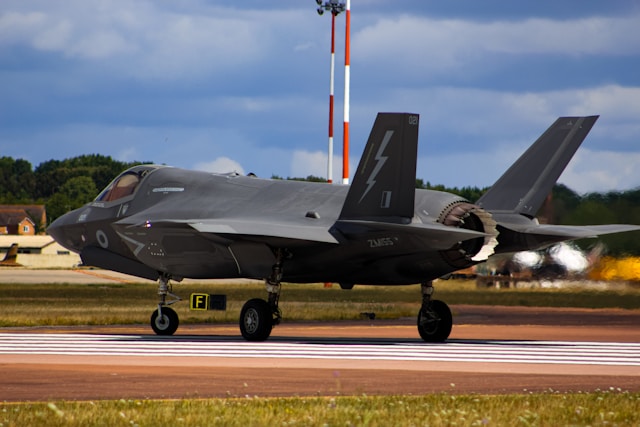
The company’s largest source of revenue is its Aeronautics segment, led by the F-35 Lightning II fighter aircraft program. The F-35 is the world’s largest defense program and accounted for approximately 27% of Lockheed Martin’s 2025 net sales. Beyond manufacturing new aircraft, the company earns recurring revenue from sustainment, spare parts, pilot training, software upgrades, and logistics support throughout the aircraft’s operational life. Aeronautics also generates revenue from programs such as the F-16 Fighting Falcon, F-22 Raptor, and C-130 Hercules, serving both U.S. and international customers.
Its Missiles and Fire Control (MFC) segment earns revenue by supplying missile defense systems and precision-guided weapons, including PAC-3, THAAD, JASSM, LRASM, HIMARS, and Javelin missile systems. Meanwhile, the Rotary and Mission Systems (RMS) business generates revenue from military helicopters such as the Black Hawk, Seahawk, and CH-53K, along with naval combat systems, radar technologies, cybersecurity solutions, command-and-control platforms, and mission support services. The Space segment contributes through satellite programs, missile defense technologies, strategic deterrence systems, NASA space exploration programs such as Orion, and classified national security space projects. Together, these diversified businesses reduce dependence on any single defense program while positioning the company across nearly every major defense spending category.
In 2025, Lockheed Martin reported $71.0 billion in net sales and $5.3 billion in net earnings. Approximately 73% of total revenue came from the U.S. Government, while 27% was generated from international customers, reflecting the company’s strong presence in global defense markets. The company also ended the year with a backlog of approximately $176 billion, representing contracted future work that provides strong revenue visibility over the coming years.
A significant portion of Lockheed Martin’s earnings also comes from lifecycle sustainment and modernization services. Military aircraft, missile systems, naval platforms, and satellites require continuous maintenance, engineering support, software upgrades, spare parts, and logistics throughout their decades-long operational lives. These long-term service contracts generate recurring revenue while strengthening customer relationships and creating high switching costs. By combining large-scale defense production with recurring sustainment services and long-duration government contracts, Lockheed Martin has built one of the most stable and resilient business models in the global aerospace and defense industry.
Future Outlook
Lockheed Martin expects long-term demand for advanced defense technologies to remain strong as governments continue to modernize their armed forces in response to evolving geopolitical challenges and increasingly sophisticated security threats. The company is focused on expanding capabilities in areas such as integrated air and missile defense, hypersonic systems, space technologies, artificial intelligence, autonomy, cybersecurity, and digital engineering, while continuing to strengthen its leadership in military aircraft and mission systems. These priorities are aligned with the changing needs of the U.S. Department of Defense and allied nations, which increasingly require connected, multi-domain solutions rather than standalone defense platforms.
In addition to developing next-generation technologies, Lockheed Martin plans to leverage its substantial backlog, long-term production programs, and lifecycle sustainment business to support future growth. Continued investment in research and development, manufacturing efficiency, and strategic partnerships is expected to enhance the company’s ability to deliver innovative solutions while maintaining operational excellence. With a diversified portfolio spanning aeronautics, missile systems, rotary platforms, mission systems, and space, Lockheed Martin believes it is well positioned to capitalize on long-term global defense spending and remain a trusted technology partner to governments worldwide.