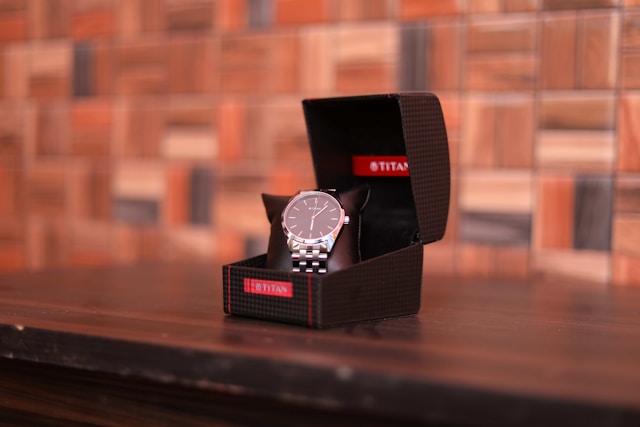
Titan Company Limited is one of India’s most valuable lifestyle companies, with businesses spanning jewellery, watches, eyewear, fragrances, women’s handbags, Indian dress wear, and engineering automation. From its beginnings as a watch manufacturer in 1984, Titan has evolved into a diversified consumer company built on trusted brands, design-led innovation, premium retail experiences, and strong customer relationships. During FY2025-26, the company crossed the landmark Rs. 75,000 crore revenue milestone, expanded internationally through the acquisition of Damas Jewellery, and operated 3,603 stores across more than 440 towns.
The company’s strategy of “Fuelled by Ideas. Scaling Frontiers.” reflects its focus on innovation, premiumisation, international growth, omnichannel retail, and category diversification. While Titan enjoys strong competitive advantages, it also operates in industries influenced by volatile commodity prices, changing consumer preferences, evolving fashion trends, and increasing competition. A SWOT analysis provides a comprehensive assessment of Titan’s strategic position and future growth prospects.
Titan Company Business Model in 2026: How Titan Makes Money
Strengths
1. India’s Most Trusted Lifestyle Brand Portfolio
Titan owns some of India’s strongest lifestyle brands, including Tanishq, CaratLane, Titan, Fastrack, Sonata, Titan Eye+, Taneira, Zoya, SKINN, and IRTH. This diversified portfolio enables the company to serve consumers across multiple lifestyle categories, income segments, and price points.
2. Market Leadership in Jewellery
Jewellery remains Titan’s largest business, led by Tanishq and supported by CaratLane, Mia, Zoya, and Damas. The company’s reputation for transparency, quality, certification, and customer trust provides a significant competitive advantage in India’s organised jewellery market.
3. Extensive Retail Network
Titan operates 3,603 stores covering approximately 46 lakh square feet across more than 440 towns, making it one of India’s largest organised lifestyle retailers. This extensive network strengthens customer accessibility while supporting omnichannel retail growth.
4. Strong Innovation and Design Capabilities
Innovation remains central to Titan’s competitive strategy. During FY2025-26, the company introduced premium watch innovations, Diamond Expertise Centres, Helios Luxe, Rivaah Wedding Lounges, lab-grown diamond brand beYon, advanced eyewear technologies, and engineering-led jewellery innovations.
5. Loyal Customer Base
Titan has built long-term customer relationships through its 49 million-member Encircle loyalty programme, omnichannel capabilities, premium customer experiences, and trusted Tata brand heritage. This provides strong customer retention and repeat purchase opportunities across businesses.
Titan Company Business Strategy in 2026
Weaknesses
1. High Dependence on Jewellery Business
Although Titan has diversified into several lifestyle categories, jewellery continues to contribute the majority of its revenue and profitability. This increases the company’s exposure to changes in gold demand and jewellery market conditions.
2. Exposure to Gold Price Volatility
Management highlights that fluctuations in global gold prices create uncertainty among jewellery consumers and can influence purchasing decisions, inventory management, and business performance.
3. Premium Positioning
Titan’s focus on organised retail, premium brands, and superior customer experiences may limit its ability to compete aggressively in highly price-sensitive segments where unorganised retailers remain strong.
4. Capital-Intensive Retail Expansion
Maintaining thousands of stores, manufacturing facilities, technology platforms, and premium retail formats requires continuous investments in infrastructure, people, product development, and supply chain capabilities.
5. Complex Multi-Category Operations
Managing businesses across jewellery, watches, eyewear, fragrances, handbags, apparel, engineering automation, and international markets increases operational complexity and requires continuous investment in leadership, innovation, and execution capabilities.
Titan Company PESTEL Analysis in 2026
Opportunities
1. Rising Premium Consumption in India
Management expects increasing discretionary spending, formalisation of retail, and growing consumer aspirations to drive long-term demand for branded lifestyle products across jewellery, watches, fashion, and accessories.
2. International Expansion
The acquisition of Damas Jewellery, expansion of Tanishq in North America, and strengthening of GCC operations provide significant opportunities to build Titan into a global jewellery and lifestyle company.
3. Growth of New Lifestyle Categories
Businesses such as Titan Eye+, Taneira, SKINN, IRTH, beYon, and engineering automation provide substantial opportunities to diversify revenue beyond jewellery while capturing larger shares of consumer lifestyle spending.
4. Omnichannel Retail
The rapid growth of omnichannel commerce, which increased by over 50% during FY2025-26, provides opportunities to enhance customer engagement, improve convenience, and strengthen cross-category sales.
5. Premium Retail Formats
Innovative retail concepts such as Helios Luxe, Rivaah Wedding Lounge, Runway, and technology-enabled shopping experiences provide opportunities to strengthen premium positioning and improve customer lifetime value.
Threats
1. Gold Price and Commodity Volatility
Rapid fluctuations in gold prices can affect consumer sentiment, jewellery purchases, inventory costs, and profitability across Titan’s largest business segment.
2. Increasing Competition
Titan faces competition from organised jewellery retailers, international luxury brands, digital-first companies, fashion retailers, eyewear chains, and numerous regional players across all business categories.
3. Geopolitical and Trade Uncertainty
Management identifies geopolitical tensions, international tariff policies, and global trade uncertainties as factors that could affect international expansion, sourcing, and consumer demand.
4. Changing Consumer Preferences
Lifestyle and fashion businesses require continuous innovation to remain relevant. Rapid shifts in consumer tastes, premium preferences, and purchasing behaviour could impact product demand if innovation slows.
5. Macroeconomic Slowdown
Economic uncertainty, inflation, reduced discretionary spending, or weakening consumer confidence could negatively affect demand for jewellery, watches, luxury accessories, and other discretionary lifestyle products. Despite the long-term consumption opportunity, Titan remains exposed to broader economic cycles.
Source: Titan Annual Report 2025-26