
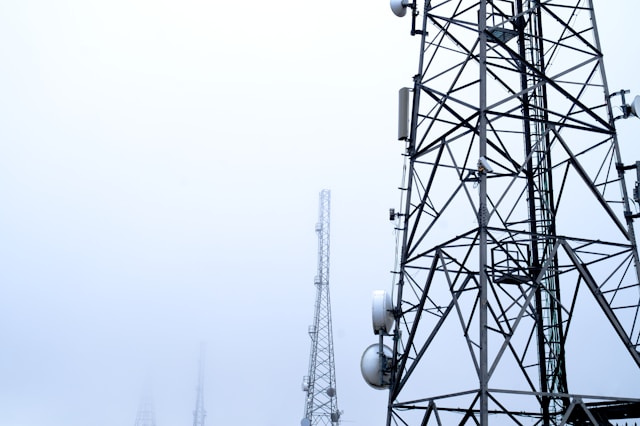
Rogers Communications is one of Canada’s largest telecommunications and media companies, operating across wireless, internet, cable, sports, and broadcasting sectors.

Headquartered in Toronto, Rogers has played a major role in shaping Canada’s telecom infrastructure through large-scale investments in wireless networks, fibre internet expansion, and media assets.
The company serves millions of Canadians through its wireless and broadband divisions while also maintaining ownership stakes in sports and media properties including the Toronto Blue Jays and Sportsnet.

In recent years, Rogers significantly expanded its national footprint through the acquisition of Shaw Communications, a transformational deal that strengthened the company’s presence across Western Canada and reshaped the competitive landscape of the Canadian telecom industry.
Like most major telecom operators, Rogers now operates in an increasingly complex environment shaped by infrastructure investment demands, cybersecurity concerns, regulatory pressure, and intensifying competition from both incumbent providers and emerging fibre network operators.
Company Overview
Founded in 1960, Rogers Communications has evolved from a traditional cable television operator into a diversified telecommunications and media conglomerate. Today, the company operates across wireless services, broadband internet, cable television, enterprise connectivity, sports media, and digital communications infrastructure.

Rogers remains one of the “Big Three” Canadian telecom providers alongside TELUS and Bell Canada.
The company’s wireless division remains one of its largest revenue drivers, supported by extensive national LTE and 5G infrastructure investments. At the same time, Rogers continues expanding fibre and broadband services across major Canadian markets following the Shaw acquisition, particularly throughout Western Canada.
Following the acquisition, Rogers significantly strengthened its position in broadband markets such as Edmonton, where the company now competes more aggressively in fibre and home internet plans.
Strengths
One of Rogers’ greatest strengths is its large-scale infrastructure footprint across Canada. The company operates extensive wireless and broadband networks that support millions of residential and enterprise customers nationwide.
Its position as one of Canada’s largest telecom providers gives Rogers significant economies of scale, strong brand recognition, and substantial recurring revenue streams. The company’s ability to bundle wireless, internet, television, and media services also creates strong customer retention advantages compared to smaller competitors.
The Shaw acquisition represented another major strategic advantage. The deal significantly expanded Rogers’ infrastructure presence across Western Canada, allowing the company to strengthen market share in provinces including Alberta and British Columbia while improving broadband coverage and operational scale.
Rogers also benefits from ownership of valuable media and sports assets. Sportsnet and the Toronto Blue Jays provide additional brand visibility and advertising opportunities that few telecom competitors can replicate.
In addition, Rogers continues investing heavily into fibre internet infrastructure and 5G deployment, positioning the company to support growing consumer demand for high-speed connectivity and cloud-based digital services.
Weaknesses
Despite its scale, Rogers faces several notable weaknesses.
One of the most damaging events in recent company history was the nationwide outage in 2022, which disrupted mobile communications, internet connectivity, payment systems, transportation services, and emergency communications across Canada.
The outage generated significant reputational damage and raised broader concerns around infrastructure resiliency, network redundancy, and operational concentration risk within Canada’s telecom sector.
Rogers also continues facing criticism surrounding pricing, customer service quality, and contract complexity, all of which remain common concerns among Canadian telecom consumers.
The Shaw acquisition, while strategically valuable, also substantially increased Rogers’ debt load. Large telecom infrastructure projects require enormous capital expenditures, and the company must now balance aggressive network investment with debt management and operational efficiency targets.
Cybersecurity risk represents another growing challenge. As Rogers continues expanding cloud-connected infrastructure, enterprise systems, customer platforms, and digital operations, the company faces increasing exposure to ransomware threats, credential attacks, infrastructure vulnerabilities, and data breach risks affecting the broader telecom industry.
Opportunities
Rogers still has significant growth opportunities available moving forward.
The continued expansion of fibre infrastructure across Canada represents one of the company’s largest long-term opportunities. Consumer demand for high-speed internet, low-latency connectivity, streaming services, and cloud-based applications continues growing rapidly.
The company also remains well-positioned to benefit from ongoing 5G adoption, particularly as enterprise customers increasingly adopt IoT technologies, smart infrastructure systems, edge computing, and AI-driven applications.
Western Canada represents another major opportunity following the Shaw acquisition. Rogers now has stronger regional infrastructure and customer reach across provinces where broadband demand and population growth remain strong.
In addition, Rogers could continue expanding enterprise connectivity, cybersecurity services, cloud infrastructure partnerships, and managed business solutions as organizations increasingly prioritize digital transformation and network modernization.
Artificial intelligence and network automation may also improve operational efficiency over time by helping optimize network traffic management, predictive maintenance, fraud detection, and customer support operations.
Threats
The Canadian telecom market remains highly competitive despite being dominated by a relatively small number of major providers.
Rogers faces constant competition from Bell and TELUS across wireless, broadband, and enterprise services. Aggressive promotional pricing, bundled offers, and infrastructure expansion initiatives continue putting pressure on customer acquisition and retention.
The company also faces growing competition from smaller regional fibre providers and alternative network operators that continue expanding in select Canadian markets.
Regulatory pressure remains another ongoing threat. Canadian telecom providers operate within a heavily regulated environment where government agencies and regulators continue scrutinizing pricing practices, competition concerns, consumer protections, and network reliability.
Cybersecurity threats also continue intensifying globally. Telecom providers remain attractive targets for ransomware groups, data theft operations, nation-state actors, and infrastructure-focused cyberattacks due to the critical nature of communications infrastructure.
Large-scale outages, service disruptions, or future cybersecurity incidents could create additional reputational and operational challenges for Rogers moving forward.
Conclusion
Rogers Communications remains one of the most influential players in Canada’s telecommunications industry.
The company benefits from strong infrastructure assets, national brand recognition, extensive wireless and broadband operations, and valuable media holdings. The Shaw acquisition further strengthened Rogers’ strategic position across Western Canada and expanded its long-term broadband growth opportunities.
At the same time, Rogers continues operating in a highly competitive and increasingly complex environment shaped by infrastructure investment demands, regulatory scrutiny, cybersecurity risks, and rising consumer expectations surrounding network reliability and service quality.
As Canada continues expanding fibre infrastructure, cloud connectivity, and next-generation communications technologies, Rogers will likely remain a central player in the evolution of the country’s digital infrastructure landscape.
Future Outlook for Rogers
Looking ahead, Rogers will likely continue focusing heavily on infrastructure expansion, network modernization, and long-term customer retention as competition within the Canadian telecom market intensifies.
One of the company’s largest priorities will be fully integrating Shaw’s infrastructure, operations, and customer base into the broader Rogers ecosystem. Large telecom mergers often take years to optimize operationally, but successful integration could provide Rogers with stronger economies of scale, improved regional coverage, and increased broadband penetration across Western Canada.
At the same time, Rogers will need to continue investing aggressively into fibre internet and 5G infrastructure to remain competitive against Bell and TELUS, both of which continue expanding high-speed network deployments nationwide.
Cybersecurity and infrastructure resiliency will also remain major strategic priorities moving forward. As telecom providers become increasingly dependent on cloud-connected systems, AI-driven operations, and enterprise digital services, the operational risks associated with outages, cyberattacks, and infrastructure failures continue growing.
Consumer expectations are also evolving. Canadians increasingly expect faster internet speeds, lower latency, improved customer support, transparent pricing, and highly reliable network performance. Providers that fail to meet those expectations risk losing market share in an industry where competition remains intense despite high barriers to entry.
While Rogers faces meaningful operational and regulatory challenges, the company remains positioned as one of the dominant long-term players within Canada’s telecommunications and digital infrastructure sector.