
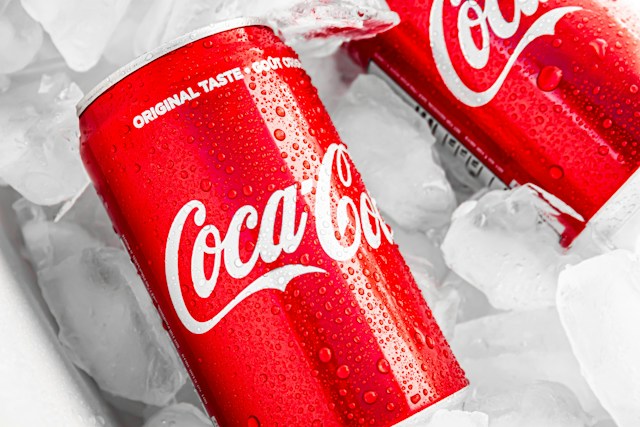
The Coca-Cola Company operates one of the world’s largest beverage systems. Its products are made available through independent bottling partners, distributors, wholesalers, retailers and consolidated bottling and distribution operations. In 2025, beverages carrying trademarks owned by or licensed to Coca-Cola represented approximately 2.2 billion of the estimated 65 billion servings of all beverages consumed worldwide each day. The Coca-Cola system sold 33.8 billion unit cases during the year, while the company generated $47.94 billion in net operating revenue.

Coca-Cola’s strategy is broader than increasing sales of its namesake sparkling beverage. The company competes across a wide commercial beverage market and must continually respond to different consumer needs, channels, price points and geographies. Its strategic architecture combines powerful brands, a diversified beverage portfolio, a largely partner-operated bottling system, disciplined revenue growth management and selective ownership of finished-product operations.
The 2025 Annual Report shows a company balancing growth and system optimization. Worldwide unit case volume was even, yet net revenue increased 2%, supported by a 4% price/mix contribution. Concentrate operations represented 59% of revenue and 85% of worldwide unit case volume. At the same time, Coca-Cola continued refranchising selected bottling operations. These figures reveal the major strategic priorities shaping Coca-Cola.

Coca-Cola Business Model 2026: How Does Coca-Cola Make Money?
1. Build a Total Beverage Portfolio Around Changing Consumer Demand
A central pillar of Coca-Cola’s strategy is to offer consumers a wide variety of beverage choices for different desires, needs and lifestyles. The company’s portfolio extends beyond Trademark Coca-Cola into sparkling flavors, water, sports drinks, coffee, tea, juice, value-added dairy and plant-based beverages and energy drinks.
This portfolio approach is strategically important because beverage demand is fragmented. Consumers do not make a single beverage decision; they make different choices depending on meals, hydration, exercise, energy, refreshment, convenience and other occasions. By participating across categories, Coca-Cola can pursue a greater share of total beverage consumption rather than relying exclusively on carbonated soft drinks.

The 2025 volume data demonstrates the value of this diversification. EMEA unit case volume increased 3%, including 2% growth in Trademark Coca-Cola, 3% growth in sparkling flavors and 2% growth in water, sports, coffee and tea, along with growth in energy drinks. Juice, value-added dairy and plant-based beverages declined 4% in the region. Asia Pacific recorded 3% growth in water, sports, coffee and tea and 1% growth in Trademark Coca-Cola, but sparkling flavors declined 3% and juice, dairy and plant-based beverages declined 6%.
These divergent results reinforce the need for a broad portfolio. A category can weaken while another grows. Coca-Cola can allocate innovation and commercial resources across its portfolio according to consumer demand rather than depending on uniform growth from every brand.
Portfolio strategy also involves acquisitions, divestitures and licensing. Coca-Cola states that it periodically acquires brands and related operations or enters licensing arrangements to supplement beverage offerings. This gives the company another route to participate in emerging consumer spaces beyond internally developed brands.
The strategic objective is therefore not simply product proliferation. Coca-Cola needs a portfolio with enough breadth to address consumer occasions while concentrating resources behind brands with the greatest potential. Brand strength must then be converted into availability through the bottling system.
2. Scale Brands Through the Coca-Cola Bottling System
Coca-Cola’s bottling network is fundamental to its strategy. The company operates two lines of business: concentrate operations and finished-product operations. Under the concentrate model, Coca-Cola typically sells beverage concentrates, bases and syrups to authorized bottling partners. Bottlers manufacture and package finished beverages and distribute them in their territories.
This division of responsibilities enables Coca-Cola to combine centralized brand, product and system capabilities with local physical execution. Bottlers invest in production lines, warehouses, distribution fleets, sales teams and customer relationships. Coca-Cola can therefore achieve immense consumer reach without owning every asset required to manufacture and distribute finished drinks.
The scale is evident in the economics. Concentrate operations represented 85% of worldwide unit case volume in 2025 but 59% of Coca-Cola’s reported revenue. Finished-product operations represented 15% of worldwide unit case volume and 41% of revenue. The concentrate structure allows Coca-Cola to participate economically in enormous system volume while bottling partners capture and incur other parts of the finished-product economics.
The strategy is dynamic rather than fixed. Coca-Cola periodically acquires and disposes of bottling interests. Bottling Investments unit case volume fell 8% in 2025, primarily reflecting refranchising in the Philippines, Bangladesh and certain territories in India. After structural changes, the underlying volume comparison was more stable.
Refranchising can move capital-intensive bottling activity to partners while preserving Coca-Cola’s concentrate relationship and brand economics. Conversely, direct ownership can be useful where Coca-Cola needs to strengthen or transform operations before eventually moving them to partners. The annual report’s structural changes illustrate active management of the system rather than passive reliance on a static network.
The success of this strategy depends on alignment. Independent bottlers must have the capability and incentive to invest behind Coca-Cola’s portfolio. The company therefore needs strong system relationships, common commercial priorities and coordinated execution across marketing, innovation, packaging, manufacturing and customer service.
Coca-Cola PESTEL Analysis 2026
3. Use Pricing, Package Mix and Revenue Growth Management to Expand Value
Coca-Cola’s 2025 results demonstrate that strategic growth does not require physical volume to rise at the same rate as revenue. Worldwide unit case volume was even compared with 2024, yet net operating revenue increased 2% to $47.94 billion. Price/mix contributed approximately four percentage points to consolidated revenue growth.
This makes revenue growth management a critical strategic lever. Coca-Cola can influence economic value through price points, package sizes, channel mix, brand mix and geographic mix. The goal is to balance consumer affordability with revenue and profitability across different markets.
North America illustrates the mechanism. The region experienced a negative 1% volume contribution to revenue in 2025, while price/mix contributed positive 5%, resulting in 4% reported revenue growth. Latin America recorded an 11% positive price/mix impact, although a 12% currency headwind contributed to a 2% reported decline. Asia Pacific recorded a 4% positive price/mix contribution.
Pricing strategy is especially important during inflation. Coca-Cola identifies inflation, commodity costs, fuel prices and consumer spending among factors affecting the industry. Price increases can protect economics, but excessive increases can hurt affordability or demand. Therefore, package architecture and mix are important alongside headline pricing.
Different package sizes can allow consumers to participate at different absolute price points. Channel and product mix can also improve revenue per case without depending entirely on list-price increases. The company’s broad portfolio and distribution system provide the foundation for this more granular approach.
The 2025 results suggest that Coca-Cola is using these levers to create value even in a muted volume environment. Strategically, maintaining this balance is important because long-term growth cannot depend indefinitely on pricing alone. Sustainable performance requires both consumer demand and appropriate monetization of that demand.
4. Pursue Geographic Diversification and Localized Growth
Coca-Cola is a global company, but its performance is built market by market. International operations generated $28.81 billion of net operating revenue in 2025 compared with $19.13 billion in the United States. This geographic diversification creates a large opportunity set and reduces dependence on any single national market.
Growth patterns differ substantially by region. EMEA unit case volume increased 3% in 2025. Within EMEA, Eurasia and Middle East grew 7%, Africa grew 3%, while Europe declined 1%. Latin America volume was even overall, with Brazil growing 2% and Argentina 6%, offset by a 4% decline in Mexico. Asia Pacific was even overall; Greater China and Mongolia grew 1%, while ASEAN and South Pacific declined 3%. India and Southwest Asia and Japan and South Korea were even.
These differences make localized execution essential. Coca-Cola’s global brands provide scale, but local bottlers and operating units need to adapt commercial activity to consumer demand, economic conditions, channels and competitive environments. A uniform global approach would not adequately address such varied market conditions.
Geographic diversification also creates foreign-exchange exposure. Currency movements reduced consolidated revenue growth by approximately two percentage points in 2025. Latin America’s 11% price/mix contribution was more than offset by a 12% currency impact before other factors. Thus strong local execution can translate into weaker reported U.S.-dollar growth when currencies move adversely.
Coca-Cola’s strategy must therefore distinguish between underlying consumer and system performance and reported financial results. Long-term value creation depends on building durable local businesses even when currency movements create short-term volatility.
5. Optimize the Portfolio of Owned Assets and Improve System Economics
Coca-Cola’s strategy includes deciding which activities should sit inside the company and which should be performed by bottling partners or other participants. The company’s history of buying and selling bottling interests reflects this portfolio-management approach.
In 2025, acquisitions, divestitures and structural changes reduced consolidated net revenue growth by approximately one percentage point. Bottling Investments revenue declined 8%, with divestiture and structural effects accounting for a significant part of that movement. This is important because lower reported revenue caused by refranchising does not necessarily indicate weaker consumer demand; it can reflect a deliberate change in who owns the bottling economics.
The long-term strategic logic is to concentrate Coca-Cola’s resources where the company believes it can create differentiated value. Brands, formulas, consumer insights, marketing, innovation and system leadership are core capabilities. Physical bottling and distribution can often be operated effectively by specialized local partners.
At the same time, Coca-Cola retains finished-product operations where direct participation fits its objectives. Finished-product operations generated $19.48 billion of revenue in 2025. The model is therefore not purely asset-light; it is a hybrid structure that can change by geography and business need.
Capital allocation around bottling assets can influence margins, revenue composition and risk. Refranchising generally reduces the amount of finished-product revenue consolidated by Coca-Cola while increasing the relative importance of concentrate economics. Investors and managers therefore need to interpret structural changes separately from organic demand trends.
6. Protect Brand Relevance Through Marketing, Innovation and Execution
Coca-Cola’s system only creates economic value if consumers continue choosing its beverages. Consequently, maintaining brand relevance is a strategic requirement. The company’s success depends on connecting with consumers by offering beverage choices that fit their desires, needs and lifestyles.
Innovation can occur across product formulations, brands, packages and consumption occasions. The company must respond to changing consumer preferences while protecting the scale and recognition of established trademarks. Zero-sugar offerings, energy drinks and growth in water, sports, coffee and tea in several regions demonstrate how category and product evolution can contribute to the portfolio.
Marketing must then translate the portfolio into consumer demand. Coca-Cola’s scale allows brand investments to be leveraged across billions of unit cases, while bottling partners translate that demand into physical availability and in-market execution. The strategic system therefore forms a loop: brand investment drives consumer preference, bottlers create availability, widespread availability reinforces consumption and scale supports continued investment.
Execution is particularly important because Coca-Cola competes against numerous global, regional and local beverage companies. Brand recognition alone does not guarantee shelf space, cold availability, appropriate pricing or relevance. The company and bottlers must coordinate with retailers and foodservice customers to make products accessible at the right occasions.
7. Manage Structural Risks While Preserving Long-Term Growth
Coca-Cola’s global strategy is exposed to a broad range of risks. Its annual report highlights competition, consumer spending, economic conditions, water availability and quality, changing preferences, inflation, geopolitical conditions, regulation, foreign exchange, fuel prices, weather patterns and health crises.
Water is fundamental to beverage production, making availability and quality strategically important. Commodity and fuel costs affect manufacturing and distribution. Regulation can influence ingredients, packaging, labeling, marketing and commercial practices. Geopolitical events can disrupt markets and supply chains.
Consumer preference is perhaps the most fundamental competitive risk. Coca-Cola must continually earn demand across a portfolio in which category performance changes over time. A global system also increases complexity because risks can emerge differently across markets.
The company’s diversified portfolio, geographic reach and partner network provide resilience, but they do not eliminate these exposures. Strategy therefore requires balancing growth initiatives with system flexibility, financial discipline and continuous adaptation.
Conclusion
Coca-Cola’s business strategy in 2026 is built around a powerful combination of consumer brands, portfolio breadth, global reach, revenue growth management and a partner-led bottling system. The company generated $47.94 billion of revenue in 2025 while the system sold 33.8 billion unit cases. Concentrate operations accounted for 85% of worldwide unit case volume, demonstrating the central role of bottling partnerships.
The company’s strategic challenge is to keep this enormous system relevant as consumer preferences, economies and competitive conditions change. Coca-Cola must grow its total beverage portfolio, use pricing and package mix intelligently, localize execution across diverse markets and continually optimize which assets it owns directly.
Its 2025 performance illustrates both the strength and complexity of this strategy. Revenue increased despite flat worldwide unit case volume, international markets remained the majority of revenue, and refranchising continued to reshape reported results. Coca-Cola’s future performance will depend on whether it can continue converting global brand strength into locally relevant consumer demand while maintaining the economic advantages of its bottling system.
Source: The Coca-Cola Company, 2025 Annual Report / Form 10-K.