Disney’s strategy entering 2026 is centered on converting its unmatched portfolio of entertainment brands into sustainable growth across streaming, sports and physical experiences. Fiscal 2025 revenue reached approximately $94.4 billion, with Entertainment, Sports and Experiences each contributing substantial scale.
The company is navigating two simultaneous transitions: traditional television economics are weakening while direct-to-consumer distribution expands, and Disney is investing heavily in parks and cruises to grow businesses that translate intellectual property into high-value physical experiences.
For the economics behind these businesses, read our Disney Business Model 2026.
1. Strengthen the Creative and Franchise Engine
Disney’s first strategic priority is creative quality because the rest of its ecosystem depends on intellectual property that audiences care about. Films and series do more than generate studio revenue: successful characters and worlds can support streaming engagement, park attractions, merchandise and licensing.
This creates a portfolio logic. Disney can invest in established franchises while also developing new intellectual property, then allocate capital toward the stories demonstrating the strongest consumer response. The strategic objective is not maximum content volume but content capable of producing durable engagement and cross-segment value.
Franchise management also requires coordination. A major release can be supported across theatrical distribution, Disney+, consumer products and parks. Timing and brand consistency can increase the lifetime economics of intellectual property.
For a structured assessment of Disney’s competitive strengths and risks, see our Disney SWOT Analysis 2026.
2. Make Direct-to-Consumer Streaming a Durable Profit Engine
Disney has moved from prioritizing streaming subscriber growth toward improving the economics of direct-to-consumer services. Disney+, Hulu and related offerings give the company direct customer relationships, subscription revenue, advertising inventory and data about viewing behavior.
The strategic challenge is balancing engagement with content spending. Streaming services require technology, marketing and a steady pipeline of programming. Scale creates value only when revenue per customer and advertising economics support those costs.
Integration across Disney+ and Hulu can reduce friction for consumers and make the bundle more valuable. Bundling can improve retention because households receive a broader mix of family entertainment, general entertainment and potentially sports access.
Advertising provides a second monetization layer beyond subscription fees. As Disney’s streaming audience grows, ad-supported tiers can broaden affordability while monetizing viewers differently according to willingness to pay.
For the external forces shaping streaming and media, read our Disney PESTEL Analysis 2026.
3. Transform ESPN for Direct-to-Consumer Sports Distribution
ESPN remains strategically important because live sports retain urgency in an on-demand media environment. The challenge is that the traditional pay-TV bundle is changing while sports-rights costs remain substantial.
Disney’s strategy is to extend ESPN more directly to consumers while maintaining valuable existing distribution relationships. A direct service can broaden access beyond traditional cable households and create a direct customer relationship, but the transition must be managed carefully to avoid destroying legacy economics faster than new economics scale.
Sports rights are therefore capital-allocation decisions as much as programming decisions. Rights should attract audiences, subscriptions and advertising sufficient to justify long-term commitments. ESPN’s brand, production capabilities and portfolio of rights create advantages, but competition for premium events can increase costs.
Bundling sports with Disney’s broader streaming ecosystem can also reduce customer acquisition friction. The strategic opportunity is to make Disney’s combined entertainment proposition more difficult to replace than any single service.
4. Expand Experiences as a High-Value Physical Extension of Disney IP
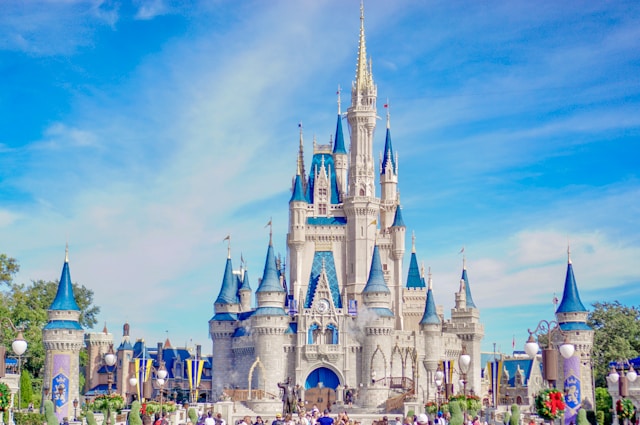
Experiences generated approximately $36.2 billion of fiscal 2025 revenue and gives Disney a business that cannot be replicated purely through digital distribution. Theme parks, resorts and cruises turn stories into immersive environments and allow Disney to monetize guest spending across tickets, hotels, food, merchandise and premium experiences.
Disney is investing substantially in Experiences capacity. The strategic logic is long duration: a successful attraction or cruise ship can operate for many years, while intellectual property gives Disney reasons to refresh and expand those assets.
Capacity investment must be disciplined because parks and ships require significant upfront capital. Returns depend on attendance, occupancy, guest spending, pricing and operating costs. Disney therefore needs to align expansion with durable demand rather than short-term attendance spikes.
Experiences also strengthens franchises. A consumer who visits an attraction or cruise environment interacts with Disney intellectual property in a deeper way than through a single film viewing, potentially increasing loyalty and future spending across the ecosystem.
5. Use the Integrated Disney Ecosystem to Increase Lifetime Value
Disney’s strategic advantage is not simply owning multiple businesses; it is the ability to make those businesses reinforce one another. Content creates intellectual property, streaming sustains engagement, consumer products extend the brand and Experiences converts fandom into physical spending.
This means the relevant economic unit can be larger than a film, subscriber or park visit. A successful franchise may create revenue across multiple segments over decades. Disney can therefore justify creative investment based partly on downstream opportunities unavailable to standalone studios.
Data and direct customer relationships can strengthen this system. Streaming and digital platforms provide information about audience preferences, while parks and consumer businesses reveal willingness to spend. Used effectively, these signals can improve marketing and investment decisions.
The ecosystem also diversifies risk. Weakness in one distribution channel does not necessarily eliminate the value of a franchise because it can still be monetized elsewhere. However, integration works only when creative quality remains strong enough to sustain consumer interest.
6. Balance Growth Investment with Cost and Capital Discipline
Disney’s portfolio requires competing uses of capital: films and series, sports rights, streaming technology, theme-park expansion, cruise ships and shareholder returns. Management must compare investments with very different risk, duration and cash-flow profiles.
Cost discipline in Entertainment is particularly important as linear-network economics decline. Disney needs to fund high-quality content without recreating an unsustainable volume-driven streaming model. Fewer, stronger projects can improve both creative focus and financial returns when execution is successful.
Experiences investment presents the opposite challenge: large physical assets require spending years before all returns are realized. These projects should be evaluated over long horizons and supported by franchise demand, capacity utilization and guest economics.
Financial discipline also preserves strategic flexibility. Media and entertainment markets change quickly, and a strong balance sheet allows Disney to continue investing through downturns or respond when attractive opportunities emerge.
Strategic Outlook for 2026
Disney enters 2026 with a clearer strategic architecture than during the initial streaming land grab: strengthen creative output, improve direct-to-consumer profitability, evolve ESPN, expand Experiences and use franchises across the entire company.
The central strategic test is whether Disney can turn integration into measurable economics. Streaming should improve retention and monetization; sports should justify rights costs; Experiences investments should produce attractive long-term returns; and successful content should create value beyond its initial release.
Disney’s greatest asset remains its portfolio of stories and brands, but intellectual property is not self-executing. The company must continually create, refresh and distribute stories in ways that fit changing consumer behavior. If it does so while maintaining capital discipline, the combination of digital reach and physical experiences gives Disney multiple avenues for long-term growth.
Creative discipline also means balancing franchise familiarity with originality. Established brands can reduce marketing risk because audiences already know the characters, but overuse can weaken consumer excitement. Disney therefore needs a pipeline that refreshes major franchises while creating new stories capable of becoming future franchises.
The theatrical window remains strategically useful even as streaming expands. A successful cinema release can create cultural visibility and establish premium positioning before a title moves into other distribution windows. The value should be judged across the full lifecycle rather than by one release channel.
Streaming strategy also involves product architecture. Disney can use bundles to combine general entertainment, family content and sports, increasing the number of reasons a household has to remain subscribed. Higher engagement can reduce churn, which lowers the effective cost of replacing departing customers.
At the same time, price increases have limits. Consumers can cancel streaming services relatively easily, so Disney must continually demonstrate value through content breadth, product quality and convenience. Advertising-supported plans can create a lower-priced entry point while preserving another source of monetization.
ESPN’s transition is strategically delicate because legacy affiliate economics remain valuable. Direct distribution can reach cord-cutters and younger consumers, but migration needs to be paced so incremental streaming revenue compensates for changes in traditional distribution.
The sports portfolio also creates cross-selling opportunities. If Disney can integrate ESPN access into broader bundles, sports can increase engagement while Disney and Hulu content broaden the proposition beyond live events. This can create a differentiated bundle compared with single-category services.
Experiences expansion should similarly be connected to franchise strategy. New lands, attractions and ships are more powerful when built around intellectual property with proven global demand. This reduces some demand uncertainty and allows marketing across Disney’s media channels.
Disney can also use capacity management and pricing to improve returns on existing Experiences assets. Growth does not have to come entirely from building new parks; better utilization, premium offerings and higher guest spending can increase economics from the installed asset base.
Internationally, the strategy must balance global scale with local relevance. Disney’s franchises travel across borders, but content preferences, regulation and purchasing power differ. Distribution and pricing therefore need local adaptation even when intellectual property remains global.
Technology investment cuts across all strategic pillars. Streaming requires reliable platforms and advertising systems, parks use digital tools to manage guest journeys, and production technologies affect content economics. Technology is most valuable when it improves consumer experience or asset productivity rather than existing as a standalone initiative.
Organizational coordination is another strategic requirement. Disney’s advantage depends on Entertainment, Sports and Experiences sharing intellectual property and customer opportunities. Segment optimization alone can leave value unrealized if one business does not support the broader franchise lifecycle.
Finally, Disney needs to measure returns over different time horizons. Streaming product investments may scale across millions of users quickly, whereas a park expansion or cruise ship can take years to build and decades to operate. Capital allocation must therefore compare risk-adjusted lifetime cash flows rather than near-term earnings alone.
Source: The Walt Disney Company, 2025 Annual Report / Form 10-K.