Chevron enters 2026 as a larger integrated energy company following the July 2025 acquisition of Hess Corporation. Its portfolio spans upstream oil and gas, LNG, refining, marketing, chemicals, logistics and emerging lower-carbon businesses. The company’s scale and integration provide important advantages, while commodity exposure, project complexity and geopolitical risk remain significant vulnerabilities.
For how Chevron makes money across its integrated portfolio, read our Chevron Business Model 2026.
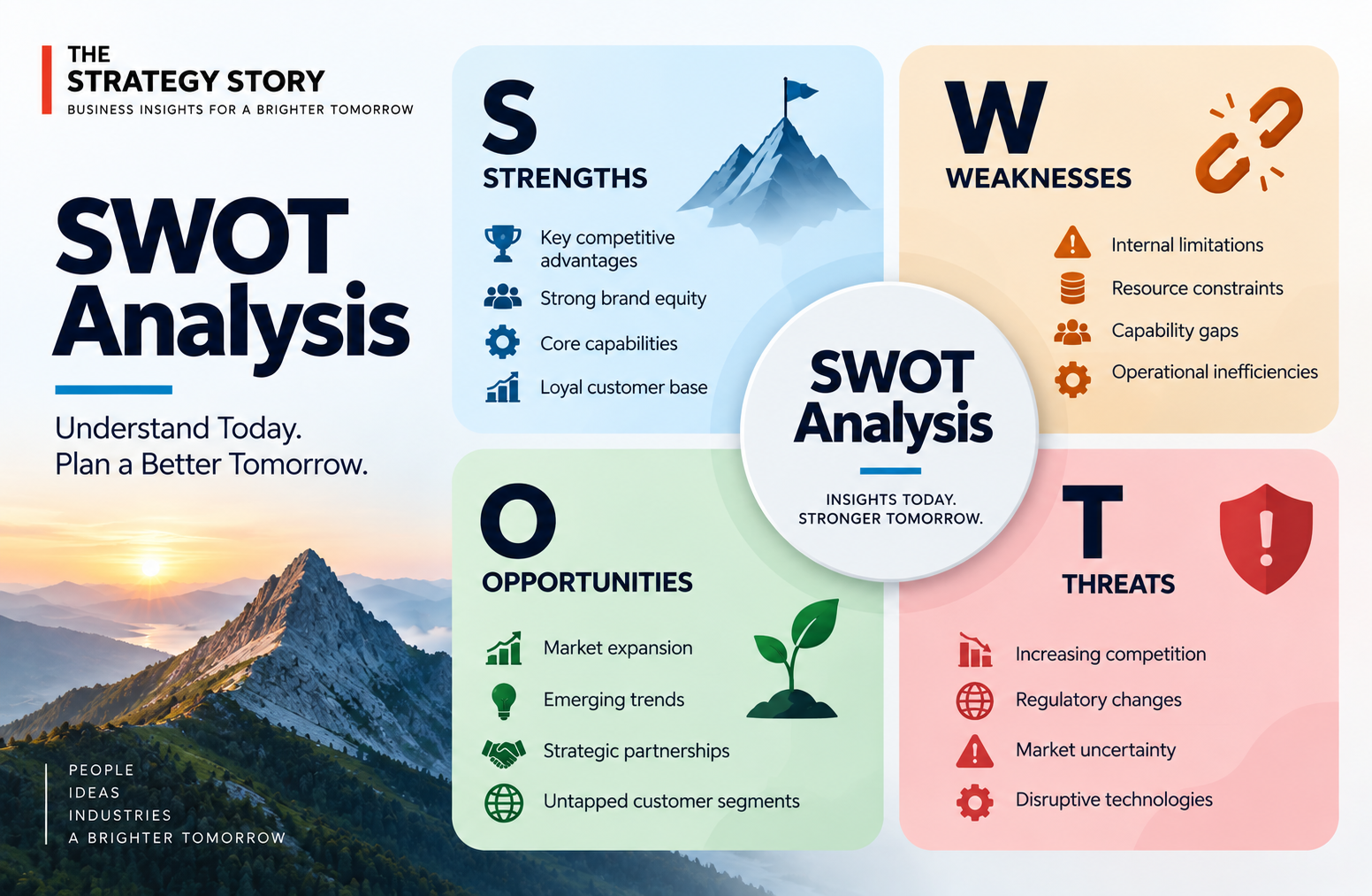
Strengths
1. Large integrated energy portfolio
Chevron operates across exploration, production, LNG, pipelines, refining, marketing, lubricants and chemicals. Integration provides multiple routes to monetize resources and can create logistics and market flexibility. It also broadens earnings sources beyond a pure upstream producer.
2. Expanded resource base after Hess
The Hess acquisition completed in July 2025 materially increased Chevron’s upstream portfolio. Legacy Hess assets represented approximately 13% of Chevron’s total proved reserves at year-end, providing additional resource depth and future development opportunities.
3. Deep engineering and project capabilities
Chevron maintains capabilities across subsurface, wells, facilities engineering, capital projects, operations, technology and environmental management. These skills are critical for developing complex offshore, LNG and other large-scale energy assets and can also support lower-carbon opportunities.
4. Global market access and logistics
Pipelines, shipping, storage, gas marketing, refineries and branded downstream channels connect Chevron’s production to customers. This infrastructure can improve placement flexibility and supports the company’s integrated business model across multiple regions.
5. Multiple pathways for future energy demand
Chevron’s portfolio includes conventional oil and gas alongside renewable fuels, carbon capture and storage, lower-carbon solutions and emerging power opportunities. This gives the company strategic optionality as customer demand and energy policy evolve.
For Chevron’s strategic priorities, see our Chevron Business Strategy 2026.
Weaknesses
1. Heavy dependence on commodity prices
Chevron states that earnings depend mostly on upstream profitability and that crude-oil price is the most significant factor affecting upstream results. Because prices are set in global markets outside company control, earnings and cash flows can fluctuate materially.
2. Capital-intensive operating model
Oil fields, LNG facilities, refineries, pipelines and new-energy projects require large upfront investments and long development periods. Cost overruns, delays or weaker commodity prices can reduce returns after substantial capital has already been committed.
3. Hess integration complexity
The acquisition expands Chevron’s opportunity set but also creates integration risk. Systems, people, reserves processes, assets and capital plans must be aligned. Chevron continued to rely partly on legacy Hess reserves processes at year-end 2025 because of the transaction’s timing.
4. Long-lived hydrocarbon asset exposure
Much of Chevron’s asset base is designed for oil and gas production or refining over long periods. Changes in demand, regulation, carbon costs or technology can affect the economics of assets whose capital decisions were made years earlier.
5. Global operating complexity
Chevron operates across numerous jurisdictions with different fiscal, regulatory, political and environmental regimes. Global scale increases opportunities but also creates compliance, tax, sanctions, security and partner-management complexity.
For the external forces behind these opportunities and risks, read our Chevron PESTEL Analysis 2026.
Opportunities
1. Value creation from Hess assets
Integrating Hess can increase Chevron’s production, reserve depth and future project portfolio. The transaction’s strategic value depends on operating performance, development execution and disciplined capital allocation across the combined asset base.
2. Growing LNG and natural-gas demand
Chevron participates across the LNG value chain from production and liquefaction to transportation and regasification. International gas demand can create long-duration opportunities, particularly where customers prioritize reliable energy supply.
3. Power demand from data centers
Chevron’s filing identifies power for data centers within New Energies responsibilities. Growing electricity demand associated with digital infrastructure and AI can create adjacent opportunities leveraging Chevron’s natural-gas, project and energy-market capabilities.
4. Carbon capture and lower-carbon solutions
Chevron participates in carbon capture and storage and other lower-carbon activities. Customers seeking emissions reductions can create new commercial opportunities where Chevron can apply subsurface, engineering and large-project expertise.
5. Operational efficiency through technology and AI
Digital tools and artificial intelligence can improve subsurface analysis, maintenance, reliability and business productivity. Applying technology across a large asset base can generate value through better recovery, lower costs and reduced downtime.
Threats
1. Oil and gas price volatility
Global supply-demand balances, geopolitical events, inventories and producer decisions can cause rapid commodity-price changes. Lower prices can reduce upstream earnings, cash flow and the economic attractiveness of future developments.
2. Geopolitical and sanctions risk
Chevron operates in politically complex regions and is exposed to conflict, sanctions, expropriation, contract changes and restrictions on trade. These risks can disrupt production, payments, logistics or access to assets.
3. Climate and environmental regulation
Governments can impose emissions limits, carbon pricing, fuel standards and permitting requirements that increase operating costs or affect demand. Long-lived energy assets make regulatory changes particularly important to investment economics.
4. Major project and operational incidents
Offshore production, refineries, LNG facilities and pipelines involve safety and environmental hazards. Accidents or equipment failures can cause injuries, production losses, remediation costs, litigation and reputational damage.
5. Energy-transition demand uncertainty
Changes in vehicle technology, efficiency, renewable power and customer preferences can alter long-term demand for petroleum products. Chevron must make capital decisions today despite uncertainty about the future pace and shape of energy-system change.
Chevron’s strengths reinforce one another. Large resource positions are more valuable when supported by engineering, logistics and downstream market access. The Hess acquisition adds resources, but Chevron’s ability to integrate those resources into its capital and operating system will determine the ultimate value created.
The company’s global scale also provides portfolio choice. Capital can be allocated across different basins, LNG, downstream assets and emerging energy businesses. This flexibility can be valuable when individual countries, commodities or projects become less attractive.
At the same time, the integrated model remains structurally exposed to energy cycles. Downstream and chemicals can diversify earnings, but upstream is still the principal driver. A sustained period of weak oil and gas prices would pressure cash generation and the economics of future development.
Hess creates both opportunity and near-term complexity. Acquired resources can support production and reserves, while integration requires harmonizing systems, technical processes and investment priorities. The reserve-review process in 2025 shows that integration was still underway at year-end.
Chevron’s lower-carbon portfolio is an opportunity because the company can apply subsurface, project and customer capabilities to carbon capture, renewable fuels and power. However, these businesses must develop commercial economics strong enough to compete for capital with established oil and gas assets.
Power demand linked to data centers and AI adds another potential adjacency. Chevron’s natural-gas position and project capabilities could be relevant where customers require reliable electricity at scale. The filing’s assignment of power for data centers to New Energies leadership indicates management attention to this area.
Operational incidents remain a major threat because the company’s assets handle hydrocarbons at high pressure, temperature and volume. A serious event can simultaneously affect people, the environment, production, regulation and reputation.
Climate policy creates long-duration uncertainty. Projects sanctioned today may operate for decades, while emissions rules and customer preferences can change over that period. Chevron must therefore test investments against multiple market and policy scenarios.
The company’s strongest defensive capability is financial and portfolio discipline. Since commodity prices are outside management control, resilience depends on costs, asset quality, balance-sheet capacity and the ability to prioritize the highest-return investments.
Another strength is Chevron’s ability to participate across the full gas and LNG chain. Production, liquefaction, shipping, regasification, storage and marketing create multiple points of value and provide access to international demand centers.
However, LNG and deepwater developments can require substantial capital before first production. Long construction periods increase exposure to inflation, contractor performance and changes in commodity markets. Project discipline is therefore essential to converting resource quality into shareholder returns.
Downstream provides diversification but carries its own structural uncertainty. Refining margins can be volatile, and long-term transportation-fuel demand may change as vehicle technologies and efficiency improve. Chevron must invest enough to maintain safe, reliable facilities without overcommitting capital to weaker assets.
Partnerships are another double-edged feature. Joint ventures can share risk and provide access to resources, but Chevron may not control all decisions. Misalignment with partners or host governments can delay projects or alter capital plans.
Financial strength can turn volatility into opportunity. Energy downturns may reduce asset values or competitors’ investment capacity, allowing well-capitalized companies to continue development or pursue acquisitions. The benefit depends on maintaining discipline rather than using balance-sheet capacity simply to increase scale.
Chevron’s brand and customer relationships also support opportunity beyond upstream. Marketing, lubricants and fuels channels can provide commercial access for evolving energy products. This can make transition-related diversification more adjacent to the existing business.
The most important strategic tension remains capital allocation between conventional and emerging energy opportunities. Oil and gas projects can generate attractive cash flows but carry long-duration transition risk; newer businesses can offer growth but may have less proven economics. Chevron must compare both on risk-adjusted returns.
Entering 2026, Chevron’s SWOT profile therefore depends heavily on execution: integrating Hess, maintaining reliable legacy operations and directing capital toward the highest-return opportunities while preserving flexibility as energy markets evolve.
Source: Chevron Corporation, FY2025 Annual Report / Form 10-K.