More than ever, UK sites are having to read safety instructions in their second language. By the end of 2025, 19% of UK employees (5.9 million) were born outside the UK, meaning non-UK nationals held one in five employee jobs.
So, when we consider something as small as durable workplace hazard labels, they must be built with this in mind to improve workforce safety.
What self-explanatory requires
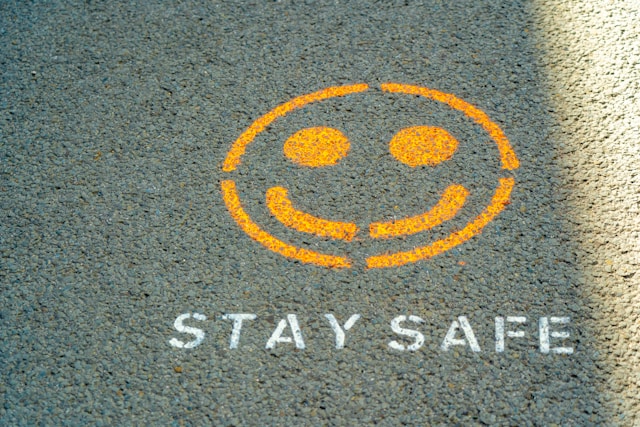
A pictogram has to earn the label of being self-explanatory through its design intuition. But, the results have to be tested empirically to see if it holds. If we take ANSI Z535.3 as an American example, their standard requires a candidate symbol to pass 85% correct-response recognition testing before it can then be standardised.
The standard’s own foreword notes that some proposed symbols had not passed the required 85% recognition testing and were therefore rejected on that basis alone. The UK’s equivalent legal position, under the Health and Safety (Safety Signs and Signals) Regulations 1996, has a specific design constraint rather than a testing regime. It states that pictograms “must be as simple as possible and should contain only essential details.” This is less measurable, but still a clear rule to abide by. Ultimately, it gets to the crux of the second-language issue by putting simplicity at the forefront. Any symbol must earn its right to be used.
When pictograms need a translator anyway
There is more to the official guidance than it seems, especially regarding “pictograms are universal”. HSE states that “most safety signs are self-explanatory” but the very same document then adds, just a few paragraphs later, that supplementary text can matter, “particularly… when introducing a new or unfamiliar sign.”
That word “most” here is important because against a workforce where one in five UK employee jobs are held by non-UK nationals, the idea that most signs work without translation still leaves a meaningful population who will read a symbol with no fallback beyond the pictogram. It’s questionable when it’s a new symbol.
The legal reminder nobody expects
It’s tempting to then assume the fix is to just translate everything, add more languages, and the liability question can resolves itself. But legally and practically, translation isn’t always the silver bullet we think it is, and this is partly because non-UK nationals can be a broad mix of backgrounds.
UK health and safety law doesn’t enforce words on a sign, but just that the instructions are understood and acted on. Placing translated text, especially multiple translations, would be in contradiction to their mantra of being as simple and minimal as possible. The multilingual safety communication would likely be too small to read, too, on a sign, but multilingualism can be useful during training.
So instead, the physical design and the placement of the safety pictogram must be backed up with onboarding and training. After all, even if they do not immediately understand or remember the sign (which is a huge issue for visual risk communication, let’s not underplay that), at the very least, they will understand that some type of hazard exists, and likely the severity/type due to the colours involved.