
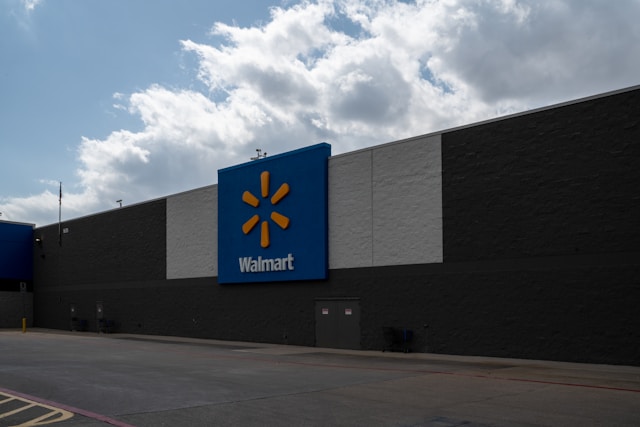
Walmart operates one of the world’s largest retail ecosystems, serving approximately 280 million customers each week across more than 10,900 stores in 19 countries, alongside eCommerce platforms, mobile applications and other services. Fiscal 2026 revenue reached $713.2 billion, making changes in trade policy, consumer economics, technology, labor regulation and environmental requirements particularly important to the company.

The following Walmart PESTEL Analysis 2026 is based strictly on Walmart’s 2026 Annual Report.
Walmart Business Model 2026: How Does Walmart Make Money?

Political Factors Affecting Walmart
1. Tariffs and Trade Policy
Walmart operates in what it describes as a “highly dynamic tariff environment.” Less than one-third of merchandise sold in the U.S. is imported, with China, Mexico, Vietnam, India and Canada among its major sourcing countries. Changes in tariffs can increase product costs and pressure Walmart’s low-price model.
2. International Trade Relations
Walmart’s global supply chain and operations expose it to changing trade relationships between countries. Political decisions affecting imports, sanctions, cross-border commerce and sourcing can alter product availability and costs, requiring Walmart to adjust suppliers, inventory purchasing and pricing.
3. Government Tax Policies
Changes in corporate taxation can affect Walmart’s cash flows and investment economics. The U.S. One Big Beautiful Bill Act enacted in July 2025 introduced changes including 100% bonus depreciation on qualified property and full expensing of R&D expenditures.

4. Political and Regulatory Differences Across Countries
Walmart International operates across 18 countries outside the U.S., including China, India, Mexico, Canada, Chile and several African and Central American markets. This exposes the company to different political, regulatory and policy environments.
5. Government Scrutiny of Large Digital Platforms
Walmart’s expansion into eCommerce and marketplaces increases its exposure to competition authorities. In India, the Competition Commission of India is investigating alleged competition-law violations involving certain Flipkart subsidiaries, with potential monetary and non-monetary remedies.
Walmart Business Strategy 2026
Economic Factors Affecting Walmart
1. Inflation and Product Costs
Walmart’s EDLP strategy makes cost inflation particularly important. When costs rise, Walmart may absorb increases, negotiate with suppliers, emphasize private labels or smaller packs, alter purchasing volumes, or ultimately pass some increases to customers. These choices can directly affect gross margins.
2. Consumer Spending Conditions
Walmart’s scale makes it highly sensitive to household spending patterns. At the same time, its low-price positioning can be particularly relevant when consumers become more value-conscious. Fiscal 2026 Walmart U.S. comparable sales increased 4.3%, supported by higher average tickets, transactions and unit volumes.
3. Foreign Exchange Fluctuations
International operations create significant currency exposure. Currency movements generated a $0.8 billion net translation gain in fiscal 2026, and Walmart uses currency swaps to hedge part of this exposure.
4. Interest Rates Affect Financing Costs
Variable-rate borrowings represented 27% of Walmart’s total short- and long-term debt at January 31, 2026. Walmart estimates that a 100-basis-point movement in prevailing rates would change annual interest costs by approximately $0.1 billion.
5. Margin Pressure Remains Significant
Walmart operates on relatively thin margins. Fiscal 2026 net sales reached $706.4 billion, but operating margin was only 4.2%, down from 4.4%. This makes productivity, inventory management, category mix and higher-margin businesses strategically important.
Social Factors Affecting Walmart
1. Customers Increasingly Demand Convenience
Walmart identifies convenience as a growing customer priority. Its strategy combines stores, eCommerce, mobile applications, pickup and delivery to make shopping easier and save customers time.
2. Digital Shopping Behavior Is Reshaping Retail
Consumers increasingly expect physical and digital shopping to work seamlessly together. Walmart has responded by making omnichannel growth a financial priority, including eCommerce expansion, Walmart+ and Sam’s Club membership growth.
3. Price Sensitivity Reinforces Walmart’s Value Proposition
Affordability remains central to Walmart’s relationship with customers. EDLP is designed to create confidence that customers can receive consistently low prices without depending on promotional events, while EDLC supports that promise through cost discipline.
4. Health and Wellness Demand Expands Walmart’s Role
Walmart sells pharmacy, over-the-counter medicines, medical products and optical services alongside traditional grocery and general merchandise. This broadens Walmart’s relationship with households beyond conventional retail purchases.
5. Walmart’s Workforce Is Strategically Important
Walmart employed approximately 2.1 million associates as of January 31, 2026. As the company introduces AI, automation and omnichannel operations, employee capabilities and productivity become increasingly important to delivering its customer experience.
Technological Factors Affecting Walmart
1. AI Is Becoming Embedded Across Walmart
Walmart increasingly uses AI-powered tools for customer and member experiences, associate productivity and operational efficiency. AI is therefore becoming part of both the customer-facing and cost-efficiency sides of Walmart’s strategy.
2. eCommerce Technology Is Essential to Growth
Walmart’s strategy increasingly integrates stores, websites and mobile applications. More than 8,400 locations globally support pickup or delivery, demonstrating how technology allows physical stores to function as digital fulfillment infrastructure.
3. Automation Can Improve Retail Economics
Walmart invests in technology and process improvements to increase productivity, manage inventory and reduce costs. This is particularly important because the company wants operating income to grow faster than sales while continuing to maintain low prices.
4. Cybersecurity Is a Growing Operational Risk
Walmart and some third-party service providers have experienced cybersecurity incidents and threats. While no known cyber risk had materially affected Walmart as of the Annual Report date, the company acknowledges that future incidents could materially affect its business.
5. Technology Leadership Is Becoming Organizationally Important
Walmart created senior leadership responsibility around AI, appointing an Executive Vice President of AI Acceleration, Product and Design in 2025. Its Walmart U.S. leadership also includes experience across eCommerce, supply chain, innovation, automation, product and engineering.
Environmental Factors Affecting Walmart
1. Climate and Sustainability Reporting Requirements
Governmental and societal attention to climate change and sustainability is increasing mandatory and voluntary reporting requirements. Walmart identifies climate change, sustainability and risk oversight among areas where reporting and diligence requirements may become more complex.
2. Supply-Chain Sustainability Is Material
Environmental expectations extend into Walmart’s enormous supply chain. The Annual Report specifically identifies sustainability with respect to its supply chain as an area facing increased governmental and societal scrutiny.
3. Natural Resource Use Is Under Greater Scrutiny
Walmart identifies natural resources among environmental areas subject to expanding reporting and diligence expectations. For a company operating nearly 11,000 retail locations and hundreds of distribution facilities, changing requirements can increase monitoring and compliance complexity.
4. Waste Reduction and Energy Use Matter
The Annual Report specifically identifies waste reduction and energy among environmental topics receiving increasing governmental and societal attention. Greater requirements around these areas could affect Walmart’s stores, logistics network and supply-chain practices.
5. Environmental Regulation Can Increase Compliance Costs
Walmart is subject to laws concerning environmental protection, health and safety, hazardous substances and their management and disposal. Failure to comply can increase costs, restrict activities or lead to penalties and other regulatory consequences.
Legal Factors Affecting Walmart
1. Antitrust and Competition Laws
Walmart is subject to competition and antitrust regulations across its markets. Its ongoing Flipkart matter in India demonstrates how expansion into large digital marketplaces can create additional legal scrutiny and potentially result in financial or operational remedies.
2. Data Privacy and Cybersecurity Regulation
Walmart must comply with increasingly complex rules governing personal information, cross-border data transfers, privacy, cybersecurity, data sharing and interoperability. These requirements become more significant as Walmart expands eCommerce, advertising and financial services.
3. AI Regulation Is an Emerging Legal Factor
Walmart specifically identifies the use of AI technology among areas subject to laws and regulations. As AI becomes more deeply integrated into customer experiences and operations, compliance requirements could influence how quickly and broadly Walmart deploys AI.
4. Financial Services Create Additional Compliance Obligations
Walmart’s financial-services offerings through partners and OnePay expose it to anti-money-laundering, sanctions, privacy, information-security and consumer-protection requirements. Increased regulation of non-bank financial institutions could add further compliance obligations.
5. Labor, Consumer and Product Regulations Are Extensive
Walmart must comply with laws covering working conditions, workplace safety, equal employment opportunity, worker classification, employee benefits, food and drug safety, consumer protection, advertising and health-and-wellness operations. Non-compliance can lead to higher costs, fines, litigation and restrictions on business activities.
Source: Walmart annual report