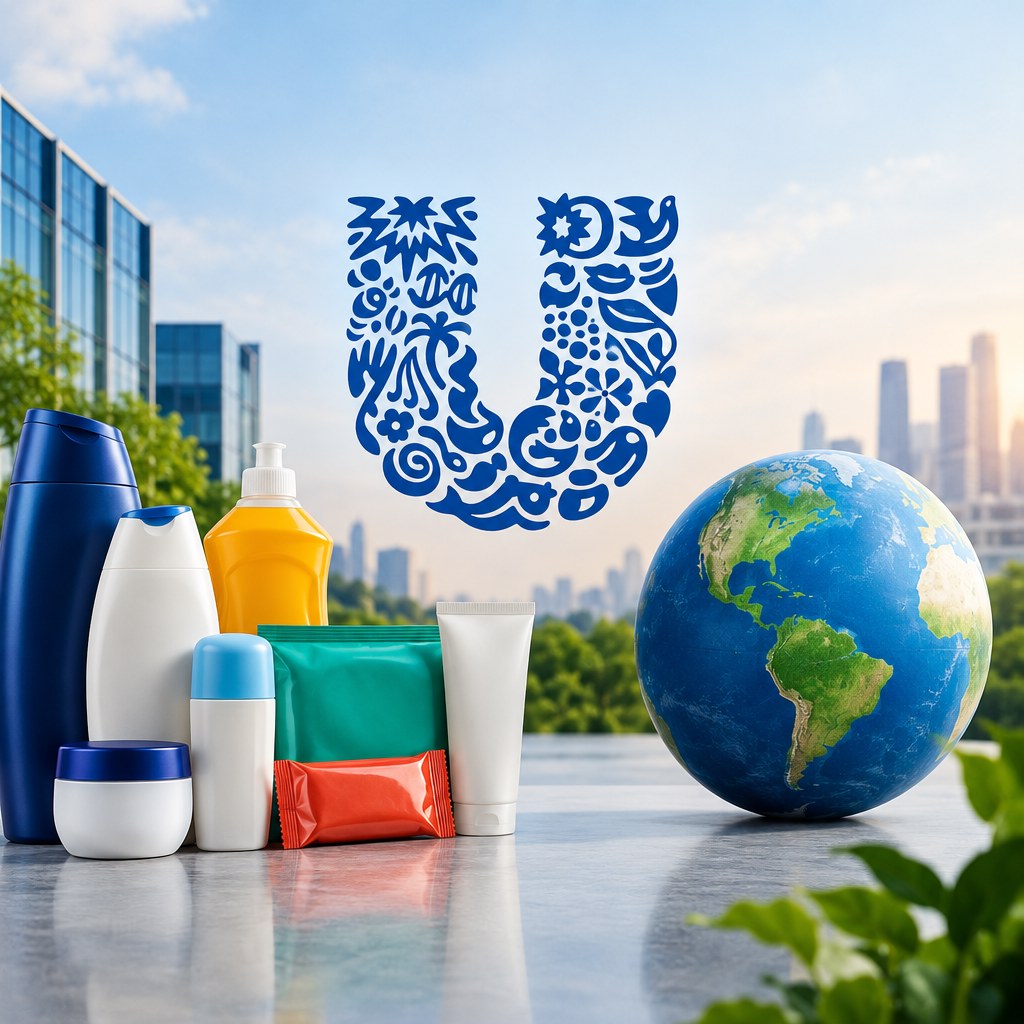
Unilever’s 2026 strategy has three parts. It is narrowing its portfolio, pushing harder on volume-led growth from a small set of global brands, and funding that growth through productivity savings rather than price increases. Ice cream has been separated into The Magnum Ice Cream Company. Food is the next big question, and the McCormick transaction is central to it. What remains is a company built around Beauty & Wellbeing, Personal Care and Home Care. This article covers how the transformation works, the numbers behind it, the trade-offs, and how to read the H1 2026 results. It contains no buy or sell recommendation.
1. The Direct Answer: What Unilever’s 2026 Strategy Is
Fernando Fernandez became CEO in March 2025. Under him, Unilever has sharpened the Growth Action Plan first set out by his predecessor, Hein Schumacher. The strategy now has four parts:
- Focus the portfolio. Shift weight toward Beauty & Wellbeing and Personal Care, where growth and margins are structurally higher. Exit or restructure slower categories.
- Concentrate on Power Brands. About 30 brands, including Dove, Vaseline, Rexona, Liquid I.V., Sunsilk and OMO, generate roughly three-quarters of turnover. They receive most of the investment.
- Win on volume, not just price. After the inflation years, management has repeatedly said that underlying volume growth matters most.
- Self-fund through productivity. Cost savings pay for higher brand and marketing investment while operating margin keeps improving.
In practice, Unilever is trying to become a smaller, faster, higher-margin personal care and beauty company. It is moving away from being a sprawling food-and-household conglomerate.
Portfolio Focus
Ice cream has been demerged and food is being restructured. Beauty, wellbeing and personal care become the core.
Power Brands
About 30 brands carry roughly 75% of turnover. They get most of the innovation and media spend.
Volume-Led Growth
Unilever wants a healthier mix of volume and price, rather than growth driven by price increases.

Productivity
The savings programme funds marketing and protects operating margin.
2. Portfolio Transformation: From Conglomerate to Focused Company
For years Unilever ran five business groups: Beauty & Wellbeing, Personal Care, Home Care, Nutrition (Foods) and Ice Cream. Each had a different growth profile, supply chain and capital need. Investors argued the mix diluted returns. A 2022 activist stake from Trian, with Nelson Peltz joining the board, sharpened that pressure.
The ice cream demerger
In March 2024 Unilever announced it would separate ice cream. The resulting business, The Magnum Ice Cream Company, took Magnum, Ben & Jerry’s, Wall’s and Cornetto. It began trading in late 2025 with listings in Amsterdam, London and New York.
The logic was simple. Ice cream needs a frozen supply chain and is highly seasonal. It also had lower margins than the rest of the group. Removing it lifts the remaining company’s margin profile and frees management time. The cost was a loss of scale, plus one-off separation costs and stranded overheads that the remaining company had to absorb.
Bolt-on acquisitions and disposals
Alongside the large moves, Unilever has made smaller deals that point in the same direction:
- Buying into premium personal care: Dr. Squatch, a US men’s grooming brand, was acquired in 2025. Minimalist, an Indian skincare brand, was acquired through Hindustan Unilever.
- Selling non-core food assets: The Vegetarian Butcher was sold to Vivera in 2025. Several smaller food and regional brands were sold off.
These deals tilt the portfolio toward premium, digitally native brands and toward the US and India, which management treats as priority growth markets.
3. The Food Question and the McCormick Transaction
With ice cream gone, Foods (Knorr, Hellmann’s and related brands) became the largest part of the old portfolio that did not fit the beauty-and-personal-care direction. Foods is profitable and cash-generative. Knorr and Hellmann’s are among Unilever’s largest brands. But the category grows more slowly, and it competes for capital with businesses that management sees as higher-return.
That is why the McCormick transaction matters so much in 2026. A deal combining Unilever’s food business with McCormick, the US spices and condiments company, would complete the portfolio reshaping. It would turn Unilever into a near-pure play in beauty, wellbeing, personal care and home care.
How to read the transaction primary source
Take the deal terms directly from the joint announcement and the regulatory filings, not from secondary coverage. These are the points to check:
- Structure: Is it a cash sale, a share-based combination, or a tax-efficient separation? Each affects Unilever’s balance sheet and shareholders differently.
- Perimeter: Which brands and regions are included? Food businesses in markets such as India are often held through listed subsidiaries and handled separately.
- Consideration and ownership: What does Unilever receive? If shares are involved, what stake would Unilever shareholders hold in the combined company?
- Use of proceeds: Will proceeds go to buybacks, debt reduction or acquisitions? This shows management’s capital-allocation priorities.
- Timeline and conditions: What antitrust reviews and shareholder approvals are required, and when is closing expected?
- Dis-synergies: Shared manufacturing, distribution and overhead have to be separated. Look for stated stranded costs and transitional service agreements.
4. The Growth Model: Volume, Price and Mix
The clearest test of the strategy is the split between underlying volume growth (UVG) and underlying price growth (UPG). In 2022 and 2023, inflation pushed growth heavily toward price. Since then, the goal has been to rebuild volume while keeping pricing positive.
Two caveats apply. First, figures from before the ice cream separation include ice cream, while later figures are reported on a continuing-operations basis. Comparing them directly is like comparing two different companies. Use the restated comparatives in the H1 2026 release. Second, 2025 growth slowed partly because of weaker conditions in key emerging markets and softer North American demand. A single half-year can therefore overstate or understate the underlying trend.
What “good” looks like
- Volume at least comparable to price. When volume growth is close to or above price growth, the brands are winning shoppers rather than just raising prices.
- Power Brands growing faster than the group. This confirms that concentrating resources is working.
- Beauty & Wellbeing leading. Prestige beauty and wellbeing brands such as Liquid I.V. and Nutrafol have been among the fastest-growing parts of the business.
- Market share gains. Unilever reports the share of turnover gaining or holding share. A rising figure supports the volume story.
5. Margins and Productivity: How the Plan Is Funded
In March 2024 Unilever announced a productivity programme targeting around €800 million of cost savings over three years. It was expected to affect about 7,500 mainly office-based roles. The aim was not only to cut costs. Savings were meant to be reinvested in brand and marketing investment (BMI), which Unilever raised to above 15% of turnover in 2024.
The model works like this:
- Gross margin is rebuilt as commodity inflation eases and the portfolio mix improves.
- Overheads fall through productivity and a simpler structure.
- Part of the gain goes back into advertising, innovation and science-backed claims.
- Higher investment supports volume growth, which spreads fixed costs across more units and lifts margin again.
Management has framed its medium-term ambition as mid-single-digit underlying sales growth with modest annual margin improvement. When you read the H1 2026 results, check whether margin gains come from real efficiency or from cutting BMI. The first is sustainable. The second borrows from future growth.
6. Strategic Trade-offs and Key Risks
Every part of the strategy involves giving something up. These are the main trade-offs to weigh:
Focus versus diversification
A beauty and personal care company has higher growth potential, but it is less defensive. Food and ice cream offered steady cash flows across economic cycles. Without them, Unilever is more exposed to discretionary spending cuts, especially in prestige beauty.
Premiumisation versus emerging-market scale
Buying premium US brands raises average margins. Yet a large share of Unilever’s volume comes from emerging markets such as India, Indonesia and Latin America, where affordability matters most. Pushing too hard on premium risks losing ground to local competitors at lower price points.
Execution risk in separations
Two major separations close together, ice cream and then food, put heavy strain on IT systems, supply chains and people. Stranded costs, distracted management and disruption to retailer relationships are real risks during the transition.
Other risks to monitor
- Currency: Weak emerging-market currencies can depress reported euro results even when underlying growth is healthy.
- Competition: Procter & Gamble, L’Oréal, Colgate-Palmolive and fast-growing digital brands compete directly in Unilever’s priority categories.
- Retailer pressure: Private label and retailer bargaining power limit pricing, especially in Europe.
- Leadership continuity: CEO changes in 2023 and again in 2025 raise questions about how stable the strategy will be.
7. How to Track Unilever’s Strategy Through 2026
For analysts, students or managers studying the case, use this checklist on each results release:
- Read the business-group table first. Compare growth and margin for Beauty & Wellbeing, Personal Care, Home Care and Foods.
- Separate volume from price. Track UVG and UPG for the group and for each business group.
- Check Power Brand performance against the group average.
- Follow BMI as a percentage of turnover. A falling ratio alongside rising margins is a warning sign.
- Review deal updates. Look for McCormick transaction milestones, regulatory progress and any revisions to expected proceeds.
- Read the outlook statement. Note any changes to growth or margin guidance, and the reasons given.
Frequently asked questions
Is Unilever leaving food entirely? The direction points toward a much smaller food presence. The exact scope depends on the McCormick transaction perimeter and on regional subsidiaries. Check the primary announcement for which brands and markets are included.
Why is volume growth emphasised over sales growth? Price-led growth can hide shrinking demand. Volume growth shows that more consumers are buying, which is a stronger sign of brand health.
Does this article recommend buying Unilever shares? No. This is a strategy analysis, not investment advice.
Summary
Unilever’s 2026 strategy is about subtraction and concentration. The company has separated ice cream and is restructuring food through the McCormick transaction. It is focusing investment on about 30 Power Brands and funding growth with productivity savings. Success depends on three things: delivering volume-led growth, completing separations without disrupting the business, and keeping margins rising without cutting brand investment.
Your next step is to compare the H1 2026 release with the restated H1 2025 figures and check them against the checklist above.
Keep Studying the Strategy
Track the business-group split, volume versus price, and McCormick deal milestones with each new Unilever results release.