
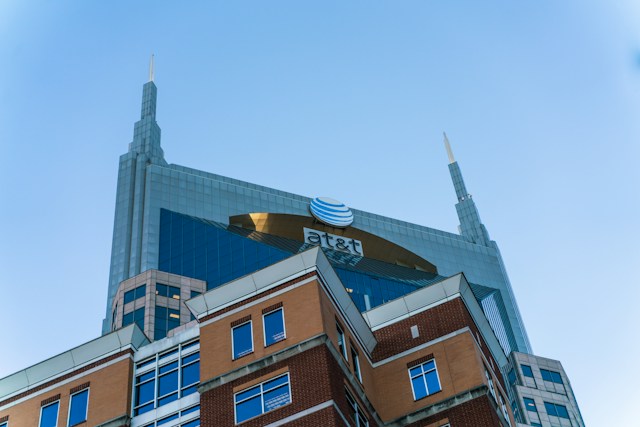
AT&T operates large-scale wireless and wireline communications networks whose performance is influenced by government spectrum policy, economic conditions, customer behavior, rapid technological change, environmental events and extensive regulation. In 2025, the company generated $125.65 billion in operating revenue, with Communications accounting for approximately 97% of segment revenue.

Its strategic focus on 5G, fiber and fixed wireless increases exposure to many external forces. Network investment depends on spectrum access, capital availability and regulation; demand depends on consumer and enterprise connectivity needs; and service reliability depends on resilient infrastructure. The following PESTEL analysis is grounded in the factors described in AT&T’s 2025 Annual Report.
AT&T Business Model 2026: How Does AT&T Make Money?

Political Factors
1. Government Spectrum Policy
Wireless networks depend on licensed spectrum. AT&T participates in FCC spectrum auctions, acquires licenses from third parties and redeploys existing spectrum. Government decisions about spectrum availability and licensing therefore directly influence network capacity, investment timing and competitive positioning.
2. Telecommunications Policy
AT&T operates communications infrastructure subject to federal, state and other governmental oversight. Changes in telecommunications policy can influence network operations, customer obligations, competition and the economics of investment.
3. Public-Safety Communications
Through FirstNet services, AT&T provides a nationwide wireless broadband network dedicated to public safety. This creates an important relationship between the company and public-sector communications requirements and increases the importance of network resilience and service performance.

4. International Political Exposure
AT&T operates wireless services in Mexico and serves business customers globally. Political or policy changes across jurisdictions can affect operating conditions, investment, taxes and cross-border activities.
5. Infrastructure Policy and Deployment
Fiber and wireless expansion require physical infrastructure, construction and access to rights and facilities. Government approaches to infrastructure deployment can affect the speed and cost at which telecommunications networks expand.
Economic Factors
1. Capital-Intensive Network Investment
AT&T expects continued significant investment in network capacity and spectrum. Fiber construction, wireless equipment and spectrum require substantial capital, making financing conditions and investment returns important economic factors.
2. Consumer Spending and Affordability
Wireless devices and connectivity services are recurring household expenses. Economic pressure on consumers can influence device upgrades, plan choices and demand, requiring AT&T to balance pricing with affordability and retention.
3. Enterprise Spending Cycles
Business Wireline serves companies and government customers. Enterprise technology and connectivity budgets can influence demand for advanced services. At the same time, secular decline in legacy services continues regardless of short-term economic cycles.
4. Revenue Mix Shift
AT&T’s economic performance is being reshaped by growth in Mobility and Consumer Wireline and decline in Business Wireline. In 2025, Mobility revenue rose 5.0% and Consumer Wireline 4.5%, while Business Wireline fell 8.4%. The pace of this mix shift materially affects profitability.
5. Foreign Exchange Exposure
AT&T’s Latin America segment operates in Mexico. The company noted foreign-exchange impacts on Mexico revenue during 2025, demonstrating that currency movements can affect reported results even when underlying subscriber activity differs.
Social Factors
1. Growing Dependence on Connectivity
Consumers increasingly rely on high-speed connectivity for communication, entertainment, work and daily digital services. This supports demand for wireless and broadband networks and increases the importance of reliability.
2. Streaming and Data-Intensive Behavior
AT&T identifies activities such as video streaming, user-generated content and other data-intensive applications as drivers of broadband demand. These behaviors increase traffic and support the case for higher-capacity fiber and 5G networks.
3. Remote and Hybrid Work
Remote work increases the importance of reliable residential broadband and enterprise connectivity. It also blurs the distinction between consumer and business connectivity requirements, strengthening demand for dependable networks.
4. Proliferation of Connected Devices
AT&T notes increasing use of advanced devices and Internet of Things technologies. More connected devices can expand wireless usage and create additional demand for network capacity and connectivity services.
5. Customer Expectations for Speed and Reliability
As connectivity becomes essential, consumers and businesses expect fast, reliable service. Service quality therefore influences retention, reputation and willingness to adopt advanced broadband and wireless offerings.
Technological Factors
1. 5G Network Development
AT&T’s U.S. 5G network covers more than 322 million people. Continued 5G development supports mobile data growth and enables additional services such as fixed wireless access through AT&T Internet Air.
2. Fiber Expansion
Fiber is a core technology priority. AT&T had 10.4 million consumer fiber connections at the end of 2025, up 11.5%. Fiber supports multi-gigabit broadband and is central to replacing older copper infrastructure.
3. Fixed Wireless Access
AT&T Internet Air uses the 5G network to provide residential broadband in selected areas. It reached 1.5 million connections in 2025. This technology provides an alternative way to expand broadband without deploying fiber to every location.
4. Software-Defined Networks and Virtualization
AT&T is migrating toward software-based networks and uses software-defined networking and network function virtualization. These approaches can improve flexibility and support deployment of next-generation services more efficiently than traditional hardware-intensive architectures.
5. AI and Rising Network Demand
The annual report identifies AI-enabled applications among activities contributing to demand for high-speed broadband. As applications become more data intensive, AT&T must continue expanding capacity while ensuring that investment translates into customer and financial value.
Environmental Factors
1. Physical Network Exposure
AT&T operates extensive physical communications infrastructure. Severe weather and other physical events can damage facilities, disrupt service and require restoration spending, making network resilience an operational consideration.
2. Energy Requirements of Networks
Large wireless and wireline networks require energy to operate. Network modernization and technology choices therefore have implications for operating efficiency and resource consumption.
3. Infrastructure Modernization
Migrating from older copper systems toward fiber and software-based networks changes the physical infrastructure AT&T operates. Modernization can affect maintenance requirements, equipment usage and long-term network efficiency.
4. Business Continuity and Resilience
Because customers rely on communications during disruptions, AT&T must maintain resilient infrastructure and recovery capabilities. Environmental events can therefore affect not only costs but also customer trust and public-safety responsibilities.
5. Environmental Regulation
AT&T’s physical facilities, construction activities and equipment are subject to applicable environmental requirements. Changes in such requirements can influence network deployment, facility management and operating costs.
Legal Factors
1. Extensive Telecommunications Regulation
AT&T’s services and networks operate under extensive legal and regulatory frameworks. Compliance obligations can affect pricing, network practices, customer relationships and investment decisions.
2. Privacy and Data Protection
Telecommunications providers handle significant volumes of customer information. Privacy and data-protection requirements create compliance obligations and potential legal exposure if customer information is mishandled.
3. Cybersecurity Obligations
Cyber incidents can affect networks, customers and data. AT&T must manage security risks while complying with evolving legal and regulatory expectations related to cybersecurity and incident response.
4. Litigation and Legal Settlements
AT&T’s 2025 operating expenses included approximately $440 million of apportioned legal settlements. This illustrates that litigation and legal matters can have direct financial consequences.
5. Consumer Protection and Contractual Requirements
Wireless and broadband services involve customer contracts, billing, devices and service commitments. Consumer-protection rules and contractual obligations can affect marketing, sales, customer service and financial exposure.
Source: AT&T Inc., 2025 Annual Report / Form 10-K.