
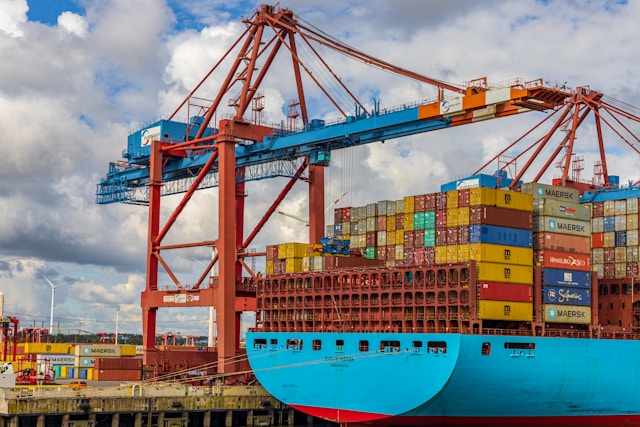
Adani Ports and Special Economic Zone Limited (APSEZ) operates at the centre of India’s logistics, maritime trade, and infrastructure ecosystem. As India’s largest integrated transport infrastructure company, APSEZ’s performance is influenced by several external factors, including government infrastructure policies, global trade trends, technological advancements, environmental regulations, and geopolitical developments. The company operates an extensive logistics network comprising 19 ports, 12 multimodal logistics parks, 132 railway rakes, 25,000+ trucks, 247 marine vessels, and over 3.1 million square feet of warehousing space, making it highly exposed to changes in both domestic and international business environments.

The FY2025-26 Annual Report highlights a strategy centred on “Accelerating Infrastructure, Leveraging Intelligence,” while identifying key external risks including geopolitical uncertainty, regulatory changes, climate risks, technology risks, and competition. A PESTEL analysis helps evaluate the macro-environmental factors that influence APSEZ’s long-term strategy and business performance.
Adani Ports Business Model in 2026: How Adani Ports Makes Money

Political Factors
1. Government Infrastructure Development
India’s continued investment in ports, logistics corridors, highways, rail connectivity, and industrial infrastructure supports APSEZ’s long-term growth. National infrastructure initiatives increase cargo movement while improving connectivity between ports and inland markets.
2. Maritime and Port Policies
Government policies governing ports, shipping, Special Economic Zones (SEZs), customs procedures, and maritime trade directly influence APSEZ’s operations. Stable policy support encourages long-term infrastructure investments and logistics expansion.
3. Geopolitical Developments
International geopolitical tensions can disrupt global trade routes, shipping patterns, and cargo volumes. The company identifies geopolitical uncertainty as a strategic risk that requires continuous monitoring and risk management.

4. Public-Private Infrastructure Partnerships
India’s increasing reliance on private participation in infrastructure development creates opportunities for APSEZ to expand port operations, logistics facilities, and transportation infrastructure through long-term partnerships with governments and public authorities.
5. International Trade Relations
Changes in bilateral trade agreements, tariffs, import-export policies, and diplomatic relationships influence cargo movement across ports. Strong international trade relations can increase demand for APSEZ’s integrated transport services, while trade restrictions may reduce cargo flows.
Adani Ports Business Strategy in 2026
Economic Factors
1. India’s Economic Growth
Economic expansion increases manufacturing output, industrial production, exports, imports, and domestic consumption, all of which contribute to higher cargo volumes handled by APSEZ’s logistics network.
2. Growth in Global Trade
As an infrastructure company closely linked to international trade, APSEZ benefits from rising global cargo movement. Conversely, global economic slowdowns can reduce shipping activity and affect cargo volumes.
3. Capital Investment Requirements
Infrastructure development requires substantial long-term investments. APSEZ has announced planned capital expenditure of approximately Rs. 90,000–1,00,000 crore over the next five years, making financing conditions and capital availability important economic considerations.
4. Supply Chain Diversification
Global companies are increasingly diversifying manufacturing and supply chains, creating opportunities for India to attract more production and exports. This structural shift can increase long-term demand for integrated logistics services offered by APSEZ.
5. Inflation and Interest Rates
Changes in inflation, borrowing costs, fuel prices, and financing expenses influence infrastructure development costs and logistics operations. Effective financial management remains important for maintaining profitability during different economic cycles.
Adani Ports SWOT Analysis in 2026
Social Factors
1. Rising Consumer Demand
Increasing urbanisation, rising incomes, and growing consumption drive demand for imported and domestically manufactured goods, resulting in higher cargo movement across India’s logistics network.
2. Employment Generation
APSEZ’s ports, logistics parks, transportation services, and industrial infrastructure create significant employment opportunities while supporting economic development across multiple regions of India.
3. Community Development
The company invests in education, healthcare, livelihood programmes, and community development initiatives around its operating locations. Maintaining positive relationships with surrounding communities supports sustainable long-term operations.
4. Demand for Reliable Logistics
Businesses increasingly expect faster, more transparent, and integrated logistics services. APSEZ’s end-to-end transport platform addresses these evolving customer expectations through multimodal connectivity and digital logistics solutions.
5. Workforce Transformation
As digital technologies and automation become more important, APSEZ continues investing in workforce capability, safety, leadership development, and technical skills to support intelligent infrastructure operations.
Technological Factors
1. Artificial Intelligence and Intelligent Infrastructure
The central theme of APSEZ’s strategy is integrating artificial intelligence, predictive analytics, automation, and digital intelligence across logistics operations. These technologies improve asset utilisation, operational efficiency, and decision-making.
2. Digital Supply Chain Platforms
The company is building digital platforms that improve cargo visibility, logistics coordination, operational monitoring, and customer experience throughout the transportation ecosystem.
3. Automation Across Operations
Automation in cargo handling, port operations, maintenance, warehousing, and logistics helps reduce turnaround time, improve safety, and increase operational productivity.
4. Cybersecurity Risks
As operations become increasingly digital, protecting critical infrastructure from cyber threats becomes essential. The company identifies information security and technology risks as important strategic priorities.
5. Data-Driven Decision Making
Advanced analytics, real-time operational intelligence, predictive maintenance, and machine learning enable APSEZ to optimise infrastructure utilisation while improving planning, maintenance, and operational performance across its logistics network.
Environmental Factors
1. Net Zero Commitment
APSEZ has committed to achieving Net Zero emissions by 2040, making sustainability a central component of its long-term business strategy.
2. Climate Change Risks
Ports and coastal infrastructure are exposed to rising sea levels, extreme weather events, flooding, and other climate-related disruptions. The company identifies climate risk as a material strategic challenge requiring continuous mitigation.
3. Renewable Energy Adoption
The company continues investing in renewable energy and energy-efficient infrastructure to reduce carbon emissions and improve environmental performance across operations.
4. Biodiversity and Resource Conservation
APSEZ undertakes initiatives related to biodiversity conservation, water management, waste reduction, and circular resource management to minimise the environmental impact of its infrastructure projects.
5. Sustainable Infrastructure Development
Environmental considerations increasingly influence infrastructure planning, construction, and operations. APSEZ integrates ESG principles into project development to improve long-term resilience and stakeholder confidence.
Legal Factors
1. Port and Maritime Regulations
APSEZ must comply with regulations governing ports, shipping, customs, maritime safety, and cargo handling across all its operations. Regulatory compliance is essential for maintaining business continuity.
2. Environmental Compliance
Infrastructure projects are subject to environmental approvals, pollution control regulations, coastal zone requirements, and sustainability standards. Compliance with these regulations is critical for project execution and long-term operations.
3. Corporate Governance Requirements
As a listed company, APSEZ follows corporate governance, financial reporting, risk management, and disclosure requirements that strengthen transparency and investor confidence.
4. Labour and Workplace Safety Regulations
The company must comply with labour laws, occupational health and safety standards, and workforce regulations across its ports, logistics operations, and infrastructure facilities to ensure employee welfare and operational safety.
5. Data Protection and Cybersecurity Regulations
As APSEZ expands digital infrastructure and AI-enabled operations, compliance with cybersecurity, information security, and data governance requirements becomes increasingly important for protecting business continuity and customer trust.