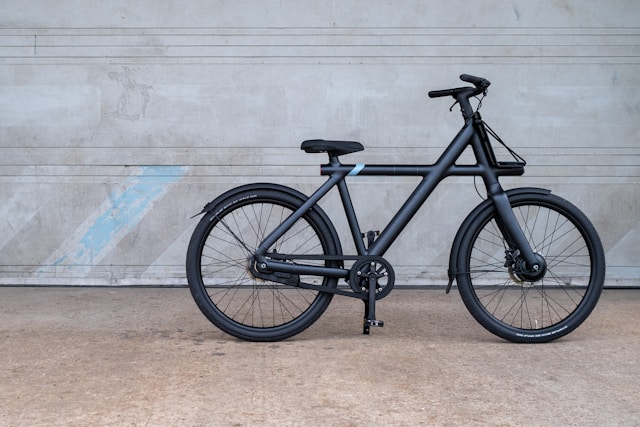
When most people think of disruptive tech brands, they imagine bold founders, dramatic announcements, and Silicon Valley theatrics. Yet every so often, a company emerges quietly—no noise, no hype—just a relentless focus on solving a real consumer problem better than anyone else.
In the world of electric bicycles, that company is Aventon.
Today, Aventon is one of the most recognisable names in North America’s fast-growing e-bike industry. But its rise didn’t happen the way most imagine. There was no billionaire founder, no glossy global campaign, no venture-capital rocket fuel. Instead, Aventon’s growth came from grounding itself in an overlooked truth:

Most people don’t want the best e-bike in the world.
They want the best e-bike they can realistically afford.
This single insight became the centrepiece of the Aventon strategy story — a story that turned the brand from a small start-up into a category-shaping disruptor.
The Humble Beginning: A Brand Built on Practicality
Before Aventon became synonymous with e-bikes, it was a small operation in Southern California producing fixed-gear bikes for young urban riders. The fixed-gear trend was exploding in the early 2010s. Lightweight frames. Simple mechanics. Accessible pricing. These bikes weren’t designed for elite athletes — they were built for everyday riders looking for style and function.
That early foundation mattered more than anyone realised at the time.
Because in building an entry-level fixie brand, Aventon quietly mastered three skills that would later define their e-bike disruption strategy:
- Vertical control — in-house frame design and manufacturing
- Mass-market thinking — building bikes people could actually afford
- Direct relationships — selling through a D2C model long before it became cool
By the time e-bikes began catching mainstream attention, Aventon had a competitive advantage that more established companies didn’t:
they already understood the ‘value buyer’ better than anyone.
The E-Bike Boom — and the Gap No One Addressed
When electric bikes started gaining traction, the market quickly polarised.
On one end were premium European brands charging upwards of £4,000–£7,000. Beautiful bikes, high-tech systems, elite performance — but well out of reach for the everyday commuter or weekend rider.
On the other end were low-cost, no-name imports flooding online marketplaces. Attractive prices, yes. But inconsistent build quality, weak customer service, and poor safety standards.
This created a massive vacuum in the middle — a space Aventon immediately saw as its opportunity:
Build e-bikes that feel premium…
but price them for the everyday rider.
While competitors targeted either enthusiasts or bargain hunters, Aventon focused on the largest group in the market:
people who weren’t cyclists at all.
People are simply looking for a reliable way to get around.
And this single strategic decision reshaped the brand’s trajectory.
The Strategic Pivot: From Fixies to E-Bikes
Aventon’s leadership didn’t just “decide to make e-bikes.”
They recognised an inevitable shift.
Cities were getting more crowded.
Public transport was becoming less reliable.
People wanted sustainable options without lifestyle compromise.
The pandemic accelerated interest in alternative transport.
By pivoting early — before the e-bike wave peaked — Aventon positioned itself perfectly before most competitors even noticed the trend.
And they did it in a way that avoided the classic trap of brand identity crisis. Instead of discarding their roots, Aventon used its fixie-era strengths (affordable quality + simple design) to reinvent itself for the electric future.
The Secret Weapon: Vertical Integration That Actually Matters
Most e-bike brands don’t make their own frames. They buy them. Same with electronics, controllers, and components. It’s cheaper, easier, faster — but it limits how much a brand can innovate or control costs.
Aventon took a different route.
They invested heavily in their own manufacturing capabilities, which gave them three massive strategic advantages:
1. Cost Discipline = Better Prices
Cutting out intermediaries allowed Aventon to maintain tight control over costs and pass savings on to customers.
This is why their bikes often look and feel like £3,000–£4,000 models, even though the price sits closer to the £1,200–£1,800 range.
2. Faster Iteration
They could test a new frame geometry on Monday…
Redesign it Tuesday…
And have a new prototype by Friday.
That agility made them one of the first mid-range brands to offer:
- fully integrated batteries
- torque sensors on selected models
- sleek frame designs that look “premium”
- colour LCDs + companion app integration
3. Quality Control
End-to-end control meant fewer warranty issues, fewer recalls, and a far better customer experience.This vertical integration didn’t just make Aventon more efficient.
It made the brand trustworthy.
The D2C Advantage: Owning the Customer Relationship
Aventon didn’t just sell bikes — they sold an experience.
While legacy brands relied on traditional dealers, Aventon embraced a direct-to-consumer model (with optional dealer support), allowing them to:
✔ Build stronger relationships
Customers didn’t talk to a retailer. They talked to Aventon.
✔ Control the storytelling
No middleman misrepresentation. The brand message stayed intact.
✔ Understand demand patterns
Data came directly from customers, not third-party retailers.
✔ Reinforce brand credibility
Support, parts, warranty — everything came from the source.
The D2C model wasn’t an afterthought.
It was a strategic moat that insulated Aventon from the noisy, fragmented e-bike market filled with unreliable resellers.
Design That Put Humans First
While big bike companies obsessed over engineering prestige, Aventon focused on something simpler:
riders who weren’t traditional cyclists.
People who:
- hadn’t ridden in years
- lived in cities
- wanted to commute without sweating
- wanted comfort and confidence over speed
- wanted clarity, not jargon
That human-first approach led to signature design principles:
Comfort-first geometry
More upright, more approachable, less intimidating.
Integrated batteries
A sleek look that made the bikes feel modern, not industrial.
Colour LCDs
Clear information for new riders.
Simple controls
Not techy, not complex — just intuitive.
Real-world power
Not the biggest motors. Not the flashiest sensors.
Just the right amount of assistance for commuting and leisure.
By understanding everyday riders better than competitors, Aventon created e-bikes that people actually wanted to use — not just admire.
The Viral Moment: Word-of-Mouth That Money Can’t Buy
Aventon didn’t rise because of ads.
They rose because real riders shared real stories.
A commuter who replaced their car.
A retiree who regained mobility after years of discomfort.
A student who rode daily instead of taking the bus.
A parent who started using an e-bike for school runs.
The stories were genuine, relatable, and powerful.
And in the digital age, that matters more than any marketing budget.
Aventon didn’t need to shout — its community did the shouting for them.
The Competitive Landscape: Winning the Middle Ground
Aventon occupies a strategic sweet spot:
Not as expensive as premium brands, not as cheap as generic imports.
This middle-market dominance works because:
✔ Premium buyers admire the design
✔ Budget buyers appreciate the value
✔ Everyday riders feel the bikes were built for them
Brands like Rad Power Bikes, Trek, and Ride1Up all compete in overlapping spaces, but Aventon’s combination of:
- price
- design
- user-friendly tech
- D2C model
- community trust
makes it incredibly difficult to displace.
Aventon didn’t enter a crowded field.
They created their own lane — and owned it.
Interestingly, Aventon’s rise isn’t limited to the U.S. market. In places like Australia, where transport costs, commuting distance, and terrain vary wildly, Aventon has become one of the most sought-after mid-range e-bike brands. Retailers such as BikesOnline AU have helped shape this growth by stocking Aventon models at competitive pricing, giving Australian riders access to some of the brand’s best-value offerings. It reinforces the same story globally: people aren’t just buying Aventon because it’s fashionable — they’re buying it because it delivers extraordinary value at a price point everyday riders can justify.
The Strategic Flywheel That Powers Aventon
Aventon’s brand journey can be summarised through a simple flywheel effect:
Affordable quality → Happy customers → Strong reviews → Higher demand → Economies of scale → Even better prices → More customers
It’s a momentum loop that accelerates with every bike sold.
While many companies chase trend cycles, Aventon built a model that compounds.
What’s Next for Aventon?
The brand’s future likely includes:
- deeper integration of smart tech
- expansion into cargo and utility segments
- broader global presence
- possibly subscription or financing models
- sustainability-linked initiatives
- improved after-sales ecosystem
If Aventon maintains its core philosophy — practical innovation for everyday riders — there’s no reason they can’t become one of the world’s defining names in the e-mobility movement.
Final Thoughts: Disruption Doesn’t Always Shout
Aventon didn’t become a major player through noise.
They did it through clarity.
They understood a customer base that others ignored.
They built bikes that fit real lives, not marketing fantasies.
They used vertical integration not as a buzzword, but as a tool for affordability and quality.
And they embraced direct-to-consumer relationships long before most competitors caught on.
In a market obsessed with specs and prestige, Aventon chose a different path:
Make electric mobility accessible, attractive, and genuinely useful.
That’s what real disruption looks like.
Quiet. Intentional. And impossible to ignore.